Hager Marlies V, Clydesdale Lachlan, Gellman Samuel H, Sexton Patrick M, Wootten Denise
Department of Chemistry, University of Wisconsin, Madison, WI, United States.
Drug Discovery Biology, Monash Institute of Pharmaceutical Sciences and Department of Pharmacology, Monash University, Parkville, Australia.
Biochem Pharmacol. 2017 Jul 15;136:99-108. doi: 10.1016/j.bcp.2017.03.018. Epub 2017 Mar 29.
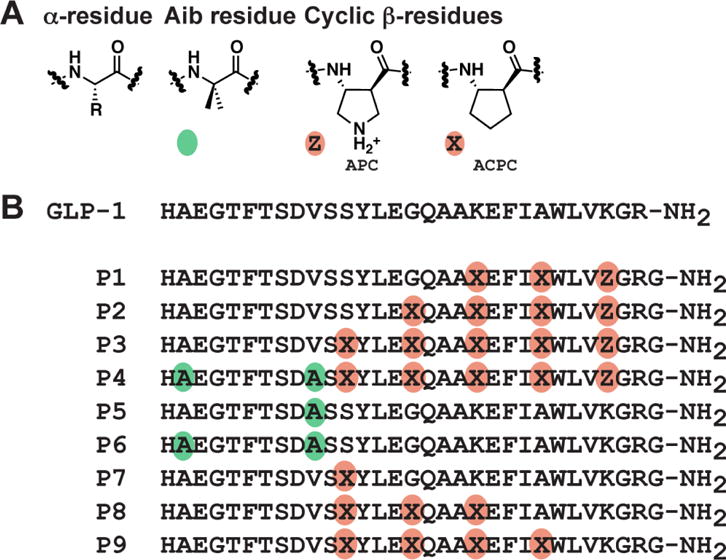
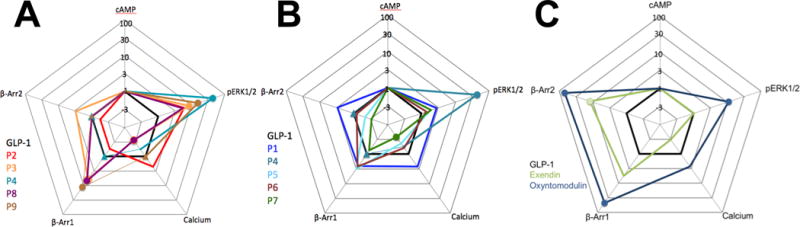
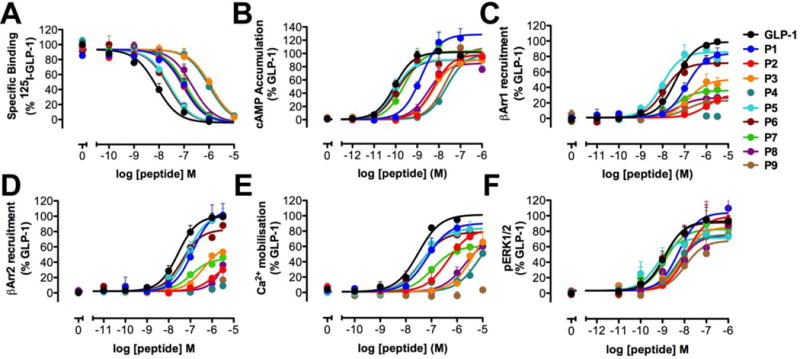
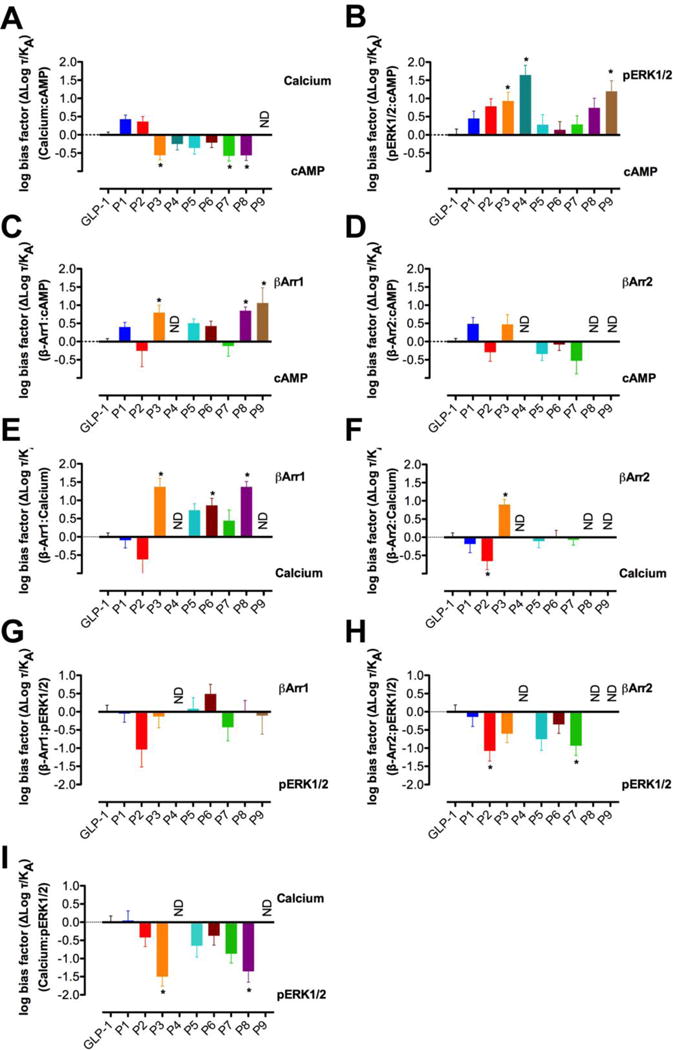
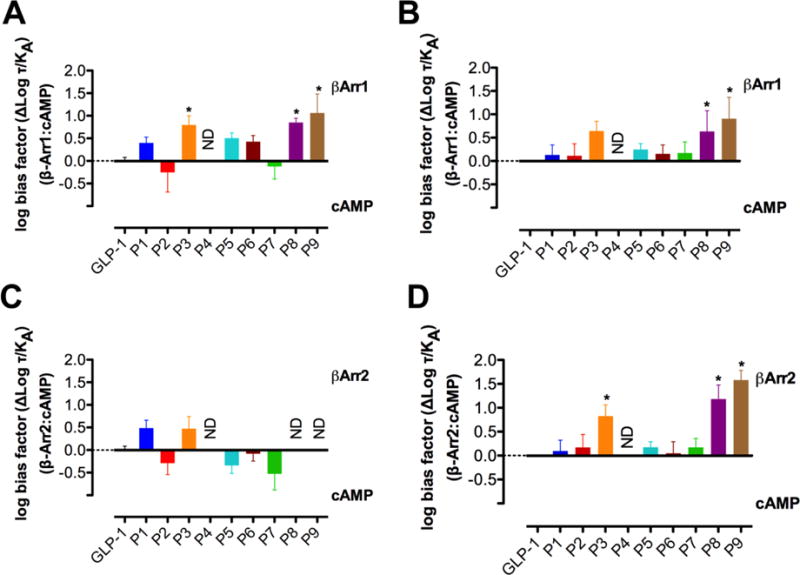
The glucagon-like peptide-1 receptor (GLP-1R) is a class B G protein-coupled receptor that is a major therapeutic target for the treatment of type 2 diabetes. Activation of this receptor promotes insulin secretion and blood glucose regulation. The GLP-1R can initiate signaling through several intracellular pathways upon activation by GLP-1. GLP-1R ligands that preferentially stimulate subsets among the natural signaling pathways ("biased agonists") could be useful as tools for elucidating the consequences of specific pathways and might engender therapeutic agents with tailored effects. Using HEK-293 cells recombinantly expressing human GLP-1R, we have previously reported that backbone modification of GLP-1, via replacement of selected α-amino acid residues with β-amino acid residues, generates GLP-1 analogues with distinctive preferences for promoting G protein activation versus β-arrestin recruitment. Here, we have explored the influence of cell background across these two parameters and expanded our analysis to include affinity and other key signaling pathways (intracellular calcium mobilization and ERK phosphorylation) using recombinant human GLP-1R expressed in a CHO cell background, which has been used extensively to demonstrate biased agonism of GLP-1R ligands. The new data indicate that α/β-peptide analogues of GLP-1 exhibit a range of distinct bias profiles relative to GLP-1 and that broad assessment of signaling endpoints is required to reveal the spectrum of behavior of modified peptides. These results support the view that backbone modification via α→β amino acid replacement can enable rapid discovery of peptide hormone analogues that display substantial signal bias at a cognate GPCR.
胰高血糖素样肽-1受体(GLP-1R)是一种B类G蛋白偶联受体,是治疗2型糖尿病的主要治疗靶点。该受体的激活可促进胰岛素分泌和血糖调节。GLP-1R在被GLP-1激活后可通过多种细胞内途径启动信号传导。优先刺激天然信号通路中的亚群的GLP-1R配体(“偏向性激动剂”)可作为阐明特定途径后果的工具,并可能产生具有特定效应的治疗药物。利用重组表达人GLP-1R的HEK-293细胞,我们之前报道过,通过用β-氨基酸残基取代选定的α-氨基酸残基对GLP-1进行主链修饰,可生成对促进G蛋白激活与β-抑制蛋白募集具有不同偏好的GLP-1类似物。在此,我们探讨了细胞背景对这两个参数的影响,并将分析扩展到包括亲和力和其他关键信号通路(细胞内钙动员和ERK磷酸化),使用在CHO细胞背景中表达的重组人GLP-1R,该细胞背景已被广泛用于证明GLP-1R配体的偏向性激动作用。新数据表明,GLP-1的α/β-肽类似物相对于GLP-1表现出一系列不同的偏向性特征,并且需要对信号终点进行广泛评估以揭示修饰肽的行为谱。这些结果支持这样一种观点,即通过α→β氨基酸取代进行主链修饰能够快速发现对同源GPCR表现出显著信号偏向性的肽激素类似物。