Mishra Gyan P, Singh Bijendra, Seth Tania, Singh Achuit K, Halder Jaydeep, Krishnan Nagendran, Tiwari Shailesh K, Singh Prabhakar M
Department of Biotechnology, ICAR-Indian Institute of Vegetable Research Varanasi, India.
Front Plant Sci. 2017 Mar 17;8:360. doi: 10.3389/fpls.2017.00360. eCollection 2017.
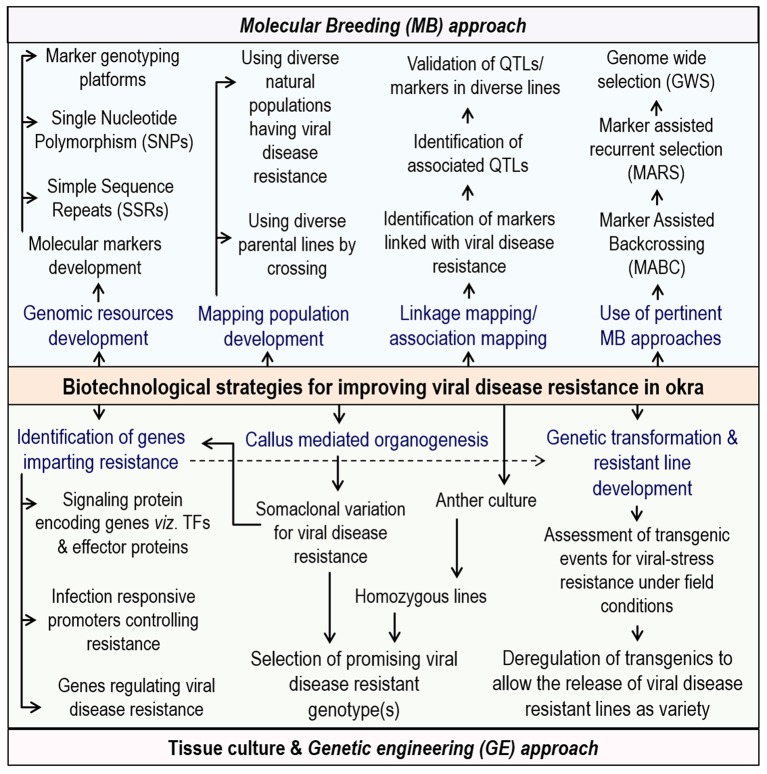
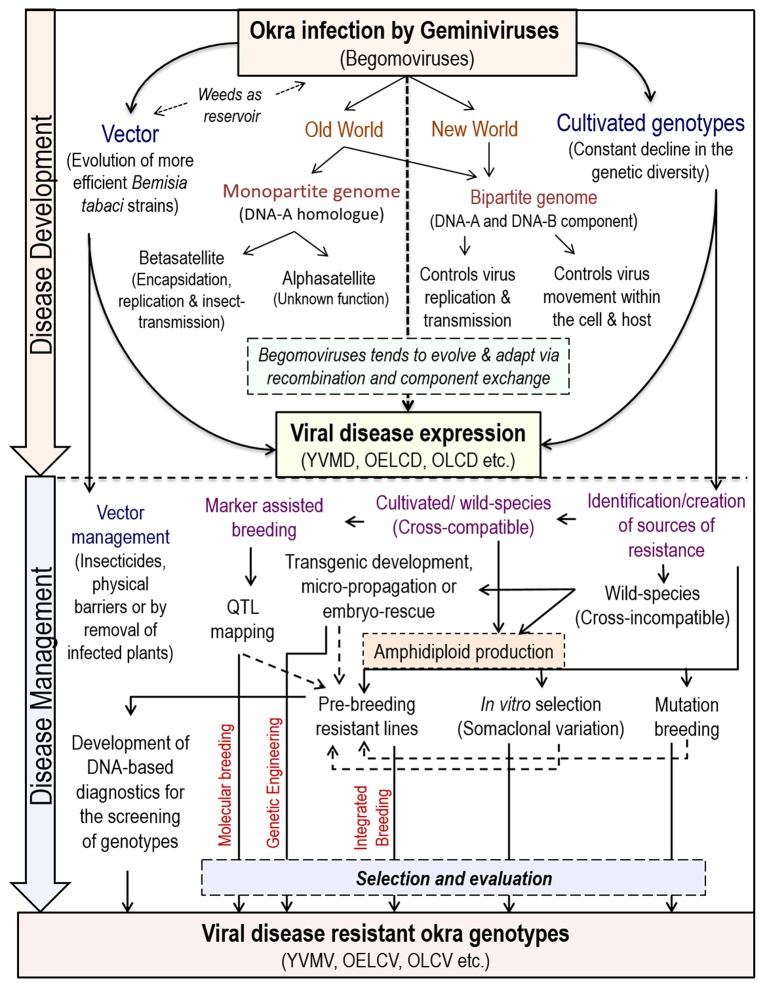
Despite the importance of okra, as one of the important vegetable crop, very little attention has been paid to its genetic improvement using advanced biotechnological tools. The exploitation of marker assisted breeding in okra is often limited due to the availability of a few molecular markers, the absence of molecular genetic-map(s), and other molecular tools. Chromosome linkage-groups were not yet constructed for this crop and reports on marker development are very scanty and mostly hovering around cultivar characterization. Besides, very little progress has been observed for transgenic development. However, high throughput biotechnological tools like chromosome engineering, RNA interference (RNAi), marker-assisted recurrent selection (MARS), genome-wide selection (GWS), targeted gene replacement, next generation sequencing (NGS), and nanobiotechnology can provide a rapid way for okra improvement. Further, the etiology of many deadly viral diseases like the yellow vein mosaic virus (YVMV) and okra enation leaf curl virus (OELCV) in okra is broadly indistinct and has been shown to be caused by various begomovirus species. These diseases cause systemic infections and have a very effective mode of transmission; thus, preventing their spread has been very complicated. Biotechnological interventions have the potential to enhance okra production even under different viral-stress conditions. In this background, this review deals with the biotechnological advancements in okra along with the begomoviruses infecting okra, and special emphasis has been laid on the exploitation of advanced genomic tools for the development of resistant varieties.
尽管秋葵作为重要的蔬菜作物之一很重要,但利用先进生物技术工具对其进行遗传改良却很少受到关注。由于分子标记数量有限、缺乏分子遗传图谱以及其他分子工具,秋葵中标记辅助育种的应用往往受到限制。该作物尚未构建染色体连锁群,关于标记开发的报道非常稀少,且大多围绕品种鉴定。此外,转基因开发进展甚微。然而,染色体工程、RNA干扰(RNAi)、标记辅助轮回选择(MARS)、全基因组选择(GWS)、靶向基因替换、下一代测序(NGS)和纳米生物技术等高通量生物技术工具可为秋葵改良提供快速途径。此外,秋葵中许多致命病毒病,如黄脉花叶病毒(YVMV)和秋葵脉突叶卷曲病毒(OELCV)的病因大致不明,已证明是由多种双生病毒引起的。这些疾病会引发系统性感染,传播方式非常有效;因此,防止其传播一直非常复杂。生物技术干预即使在不同病毒胁迫条件下也有提高秋葵产量的潜力。在此背景下,本综述探讨了秋葵的生物技术进展以及感染秋葵的双生病毒,并特别强调了利用先进基因组工具培育抗性品种。