Magna Gabriele, Catini Alexandro, Kumar Raj, Palmacci Massimo, Martinelli Eugenio, Paolesse Roberto, di Natale Corrado
Department of Electronic Engineering, University of Rome Tor Vergata, Via Politecnico 1, 00133 Roma, Italy.
Department of Chemical Science and Technology, University of Rome Tor Vergata, Via della Ricerca Scientifica, 00133 Roma, Italy.
Sensors (Basel). 2017 Apr 1;17(4):747. doi: 10.3390/s17040747.
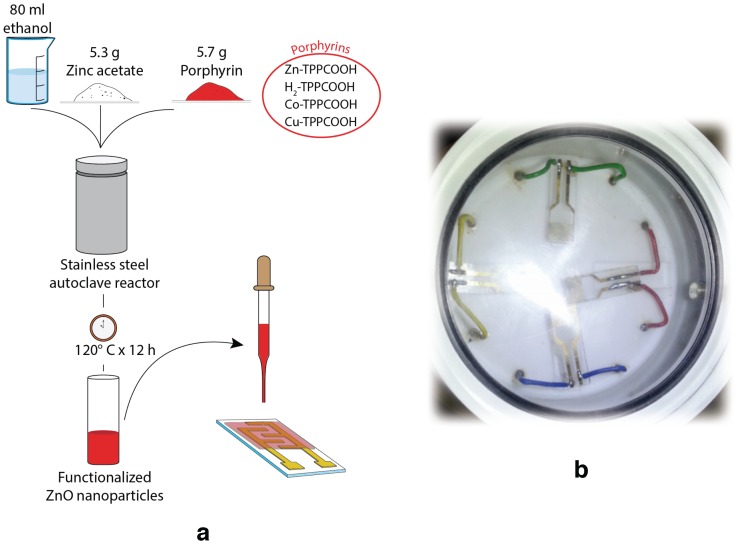
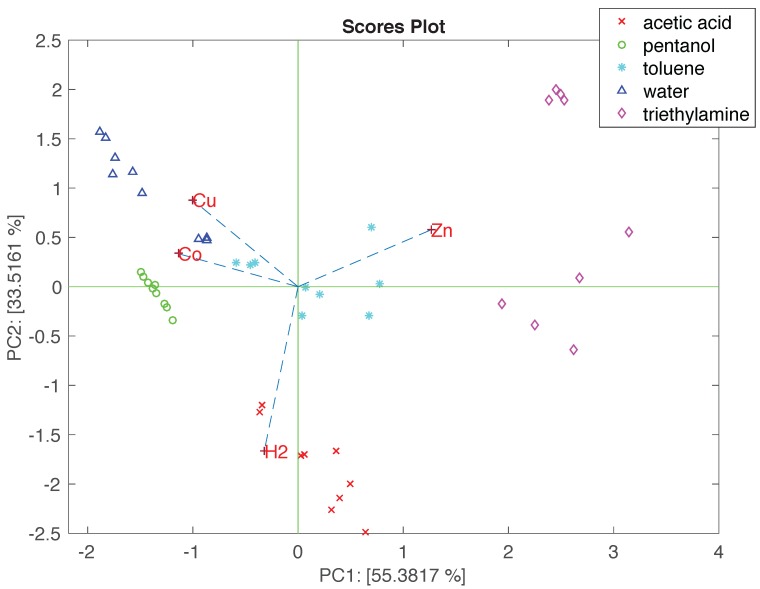
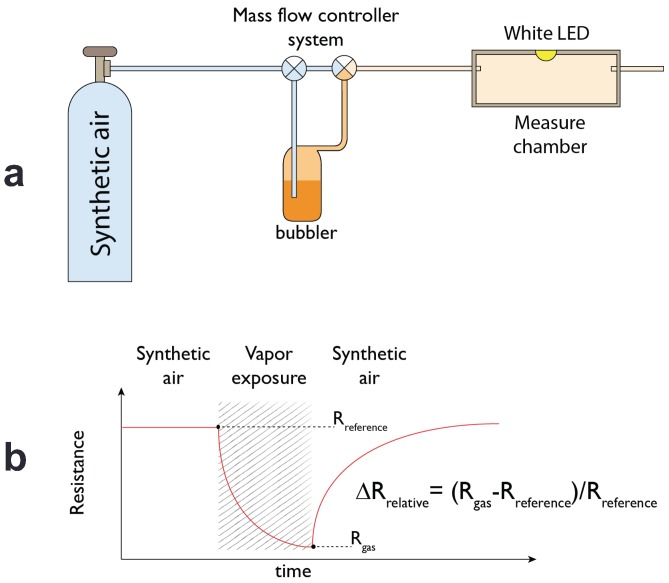
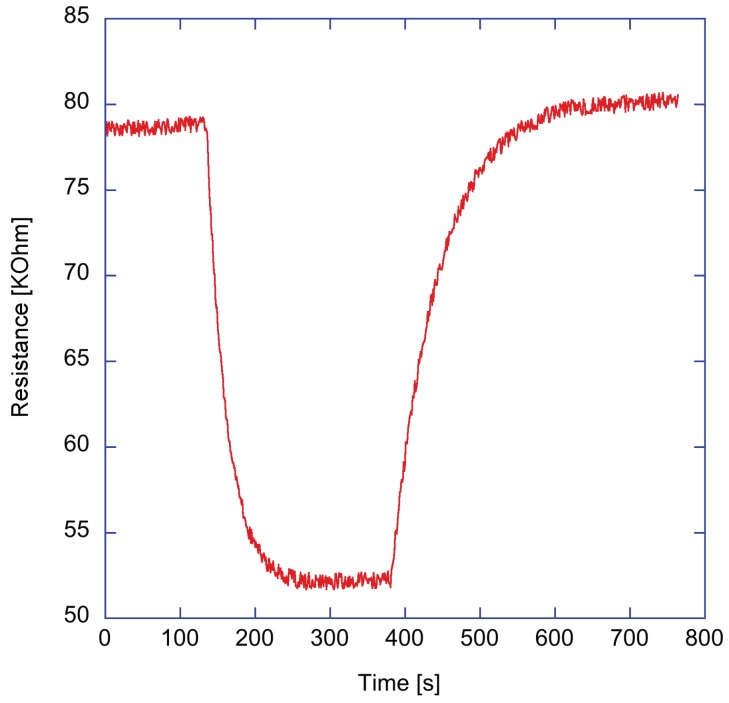
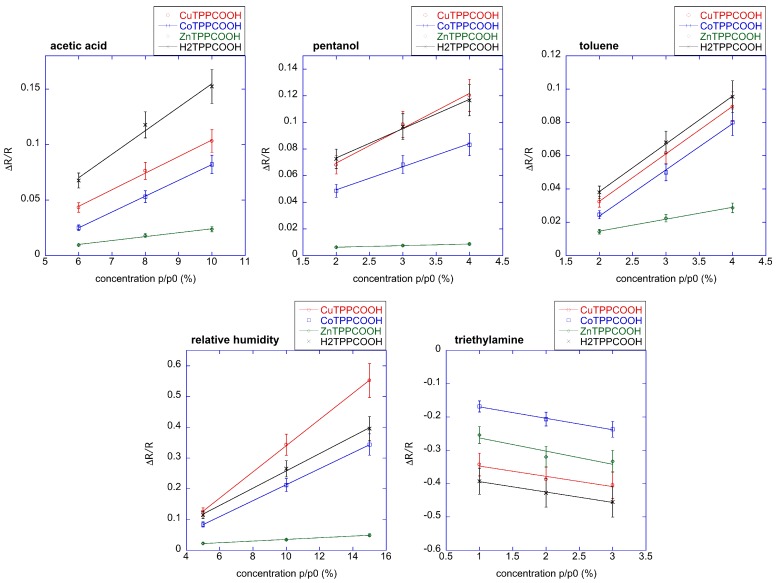
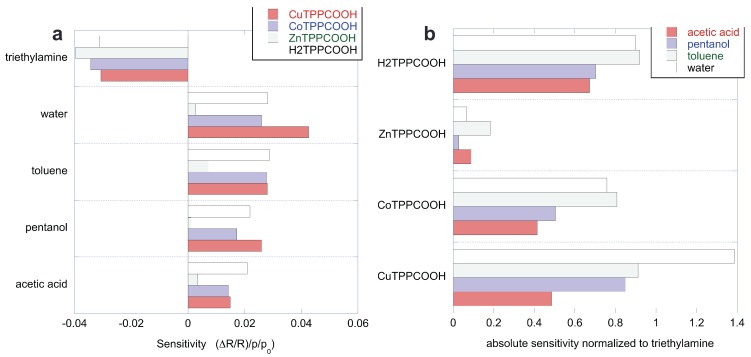
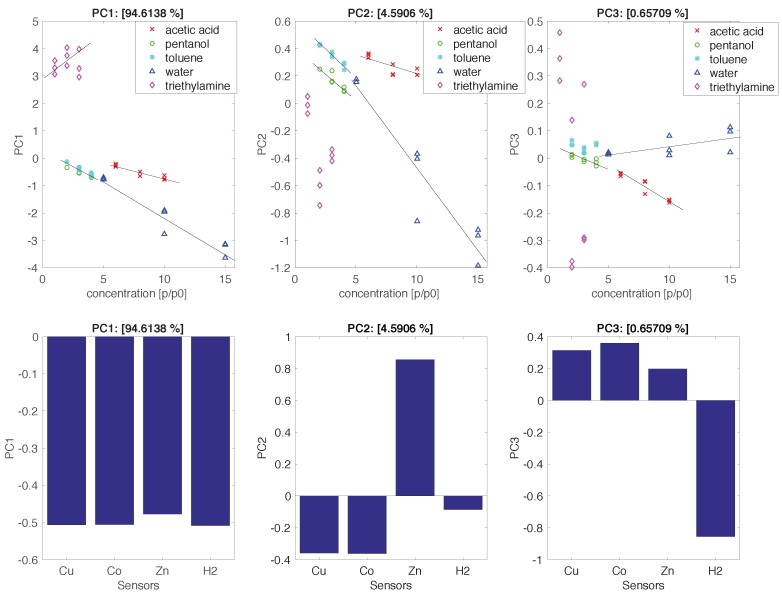
Chemoresistors working at room temperature are attractive for low-consumption integrated sensors. Previous studies show that this feature can be obtained with photoconductive porphyrins-coated ZnO nanostructures. Furthermore, variations of the porphyrin molecular structure alter both the chemical sensitivity and the photoconductivity, and can be used to define the sensor characteristics. Based on these assumptions, we investigated the properties of an array of four sensors made of a layer of ZnO nanoparticles coated with porphyrins with the same molecular framework but different metal atoms. The array was tested with five volatile organic compounds (VOCs), each measured at different concentrations. Results confirm that the features of individual porphyrins influence the sensor behavior, and the differences among sensors are enough to enable the discrimination of volatile compounds disregarding their concentration.
室温下工作的化学电阻器对于低功耗集成传感器具有吸引力。先前的研究表明,这种特性可以通过涂有光导卟啉的ZnO纳米结构来实现。此外,卟啉分子结构的变化会改变化学灵敏度和光电导率,并可用于定义传感器特性。基于这些假设,我们研究了由一层涂有具有相同分子框架但不同金属原子的卟啉的ZnO纳米颗粒制成的四个传感器阵列的特性。该阵列用五种挥发性有机化合物(VOC)进行测试,每种化合物在不同浓度下进行测量。结果证实,单个卟啉的特性会影响传感器行为,并且传感器之间的差异足以实现对挥发性化合物的区分,而不考虑其浓度。