Tain You-Lin, Lin Yu-Ju, Sheen Jiunn-Ming, Yu Hong-Ren, Tiao Mao-Meng, Chen Chih-Cheng, Tsai Ching-Chou, Huang Li-Tung, Hsu Chien-Ning
Department of Pediatrics, Kaohsiung Chang Gung Memorial Hospital and Chang Gung University College of Medicine, Kaohsiung 833, Taiwan.
Institute for Translational Research in Biomedicine, Kaohsiung Chang Gung Memorial Hospital and Chang Gung University College of Medicine, Kaohsiung 833, Taiwan.
Nutrients. 2017 Apr 3;9(4):357. doi: 10.3390/nu9040357.
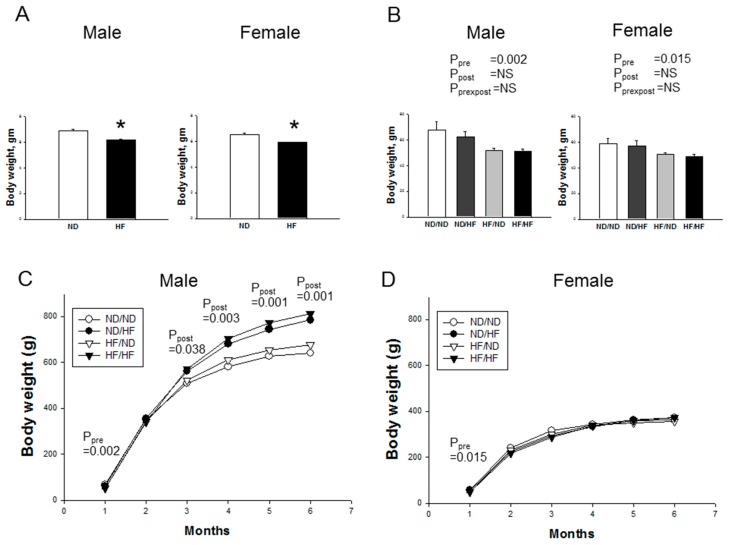
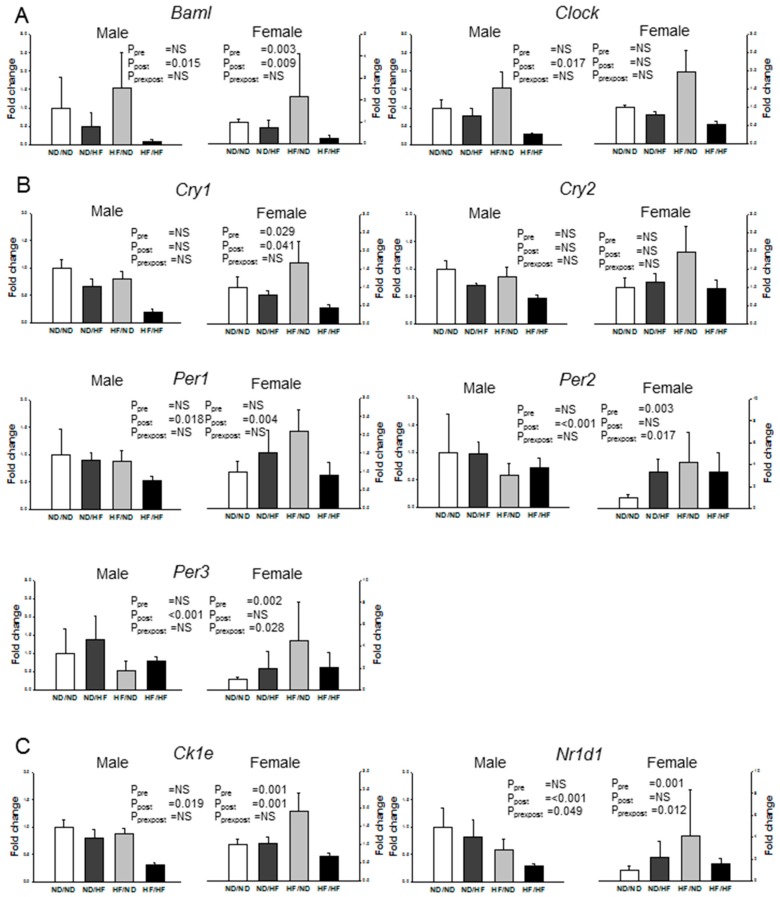
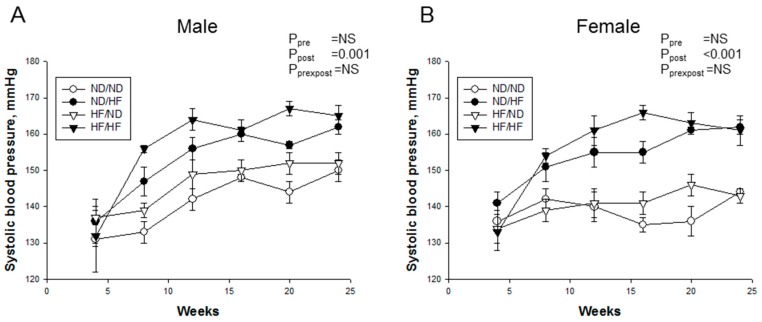
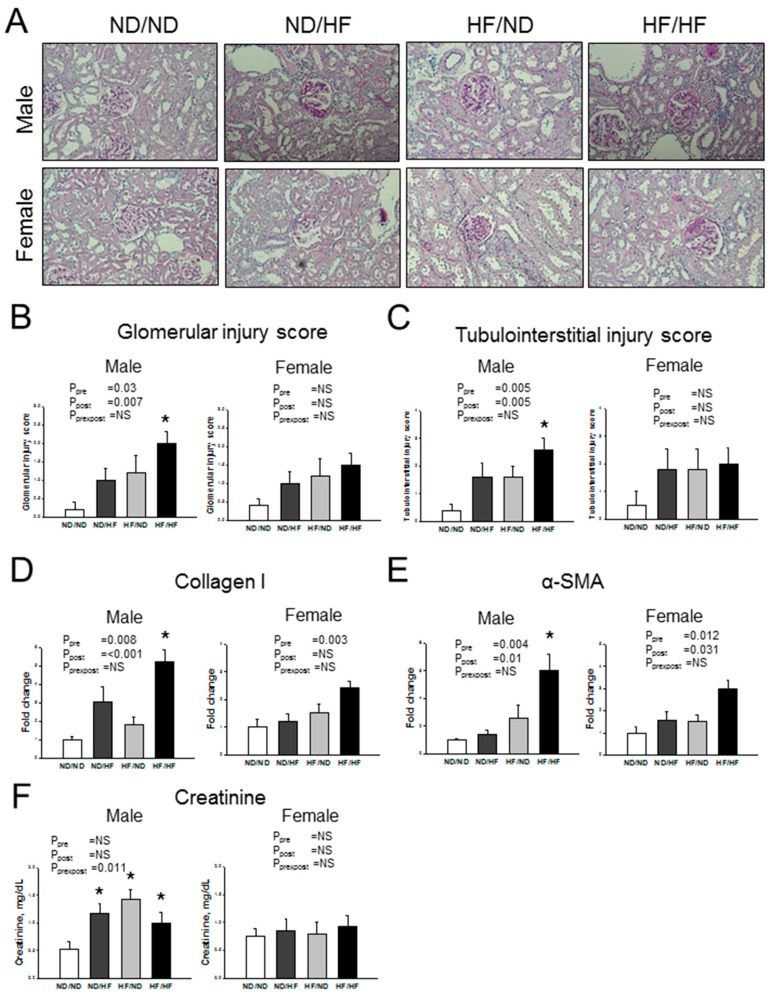
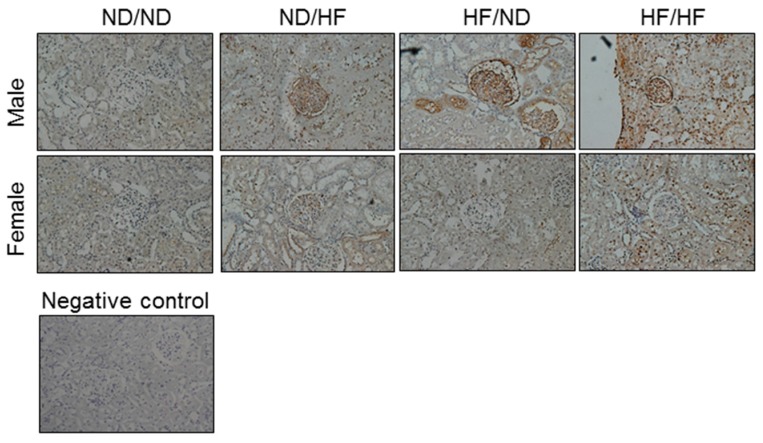
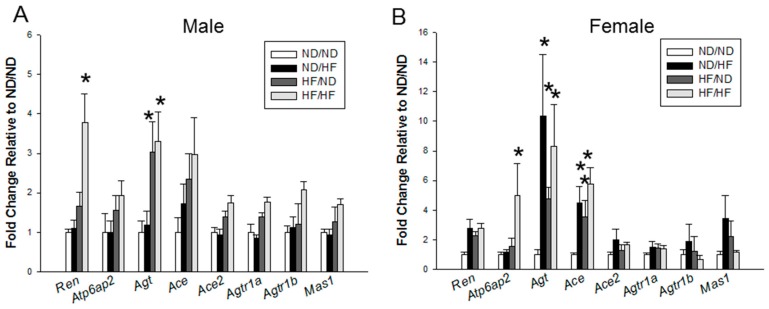
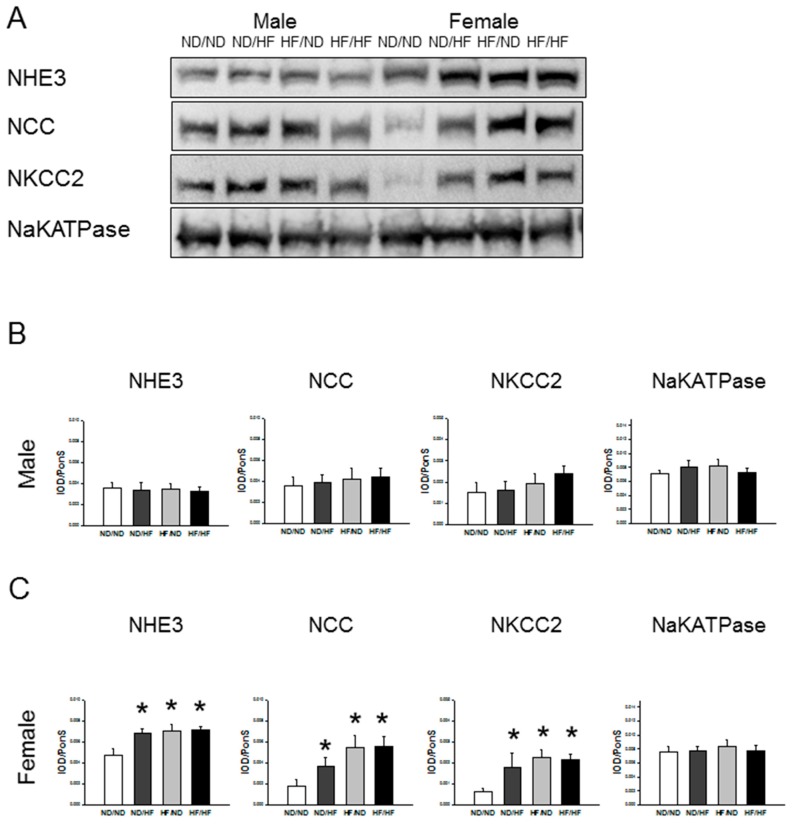
Obesity and related disorders have increased concurrently with an increased consumption of saturated fatty acids. We examined whether post-weaning high fat (HF) diet would exacerbate offspring vulnerability to maternal HF-induced programmed hypertension and kidney disease sex-specifically, with a focus on the kidney. Next, we aimed to elucidate the gene-diet interactions that contribute to maternal HF-induced renal programming using the next generation RNA sequencing (NGS) technology. Female Sprague-Dawley rats received either a normal diet (ND) or HF diet (D12331, Research Diets) for five weeks before the delivery. The offspring of both sexes were put on either the ND or HF diet from weaning to six months of age, resulting in four groups of each sex (maternal diet/post-weaning diet; = 5-7/group): ND/ND, ND/HF, HF/ND, and HF/HF. Post-weaning HF diet increased bodyweights of both ND/HF and HF/HF animals from three to six months only in males. Post-weaning HF diet increased systolic blood pressure in male and female offspring, irrespective of whether they were exposed to maternal HF or not. Male HF/HF offspring showed greater degrees of glomerular and tubular injury compared to the ND/ND group. Our NGS data showed that maternal HF diet significantly altered renal transcriptome with female offspring being more HF-sensitive. HF diet induced hypertension and renal injury are associated with oxidative stress, activation of renin-angiotensin system, and dysregulated sodium transporters and circadian clock. Post-weaning HF diet sex-specifically exacerbates the development of obesity, kidney injury, but not hypertension programmed by maternal HF intake. Better understanding of the sex-dependent mechanisms that underlie HF-induced renal programming will help develop a novel personalized dietary intervention to prevent obesity and related disorders.
肥胖及相关疾病的增加与饱和脂肪酸摄入量的增加同时出现。我们研究了断奶后高脂(HF)饮食是否会使后代对母体HF诱导的程序性高血压和肾脏疾病的易感性在性别上有所加剧,重点关注肾脏。接下来,我们旨在利用下一代RNA测序(NGS)技术阐明导致母体HF诱导的肾脏编程的基因-饮食相互作用。雌性Sprague-Dawley大鼠在分娩前5周接受正常饮食(ND)或HF饮食(D12331,Research Diets)。两性后代从断奶到6个月龄接受ND或HF饮食,从而产生每组性别各4组(母体饮食/断奶后饮食;每组n = 5 - 7):ND/ND、ND/HF、HF/ND和HF/HF。断奶后HF饮食仅在雄性中使ND/HF和HF/HF动物从3个月到6个月的体重增加。断奶后HF饮食增加了雄性和雌性后代的收缩压,无论它们是否暴露于母体HF。与ND/ND组相比,雄性HF/HF后代表现出更大程度的肾小球和肾小管损伤。我们的NGS数据表明,母体HF饮食显著改变了肾脏转录组,雌性后代对HF更敏感。HF饮食诱导的高血压和肾损伤与氧化应激、肾素-血管紧张素系统的激活、钠转运体失调和生物钟紊乱有关。断奶后HF饮食在性别上特异性地加剧了肥胖、肾损伤的发展,但没有加剧母体HF摄入所编程的高血压。更好地理解HF诱导的肾脏编程背后的性别依赖性机制将有助于开发一种新型的个性化饮食干预措施,以预防肥胖及相关疾病。