Center for Magnetic Resonance Research, Department of Radiology, University of Minnesota, Minneapolis, Minnesota, USA.
Athinoula A. Martinos Center for Biomedical Imaging, Department of Radiology, Massachusetts General Hospital and Harvard Medical School, Boston, Massachusetts, USA.
Magn Reson Med. 2018 Jan;79(1):479-488. doi: 10.1002/mrm.26688. Epub 2017 Mar 31.
To validate electromagnetic and thermal simulations with in vivo temperature measurements, and to demonstrate a framework that can be used to predict temperature increase caused by radiofrequency (RF) excitation with dipole transmitter arrays.
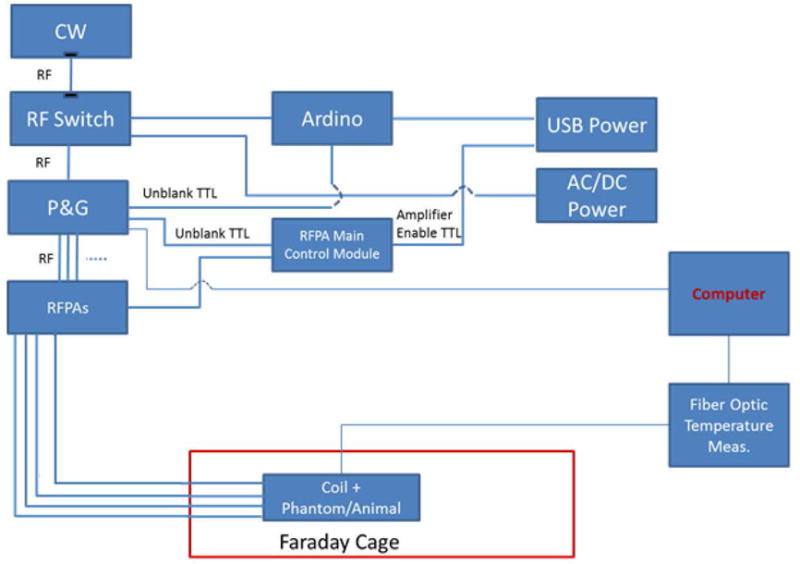
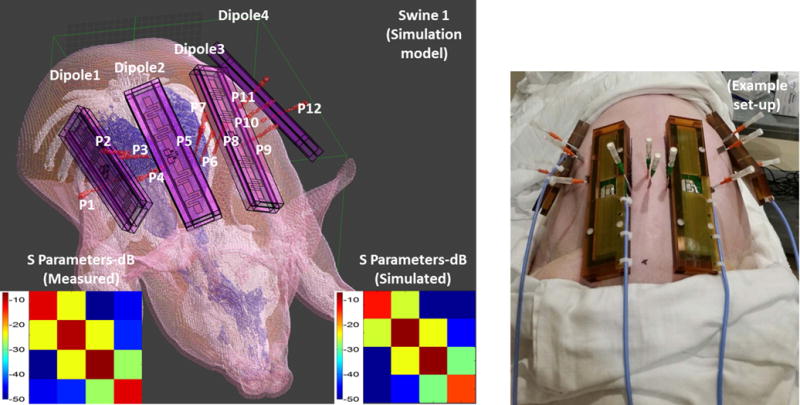
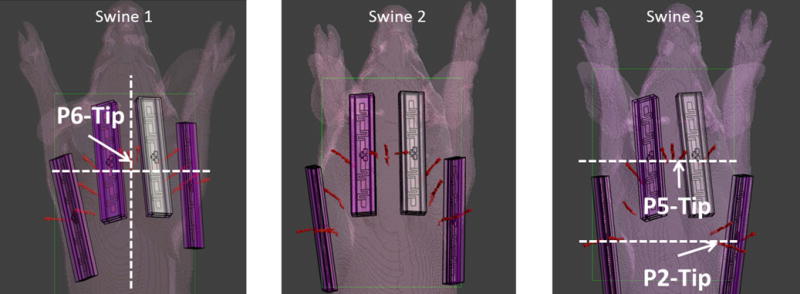
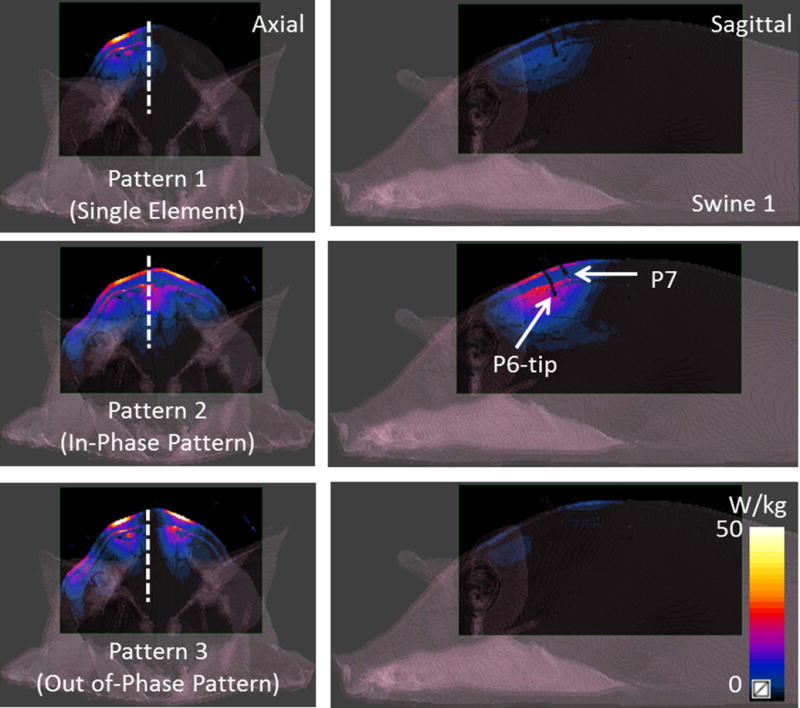
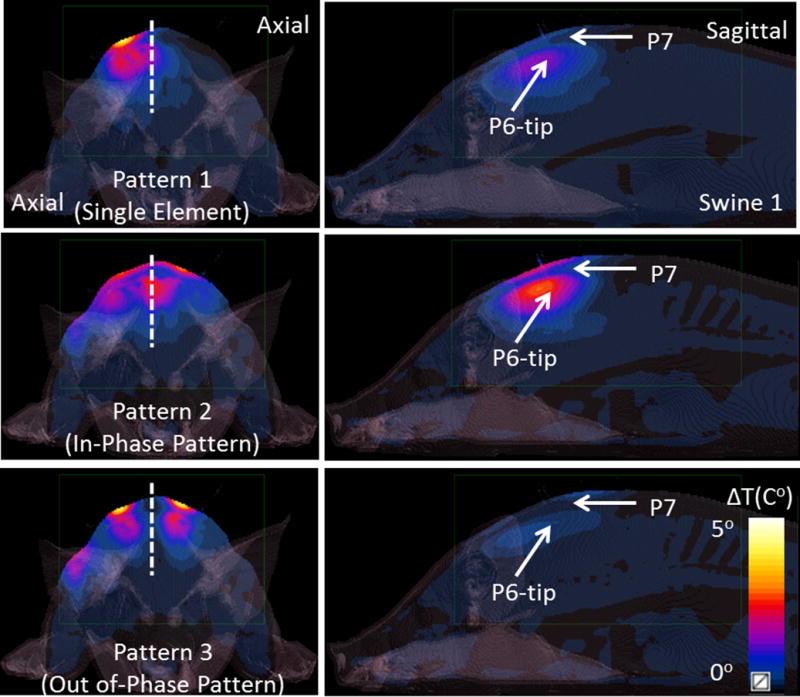
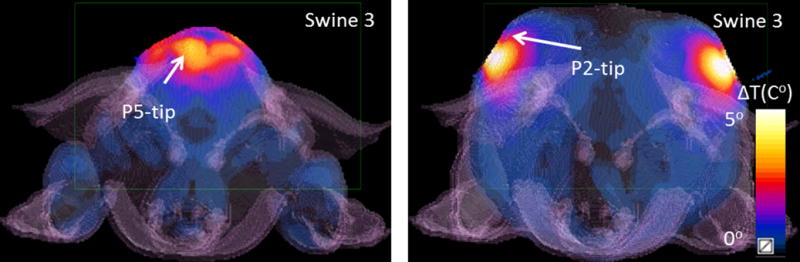
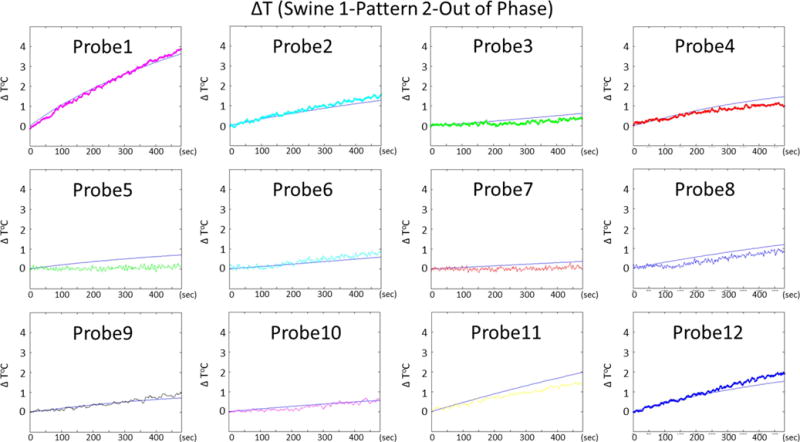
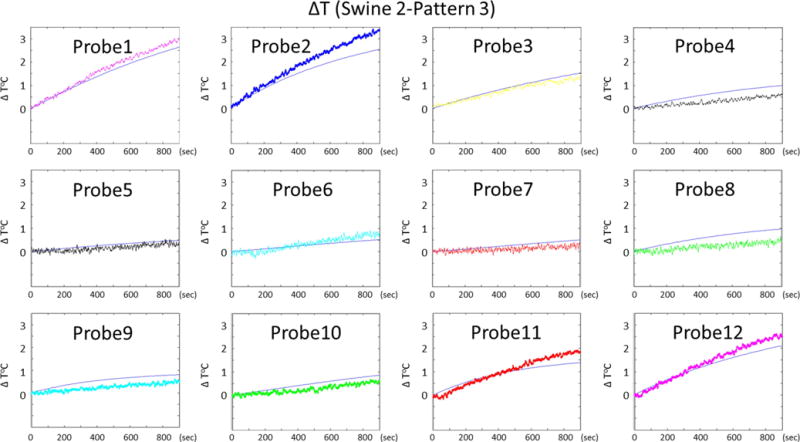
Dipole arrays were used to deliver RF energy in the back/neck region of the swine using different RF excitation patterns (n = 2-4 per swine) for heating. The temperature in anesthetized swine (n = 3) was measured using fluoroscopic probes (n = 12) and compared against thermal modeling from animal-specific electromagnetic simulations.
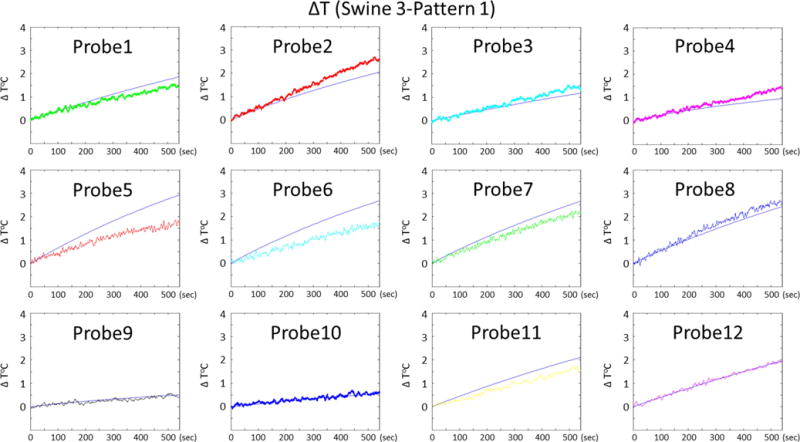
Simulated temperature curves were in agreement with the measured data. The root mean square error between simulated and measured temperature rise at all locations (at the end of each RF excitation) is calculated as 0.37°C. The mean experimental temperature rise at the maximum temperature rise locations (averaged over all experiments) is calculated as 2.89°C. The root mean square error between simulated and measured temperature at the maximum temperature rise location is calculated as 0.57°C. (Error values are averaged over all experiments.) CONCLUSIONS: Electromagnetic and thermal simulations were validated with experiments. Thermal effects of RF excitation at 10.5 Tesla with dipoles were investigated. Magn Reson Med 79:479-488, 2018. © 2017 International Society for Magnetic Resonance in Medicine.
通过体内温度测量验证电磁和热模拟,并展示一个可用于预测射频(RF)激发引起的温度升高的框架,使用偶极子发射天线。
使用偶极子天线在猪的背部/颈部区域传递 RF 能量,使用不同的 RF 激励模式(每个猪 2-4 个)进行加热。使用荧光透视探头(每个猪 12 个)测量麻醉猪(n = 3)的温度,并与动物特定电磁模拟的热模型进行比较。
模拟温度曲线与测量数据一致。在所有位置(在每次 RF 激励结束时)模拟和测量温升之间的均方根误差计算为 0.37°C。在最大温升位置(所有实验的平均值)的平均实验温升计算为 2.89°C。在最大温升位置,模拟和测量温度之间的均方根误差计算为 0.57°C。(误差值在所有实验中平均。)结论:电磁和热模拟已通过实验验证。研究了在 10.5 Tesla 下使用偶极子激发的射频热效应。磁共振医学 79:479-488, 2018。© 2017 国际磁共振学会。