van der Veen Jan Willem, Marenco Stefano, Berman Karen F, Shen Jun
Magnetic Resonance Spectroscopy Core Facility, NIMH-Intramural Research Program (IRP), National Institute of Mental Health, National Institutes of Health, Bethesda, MD, USA.
Clinical and Translational Neuroscience Branch, NIMH-Intramural Research Program (IRP), National Institute of Mental Health, National Institutes of Health, Bethesda, MD, USA.
NMR Biomed. 2017 Aug;30(8). doi: 10.1002/nbm.3725. Epub 2017 Apr 3.
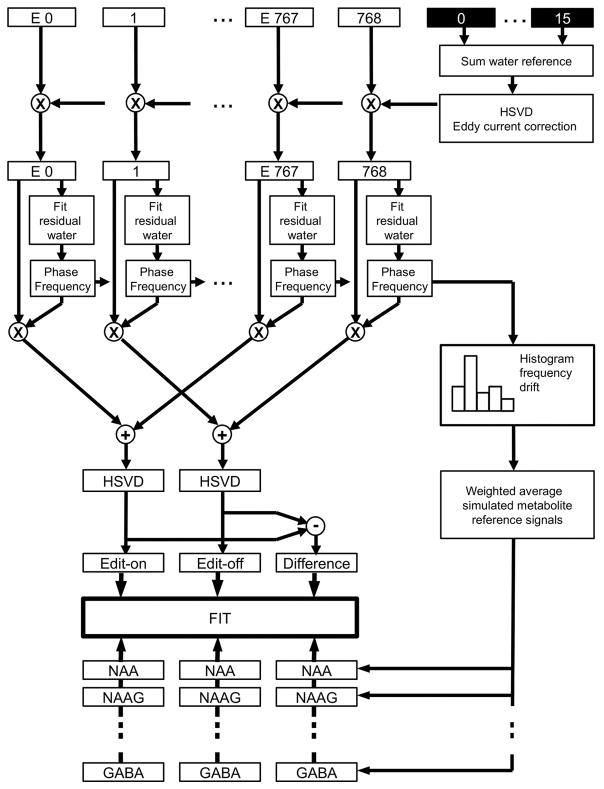
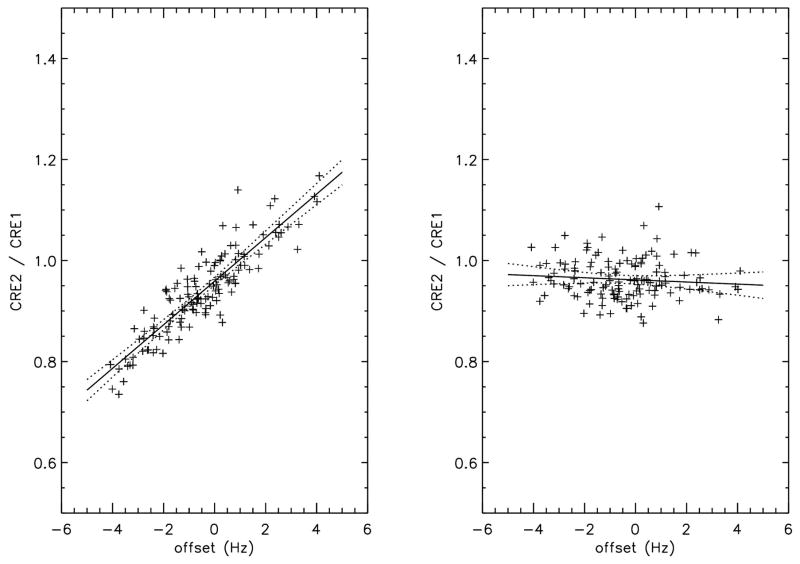
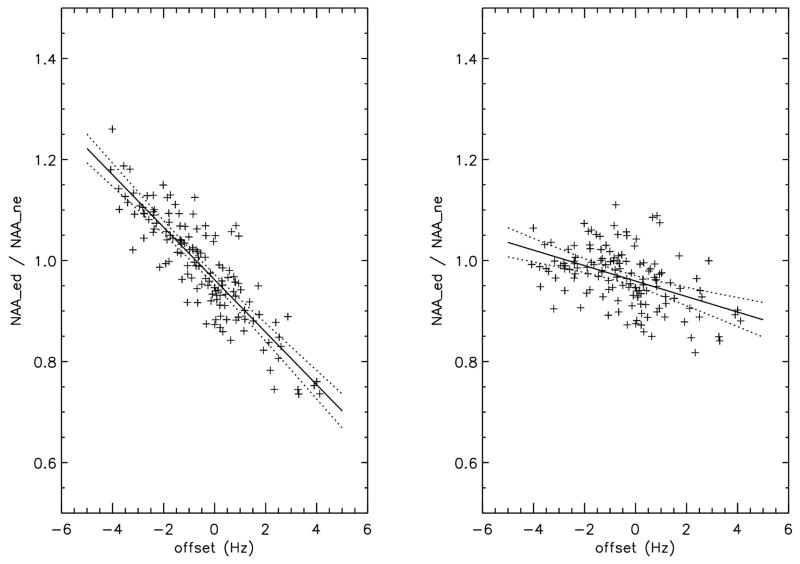
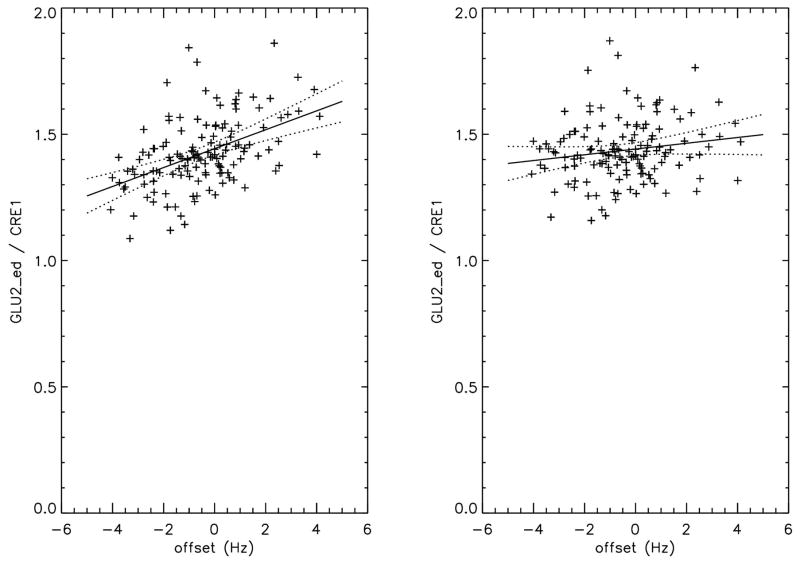
GABA levels can be measured using proton MRS with a two-step editing sequence. However due to the low concentration of GABA, long acquisition time is usually needed to achieve sufficient SNR to detect small differences in many psychiatric disorders. During this long scan time the frequency offset of the measured voxel can change because of magnetic field drift and patient movement. This drift will change the frequency of the editing pulse relative to that of metabolites, leading to errors in quantification. In this article we describe a retrospective method to correct for frequency drift in spectral editing. A series of reference signals for each metabolite was generated for a range of frequency offsets and then averaged together based on the history of frequency changes over the scan. These customized basis sets were used to fit the in vivo data. Our results demonstrate the effectiveness of the correction method and the remarkable robustness of a GABA editing technique with a top hat editing profile in the presence of frequency drift.
γ-氨基丁酸(GABA)水平可以通过质子磁共振波谱法(proton MRS)采用两步编辑序列进行测量。然而,由于GABA浓度较低,通常需要较长的采集时间才能获得足够的信噪比(SNR),以检测许多精神疾病中的微小差异。在这段较长的扫描时间内,由于磁场漂移和患者移动,所测体素的频率偏移可能会发生变化。这种漂移会改变编辑脉冲相对于代谢物的频率,从而导致定量误差。在本文中,我们描述了一种校正频谱编辑中频率漂移的回顾性方法。针对一系列频率偏移,为每种代谢物生成了一系列参考信号,然后根据扫描过程中频率变化的历史将它们平均在一起。这些定制的基集用于拟合体内数据。我们的结果证明了校正方法在存在频率漂移时的有效性,以及具有顶帽编辑轮廓的GABA编辑技术的显著稳健性。