Ferrari Daniela, Cimino Francesco, Fratantonio Deborah, Molonia Maria Sofia, Bashllari Romina, Busà Rossana, Saija Antonella, Speciale Antonio
Department of Chemical, Biological, Pharmaceutical and Environmental Sciences, University of Messina, 98168 Messina, Italy.
Mediators Inflamm. 2017;2017:3454023. doi: 10.1155/2017/3454023. Epub 2017 Mar 8.
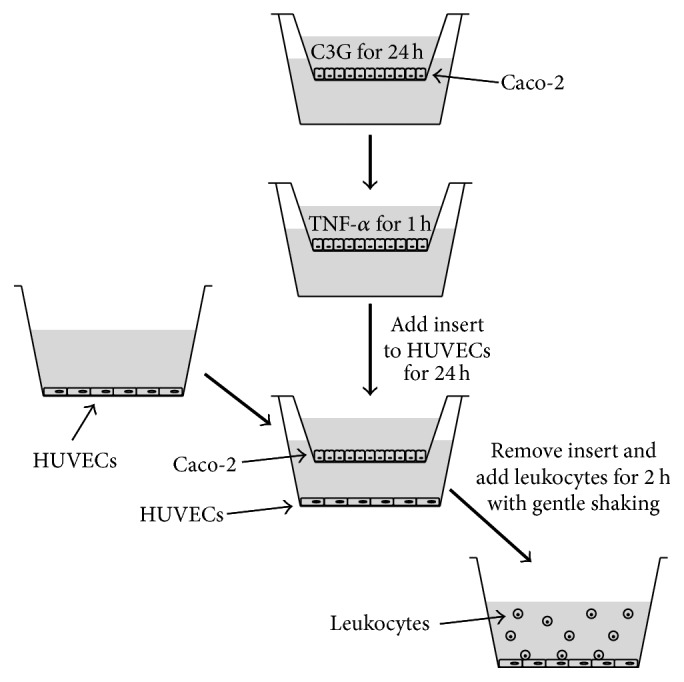
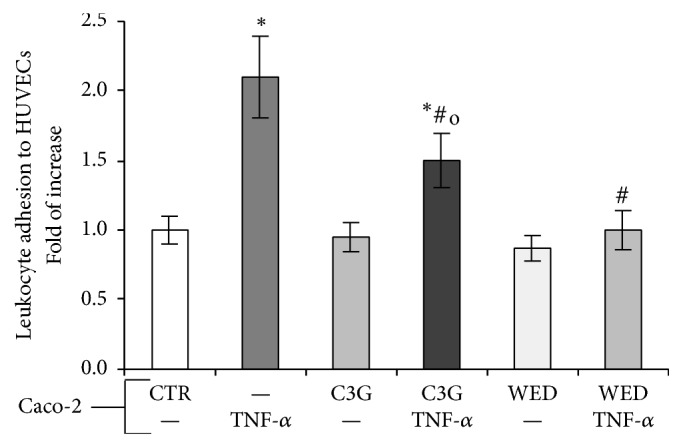
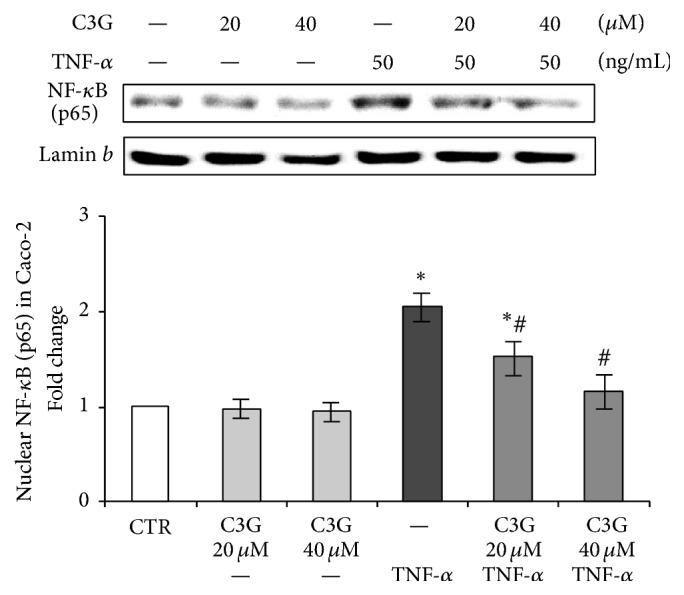
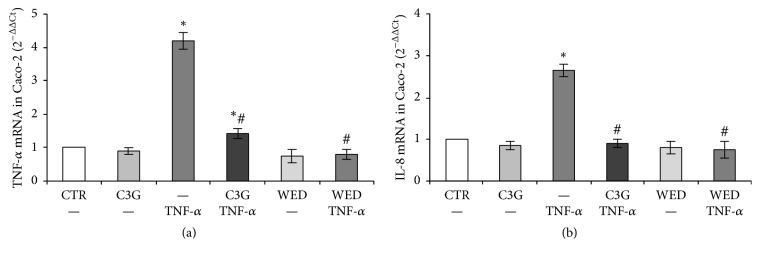
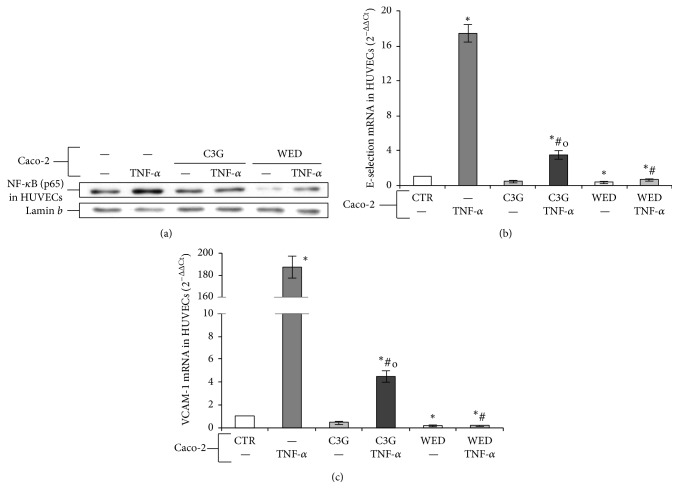
Intestinal epithelium represents a protective physical barrier and actively contributes to the mucosal immune system. Polarized basolateral intestinal secretion of inflammatory mediators, followed by activation of NF-B signaling and inflammatory pathways in endothelial cells, efficiently triggers extravasation of neutrophils from the vasculature, therefore contributing to the development and maintenance of intestinal inflammation. Proper regulation of NF-B activation at the epithelial interface is crucial for the maintenance of physiological tissue homeostasis. Many papers reported that anthocyanins, a group of compounds belonging to flavonoids, possess anti-inflammatory effects and modulate NF-B activity. In this study, by using a coculture in vitro system, we aimed to evaluate the effects of TNF--stimulated intestinal cells on endothelial cells activation, as well as the protective effects of cyanidin-3-glucoside (C3G). In this model, TNF- induced nuclear translocation of NF-B and TNF- and IL-8 gene expression in Caco-2 cells, whereas C3G pretreatment dose-dependently reduced these effects. Furthermore, TNF--stimulated Caco-2 cells induced endothelial cells activation with increased E-selectin and VCAM-1 mRNA, leukocyte adhesion, and NF-B levels in HUVECs, which were inhibited by C3G. We demonstrated that selective inhibition of the NF-B pathway in epithelial cells represents the main mechanism by which C3G exerts these protective effects. Thus, anthocyanins could contribute to the management of chronic gut inflammatory diseases.
肠上皮是一道保护性物理屏障,并积极参与黏膜免疫系统。炎性介质在肠上皮细胞基底外侧极化分泌,随后激活内皮细胞中的NF-κB信号传导和炎性通路,从而有效触发中性粒细胞从脉管系统外渗,进而促进肠道炎症的发生和维持。上皮界面处NF-κB激活的适当调节对于维持生理组织稳态至关重要。许多论文报道,花色苷(一类属于黄酮类的化合物)具有抗炎作用并调节NF-κB活性。在本研究中,我们通过使用体外共培养系统,旨在评估肿瘤坏死因子-α(TNF-α)刺激的肠细胞对内皮细胞激活的影响,以及花青素-3-葡萄糖苷(C3G)的保护作用。在该模型中,TNF-α诱导Caco-2细胞中NF-κB的核转位以及TNF-α和白细胞介素-8(IL-8)基因表达,而C3G预处理则剂量依赖性地降低这些作用。此外,TNF-α刺激的Caco-2细胞诱导内皮细胞激活,导致人脐静脉内皮细胞(HUVECs)中E-选择素和血管细胞黏附分子-1(VCAM-1)mRNA增加、白细胞黏附以及NF-κB水平升高,而C3G可抑制这些变化。我们证明,上皮细胞中NF-κB途径的选择性抑制是C3G发挥这些保护作用的主要机制。因此,花色苷可能有助于慢性肠道炎性疾病的治疗。