Arndt Andrew, LeBlanc Rachelle, Spafford Peter
College of Medicine, University of Saskatchewan, Saskatoon, SK, Canada.
Clinical Professor and Division Head: Otolaryngology - Head & Neck Surgery, College of Medicine, University of Saskatchewan, Saskatoon, Saskatchewan, Canada.
J Otolaryngol Head Neck Surg. 2017 Apr 4;46(1):26. doi: 10.1186/s40463-017-0198-y.
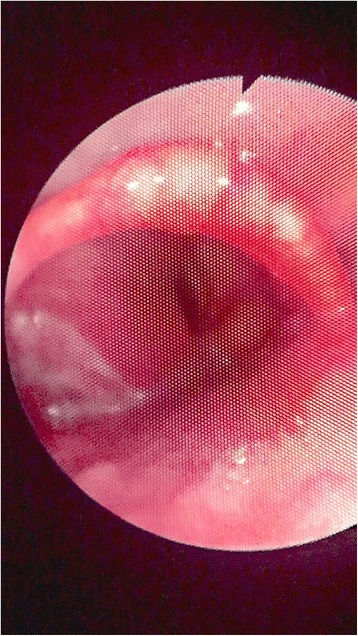
Giant cell tumors (GCTs) are typically found in the metaphyseal-epiphyseal area of long bones but can also occur in the head and neck region. GCT of the larynx is a rare entity with only 42 reported cases in the international literature. Furthermore, to the best of our knowledge this is the largest laryngeal GCT reported in the literature to date. GCT of the larynx can present with dysphonia, dyspnea, and/or dysphagia and should be considered in the differential diagnosis of a neck mass.
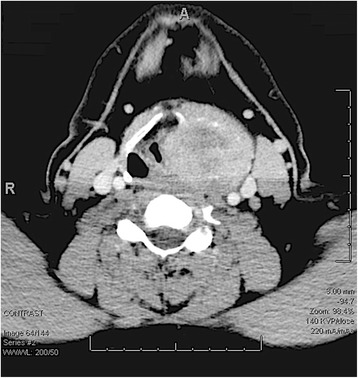
This case report describes a giant cell tumor of the left thyroid cartilage in a 30-year-old man who initially presented with dysphonia and dysphagia. Computed tomography (CT) revealed a 5 × 5.7 cm mass centered on the left thyroid cartilage, which was further diagnosed by histopathology as giant cell tumour by open biopsy. The patient was counselled on treatment options and it was decided to proceed with a surgical approach. The patient consented to and successfully underwent a total laryngectomy (TL). Currently the patient has no evidence of disease at 13 months follow-up, has an optimal prosthetic voice, and is able to tolerate all textures of foods.
GCTs of the larynx have a good prognosis and can be treated successfully through complete resection of the tumor, negating the need for adjunctive therapy such as radiation, chemo or denosumab therapy.
骨巨细胞瘤(GCTs)通常发生于长骨的干骺端-骨骺区域,但也可出现在头颈部。喉骨巨细胞瘤是一种罕见的疾病,国际文献中仅报道了42例。此外,据我们所知,这是迄今为止文献报道中最大的喉骨巨细胞瘤。喉骨巨细胞瘤可表现为声音嘶哑、呼吸困难和/或吞咽困难,在颈部肿块的鉴别诊断中应予以考虑。
本病例报告描述了一名30岁男性的左甲状软骨骨巨细胞瘤,该患者最初表现为声音嘶哑和吞咽困难。计算机断层扫描(CT)显示一个以左甲状软骨为中心的5×5.7厘米肿块,经开放活检,组织病理学进一步诊断为骨巨细胞瘤。向患者介绍了治疗方案,决定采用手术方法。患者同意并成功接受了全喉切除术(TL)。目前,患者在13个月的随访中没有疾病迹象,有最佳的人工发声,并且能够耐受所有质地的食物。
喉骨巨细胞瘤预后良好,通过肿瘤的完全切除可以成功治疗,无需放疗、化疗或地诺单抗治疗等辅助治疗。