Department of Regenerative Medicine and Tissue Engineering, National Cerebral and Cardiovascular Center, 5-7-1 Fujishiro-dai, Suita, Osaka, 565-8565, Japan.
Department of Neurology, Kyoto University Graduate School of Medicine, Kyoto, 606-8507, Japan.
Acta Neuropathol Commun. 2017 Apr 4;5(1):26. doi: 10.1186/s40478-017-0429-5.
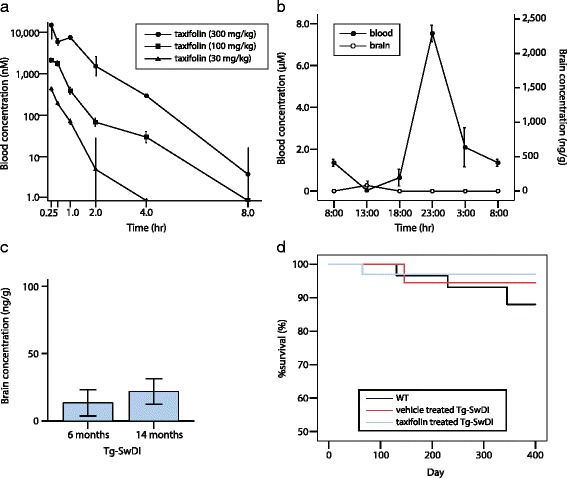
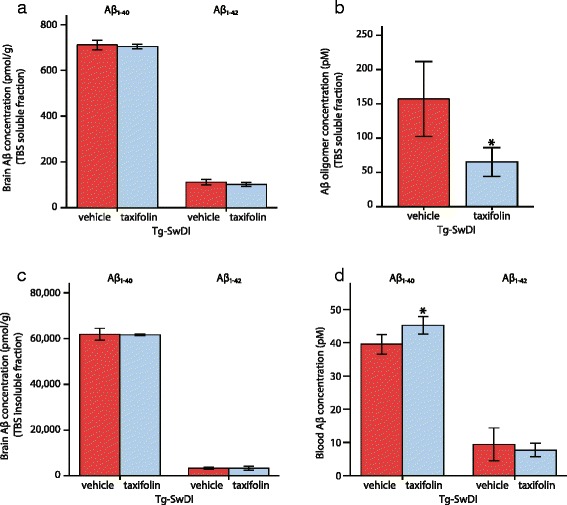
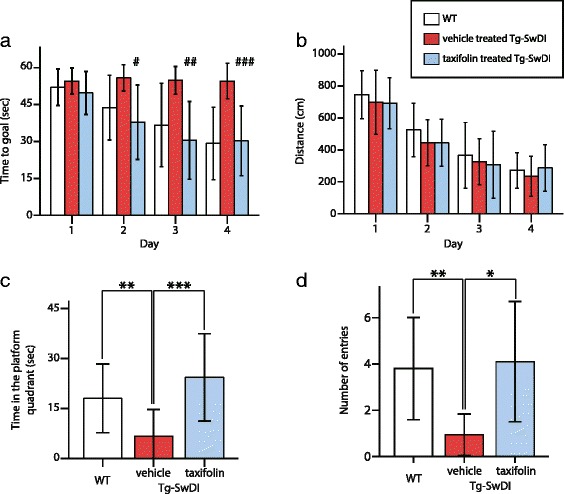
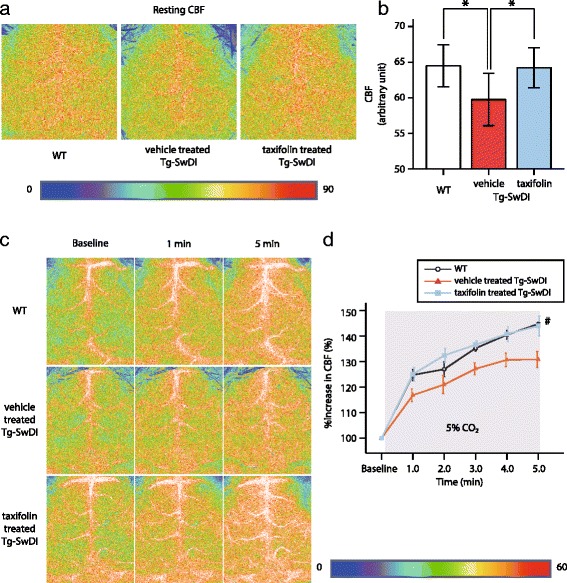
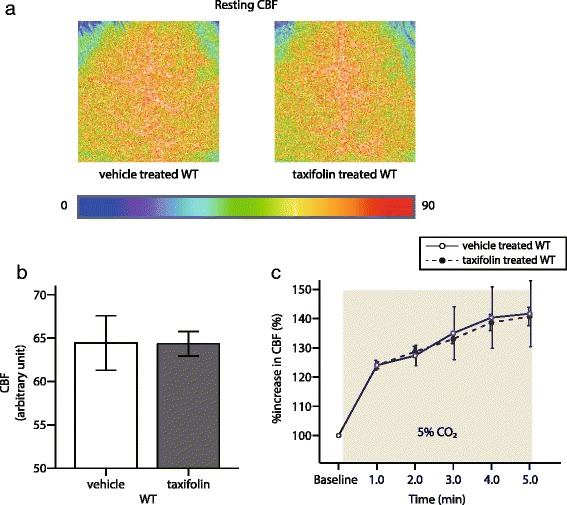
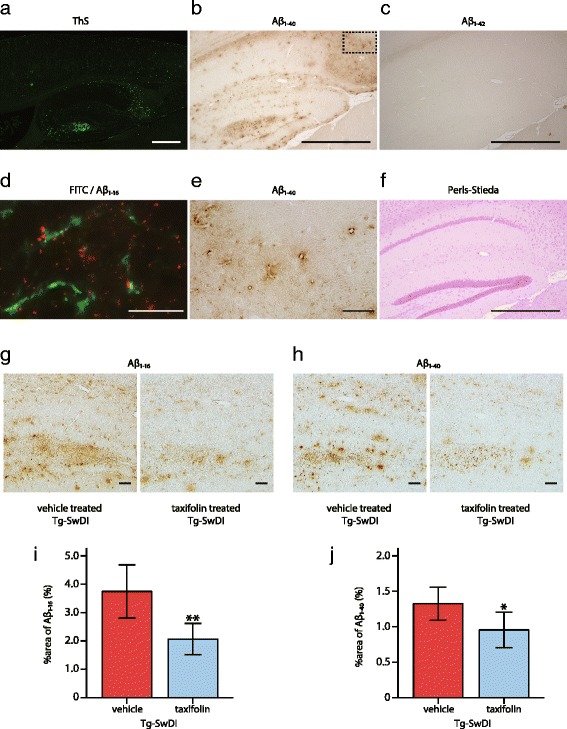
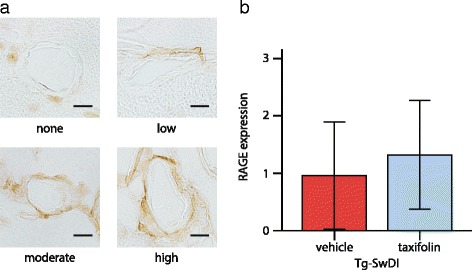
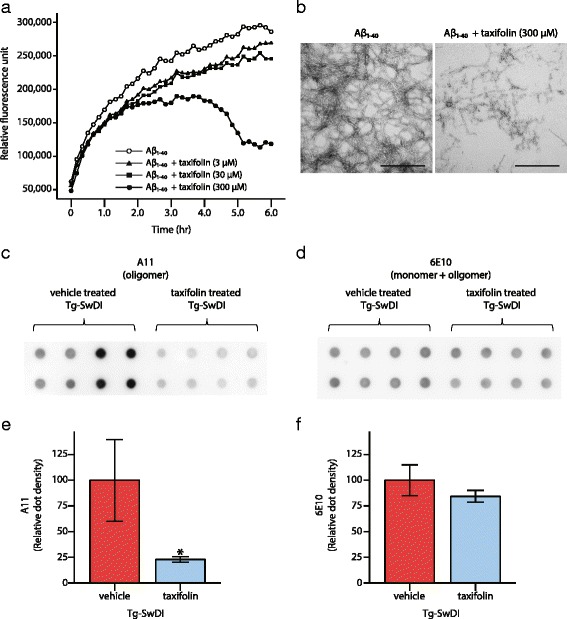
Cerebral amyloid angiopathy (CAA) induces various forms of cerebral infarcts and hemorrhages from vascular amyloid-β accumulation, resulting in acceleration of cognitive impairment, which is currently untreatable. Soluble amyloid-β protein likely impairs cerebrovascular integrity as well as cognitive function in early stage Alzheimer's disease. Taxifolin, a flavonol with strong anti-oxidative and anti-glycation activities, has been reported to disassemble amyloid-β in vitro but the in vivo relevance remains unknown. Here, we investigated whether taxifolin has therapeutic potential in attenuating CAA, hypothesizing that inhibiting amyloid-β assembly may facilitate its clearance through several elimination pathways. Vehicle- or taxifolin-treated Tg-SwDI mice (commonly used to model CAA) were used in this investigation. Cognitive and cerebrovascular function, as well as the solubility and oligomerization of brain amyloid-β proteins, were investigated. Spatial reference memory was assessed by water maze test. Cerebral blood flow was measured with laser speckle flowmetry and cerebrovascular reactivity evaluated by monitoring cerebral blood flow changes in response to hypercapnia. Significantly reduced cerebrovascular pan-amyloid-β and amyloid-β accumulation was found in taxifolin-treated Tg-SwDI mice compared to vehicle-treated counterparts (n = 5). Spatial reference memory was severely impaired in vehicle-treated Tg-SwDI mice but normalized after taxifolin treatment, with scoring similar to wild type mice (n = 10-17). Furthermore, taxifolin completely restored decreased cerebral blood flow and cerebrovascular reactivity in Tg-SwDI mice (n = 4-6). An in vitro thioflavin-T assay showed taxifolin treatment resulted in efficient inhibition of amyloid-β assembly. In addition, a filter trap assay and ELISA showed Tg-SwDI mouse brain homogenates exhibited significantly reduced levels of amyloid-β oligomers in vivo after taxifolin treatment (n = 4-5), suggesting the effects of taxifolin on CAA are attributable to the inhibition of amyloid-β oligomer formation. In conclusion, taxifolin prevents amyloid-β oligomer assembly and fully sustains cognitive and cerebrovascular function in a CAA model mice. Taxifolin thus appears a promising therapeutic approach for CAA.
脑淀粉样血管病(CAA)通过血管淀粉样β的积累导致各种形式的脑梗死和脑出血,从而加速认知障碍,目前尚无治疗方法。可溶性淀粉样β蛋白可能在阿尔茨海默病早期损害脑血管完整性和认知功能。三羟异黄酮,一种具有强抗氧化和抗糖化活性的类黄酮,已被报道可在体外分解淀粉样β,但体内相关性尚不清楚。在这里,我们研究了三羟异黄酮是否具有减轻 CAA 的治疗潜力,假设抑制淀粉样β的组装可能通过几种消除途径促进其清除。本研究使用了载体或三羟异黄酮处理的 Tg-SwDI 小鼠(常用于模拟 CAA)。研究了认知和脑血管功能,以及脑淀粉样β蛋白的可溶性和寡聚化。通过水迷宫测试评估空间参考记忆。使用激光散斑流量测量法测量脑血流,通过监测脑血流对高碳酸血症的变化来评估脑血管反应性。与载体处理的 Tg-SwDI 小鼠相比,三羟异黄酮处理的 Tg-SwDI 小鼠的脑血管全淀粉样β和淀粉样β积聚显著减少(n=5)。载体处理的 Tg-SwDI 小鼠的空间参考记忆严重受损,但经三羟异黄酮处理后恢复正常,评分与野生型小鼠相似(n=10-17)。此外,三羟异黄酮完全恢复了 Tg-SwDI 小鼠的脑血流和脑血管反应性下降(n=4-6)。硫黄素-T 比色法显示三羟异黄酮处理可有效抑制淀粉样β的组装。此外,滤膜陷阱测定和 ELISA 显示,经三羟异黄酮处理后,Tg-SwDI 小鼠脑匀浆中体内淀粉样β寡聚物水平显著降低(n=4-5),表明三羟异黄酮对 CAA 的作用归因于抑制淀粉样β寡聚物的形成。总之,三羟异黄酮可防止淀粉样β寡聚物的组装,并完全维持 CAA 模型小鼠的认知和脑血管功能。因此,三羟异黄酮似乎是治疗 CAA 的一种有前途的方法。