Rutgers, The State University of New Jersey, Rutgers Cancer Institute of New Jersey, 195 Little Albany Street, Room 5570, New Brunswick, NJ, 08903, USA.
Rutgers, The State University of New Jersey, RWJ-Family Medicine-Research, Institute for Health, Health Care Policy and Aging Research (IFH), 112 Paterson Street, New Brunswick, NJ, 08901, USA.
BMC Psychol. 2017 Apr 4;5(1):11. doi: 10.1186/s40359-017-0181-4.
Many young women experiment with using indoor tanning beds with some becoming regular users. There is a dearth of research focused on factors related to the development of regular tanning. This study was designed to gain an in-depth understanding of the experiences of a regular indoor tanning bed user for the purpose of discovering working hypotheses related to the development of this behavior. The article thesis is that initial interactions with tanning salon employees transmit insider knowledge that serves to encourage the regular use of indoor tanning beyond experimentation.
We used Spradley's ethnographic interviewing technique to conduct six iterative interviews with a key informant who was an active indoor tanning bed user and former salon employee. The research was completed in the United States in 2015.
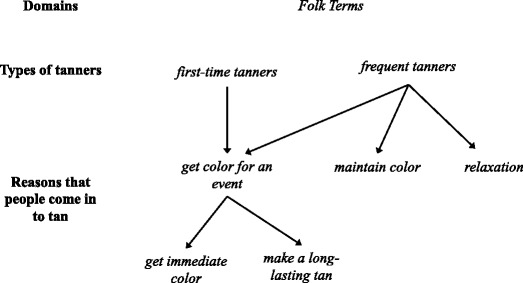
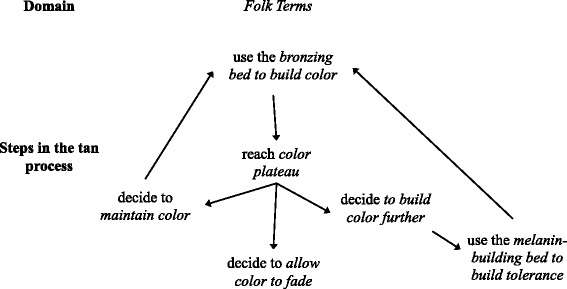
The informant described her experiences as a salon employee including her interactions with salon patrons. The informant was trained as a salon employee to talk about tanning as a complex process that requires multiple salon visits to achieve desired results and to develop rapport with salon patrons to be viewed as an important source of guidance and advice. In the informant's experience, indoor tanning users who viewed tanning as a complex process and felt connected to salon employees were more receptive to purchasing larger amounts of bulk tanning sessions and committing to purchasing salon memberships.
Findings provide insights into our understanding of the development of regular tanning behavior and we propose working hypotheses about this behavior to be examined in future research. There are also implications for policy makers to reduce excessive tanning behaviors including considering point-of-sale regulations that limit sales techniques of salon employees and pricing restrictions.
许多年轻女性尝试使用室内日光浴床,其中一些人成为了常客。目前,针对与定期日光浴相关的因素的研究还很少。本研究旨在深入了解定期使用室内日光浴床者的体验,目的是发现与这种行为发展相关的工作假设。本文的论点是,与沙龙员工的最初互动传递了内部知识,这有助于鼓励定期使用室内日光浴,而不仅仅是尝试。
我们使用斯普拉德利的人种学访谈技术对一位活跃的室内日光浴床使用者和前沙龙员工进行了六次迭代访谈。该研究于 2015 年在美国完成。
受访者描述了她作为沙龙员工的经历,包括她与沙龙顾客的互动。这位受访者接受了作为沙龙员工的培训,她将日光浴描述为一个复杂的过程,需要多次去沙龙才能达到预期的效果,并与沙龙顾客建立融洽的关系,被视为一个重要的指导和建议来源。在受访者的经验中,将日光浴视为一个复杂过程并与沙龙员工有联系的室内日光浴使用者更容易接受购买更多的批量日光浴课程,并承诺购买沙龙会员资格。
研究结果提供了对我们对定期日光浴行为发展的理解的深入了解,我们提出了关于这种行为的工作假设,以在未来的研究中进行检验。对于政策制定者来说,减少过度日光浴行为也有影响,包括考虑限制沙龙员工销售技巧和定价限制的销售点法规。