Department of Orthopedics, Xijing Hospital, Fourth Military Medical University, Xi'an, Shaanxi, China.
Department of Occupational and Environmental Health and the Ministry of Education Key Lab of Hazard Assessment and Control in Special Operational Environment, Fourth Military Medical University, Xi'an, Shaanxi, China.
Sci Rep. 2017 Apr 4;7(1):620. doi: 10.1038/s41598-017-00553-6.
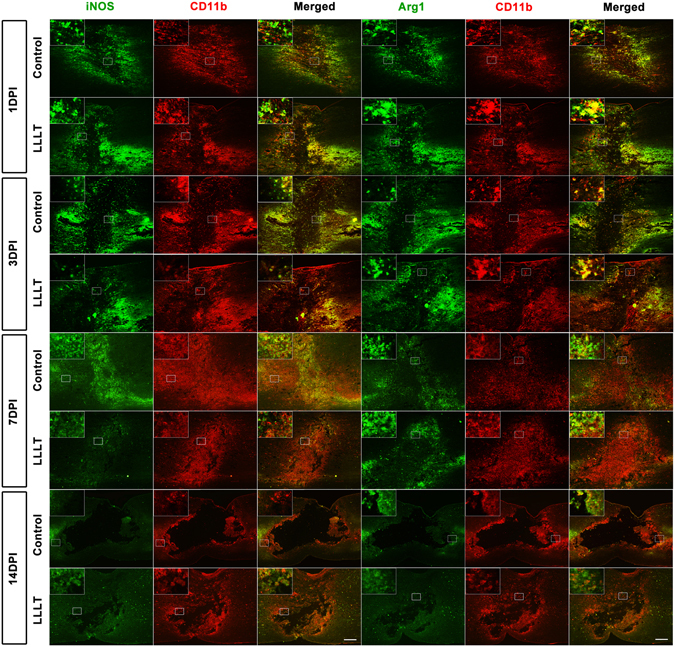
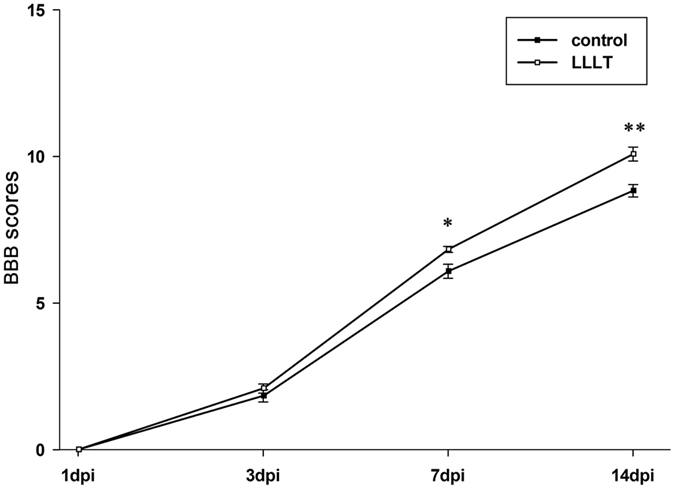
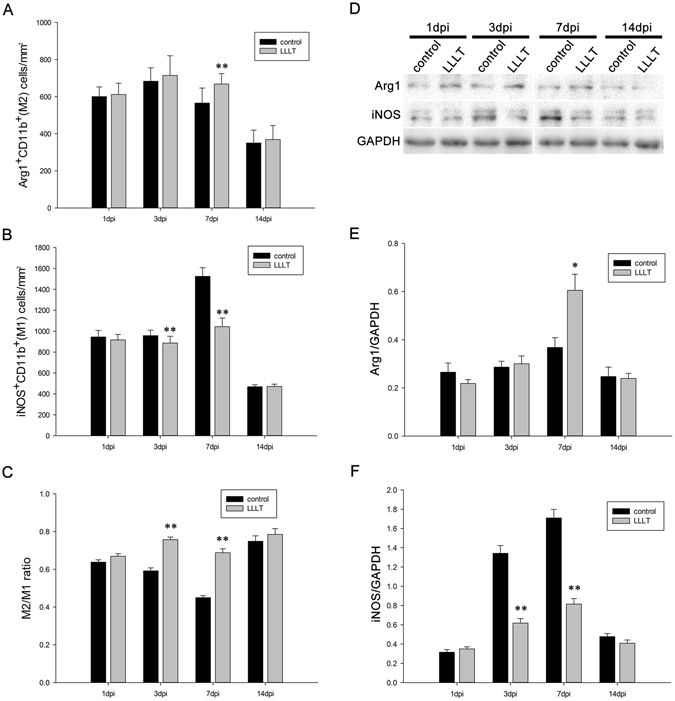
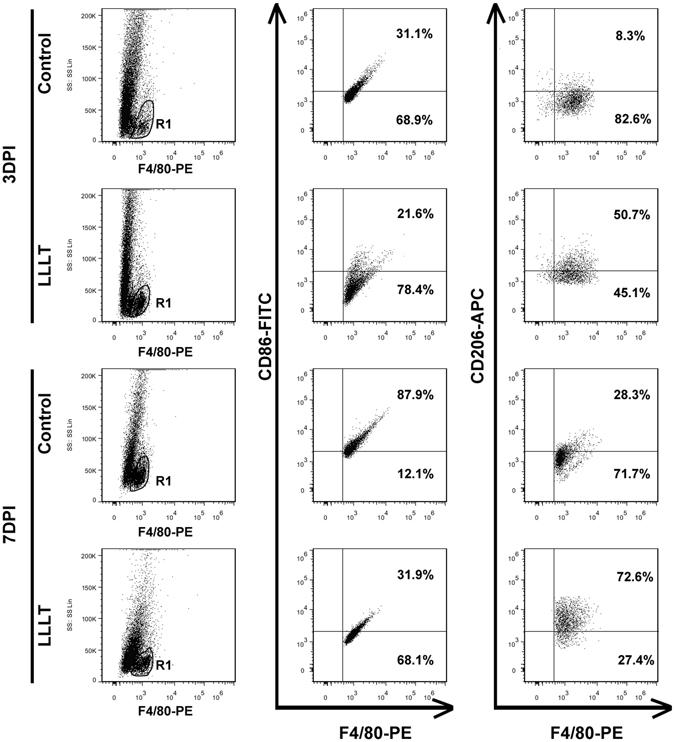
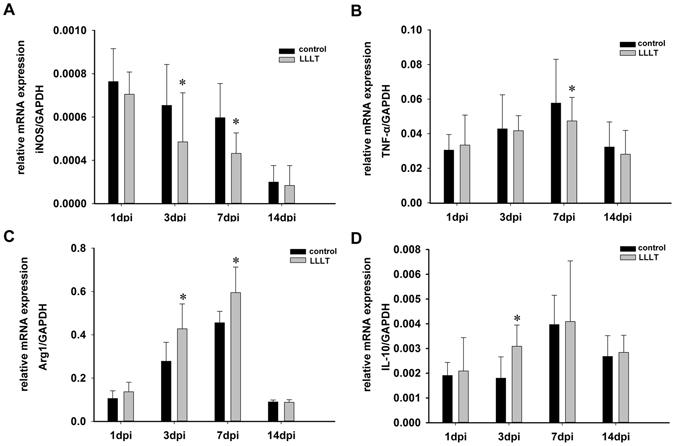
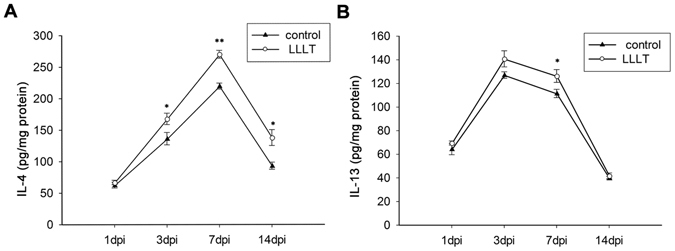
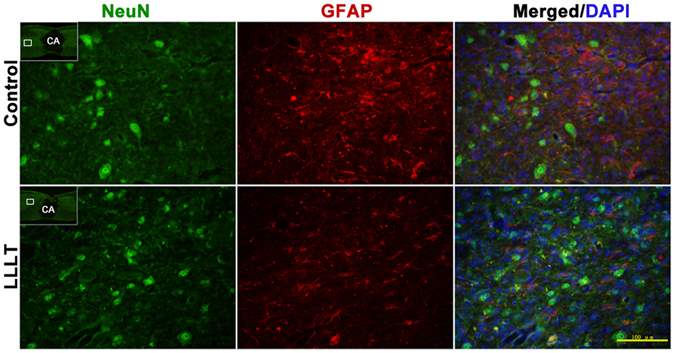
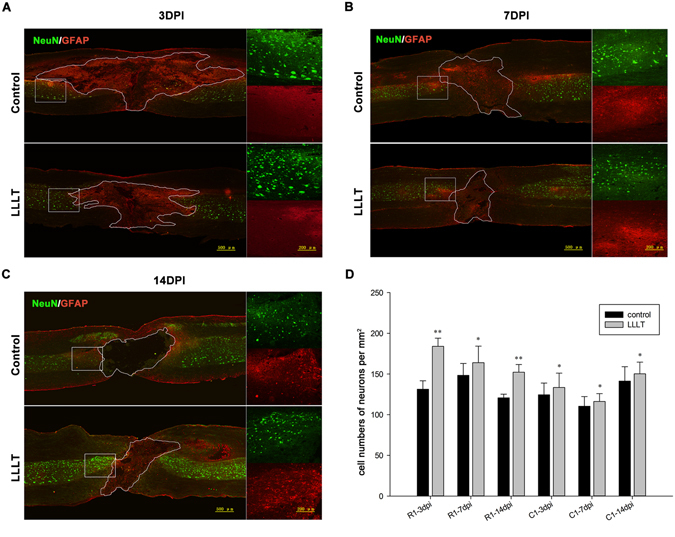
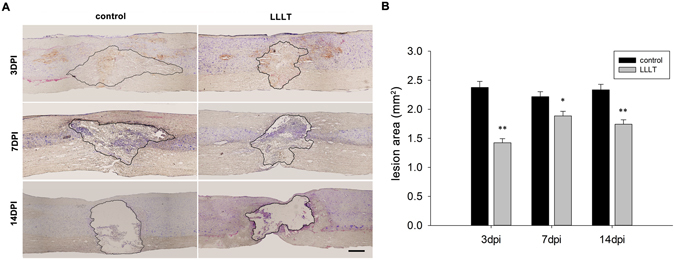
Macrophages and resident microglia play an import role in the secondary neuroinflammation response following spinal cord injury. Reprogramming of macrophage/microglia polarization is an import strategy for spinal cord injury restoration. Low-level laser therapy (LLLT) is a noninvasive treatment that has been widely used in neurotrauma and neurodegenerative diseases. However, the influence of low-level laser on polarization of macrophage/microglia following spinal cord injury remains unknown. The present study applied low-level laser therapy on a crush spinal cord injury rat model. Using immunofluorescence, flow cytometry, RT-qPCR, and western blot assays, we found that low-level laser therapy altered the polarization state to a M2 tendency. A greater number of neurons survived in the pare injury site, which was accompanied by higher BBB scores in the LLLT group. Furthermore, low-level laser therapy elevated expression of interleukin 4 (IL-4) and interleukin 13 (IL-13). Results from this study show that low-level laser therapy has the potential for reducing inflammation, regulating macrophage/microglia polarization, and promoting neuronal survival. These beneficial effects demonstrate that low-level laser therapy may be an effective candidate for clinical treatment of spinal cord injury.
巨噬细胞和固有小胶质细胞在脊髓损伤后的继发性神经炎症反应中发挥重要作用。巨噬细胞/小胶质细胞极化的重编程是脊髓损伤恢复的重要策略。低水平激光治疗(LLLT)是一种非侵入性治疗方法,已广泛应用于神经创伤和神经退行性疾病。然而,低水平激光对脊髓损伤后巨噬细胞/小胶质细胞极化的影响尚不清楚。本研究应用低水平激光治疗脊髓挤压伤大鼠模型。通过免疫荧光、流式细胞术、RT-qPCR 和 Western blot 检测,我们发现低水平激光治疗使极化状态向 M2 倾向转变。损伤部位有更多的神经元存活,并且 LLLT 组的 BBB 评分更高。此外,低水平激光治疗还提高了白细胞介素 4(IL-4)和白细胞介素 13(IL-13)的表达。本研究结果表明,低水平激光治疗具有减轻炎症、调节巨噬细胞/小胶质细胞极化和促进神经元存活的潜力。这些有益的影响表明,低水平激光治疗可能是治疗脊髓损伤的有效候选方法。