Unité de Biologie Fonctionnelle et Adaptative, Sorbonne Paris Cité, CNRS UMR 8251, Université Paris Diderot, Paris, France.
INSERM U1016, Université Paris-Descartes, Institut Cochin, Paris, France.
Mol Metab. 2017 Jan 26;6(4):340-351. doi: 10.1016/j.molmet.2017.01.009. eCollection 2017 Apr.
In type 2 diabetes (T2D), pancreatic β cells become progressively dysfunctional, leading to a decline in insulin secretion over time. In this study, we aimed to identify key genes involved in pancreatic beta cell dysfunction by analyzing multiple mouse strains in parallel under metabolic stress.
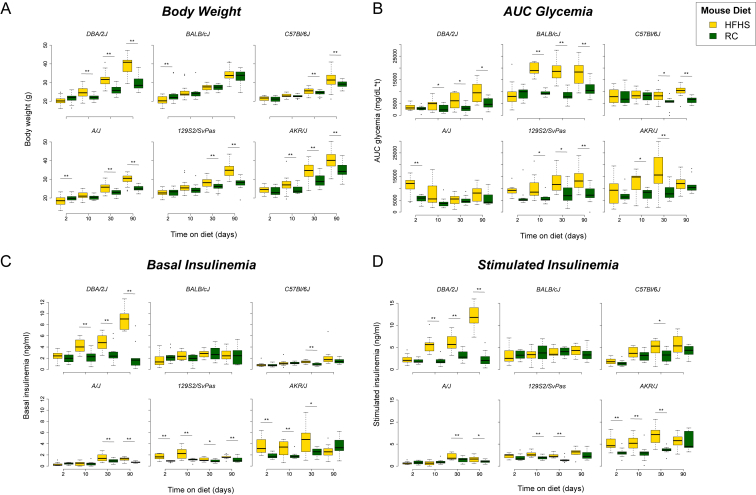
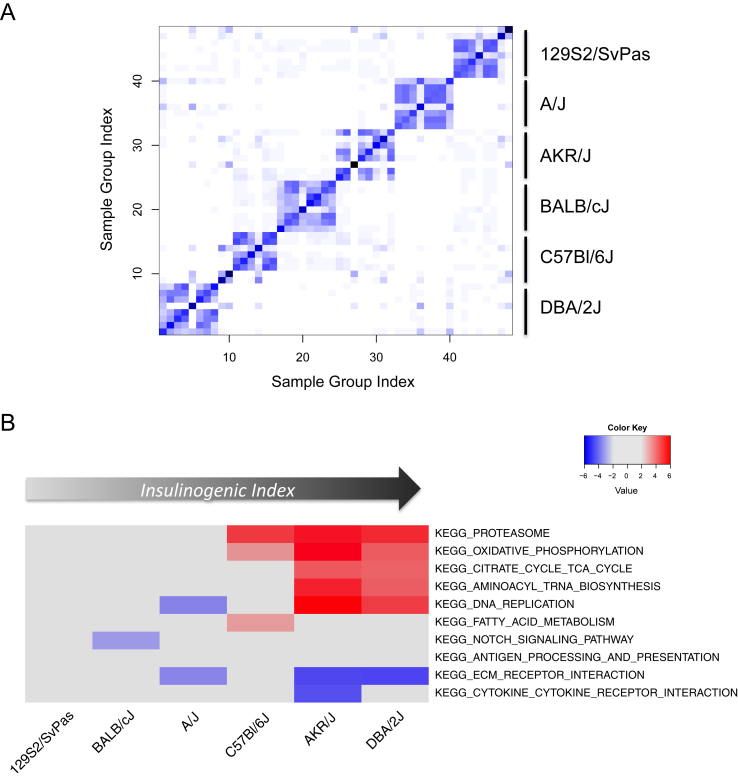
Male mice from six commonly used non-diabetic mouse strains were fed a high fat or regular chow diet for three months. Pancreatic islets were extracted and phenotypic measurements were recorded at 2 days, 10 days, 30 days, and 90 days to assess diabetes progression. RNA-Seq was performed on islet tissue at each time-point and integrated with the phenotypic data in a network-based analysis.
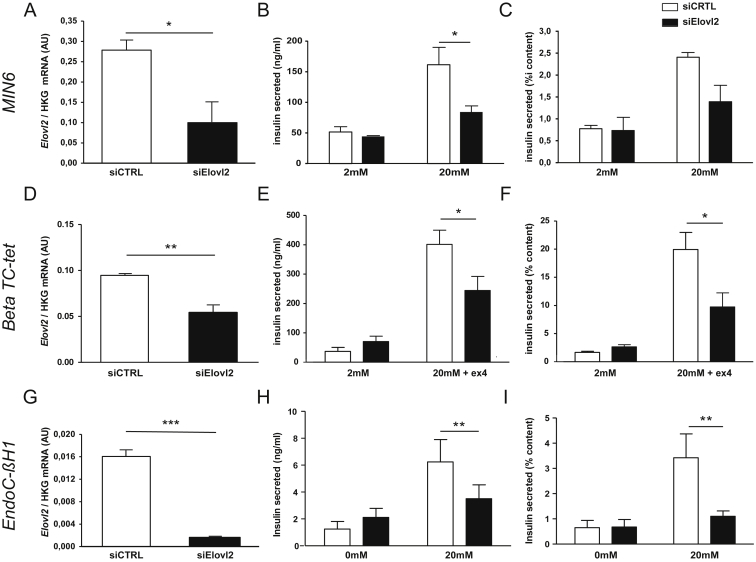
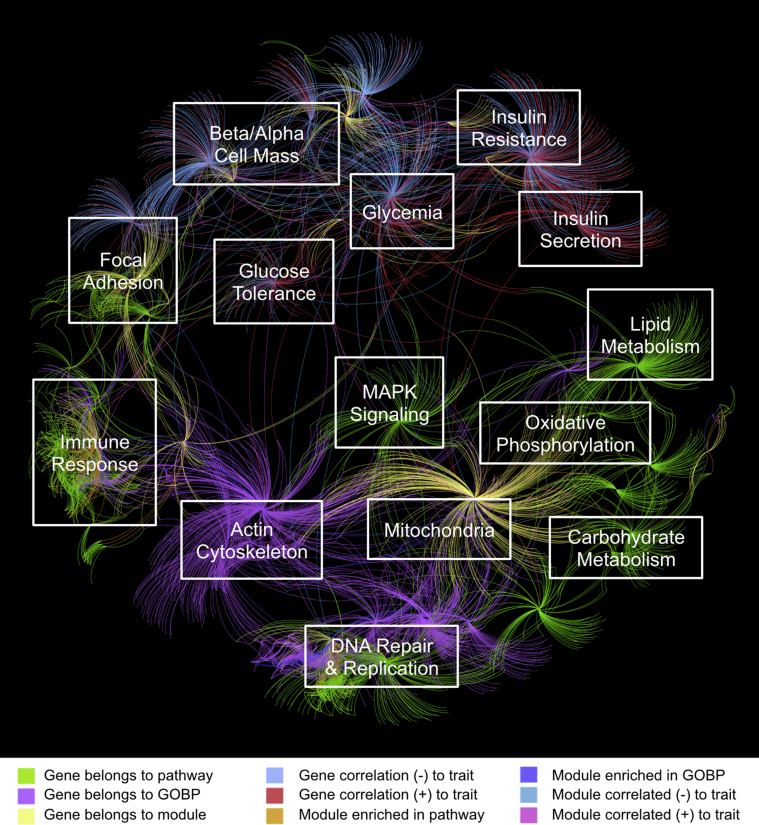
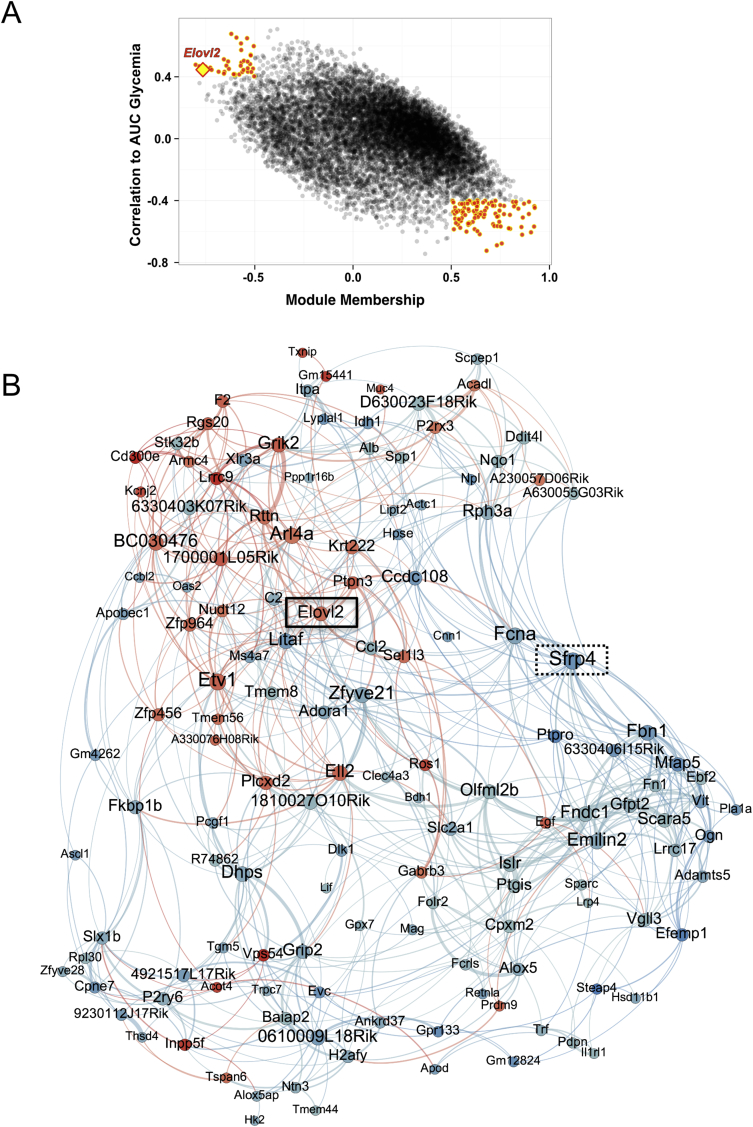
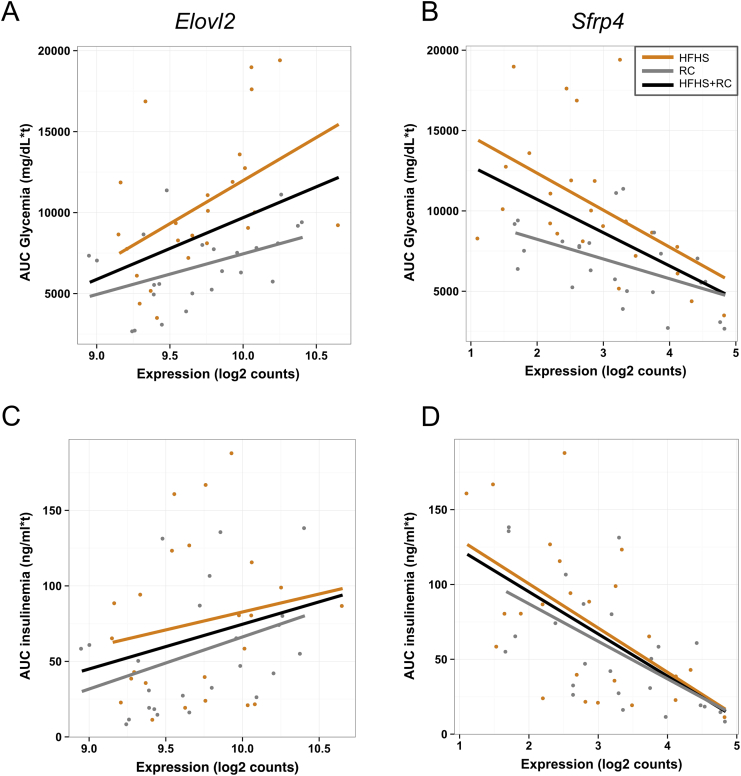
A module of co-expressed genes was selected for further investigation as it showed the strongest correlation to insulin secretion and oral glucose tolerance phenotypes. One of the predicted network hub genes was , encoding Elongase of very long chain fatty acids 2. silencing decreased glucose-stimulated insulin secretion in mouse and human β cell lines.
Our results suggest a role for in ensuring normal insulin secretory responses to glucose. Moreover, the large comprehensive dataset and integrative network-based approach provides a new resource to dissect the molecular etiology of β cell failure under metabolic stress.
在 2 型糖尿病(T2D)中,胰岛β细胞逐渐出现功能障碍,导致胰岛素分泌随时间推移而下降。在这项研究中,我们旨在通过平行分析多种代谢应激下的小鼠品系,鉴定参与胰岛β细胞功能障碍的关键基因。
雄性非糖尿病小鼠来自六种常用的小鼠品系,分别用高脂肪或标准饮食喂养 3 个月。提取胰岛并在第 2 天、第 10 天、第 30 天和第 90 天进行表型测量,以评估糖尿病进展情况。在每个时间点对胰岛组织进行 RNA-Seq 测序,并与表型数据进行网络分析整合。
选择一个共表达基因模块进行进一步研究,因为它与胰岛素分泌和口服葡萄糖耐量表型相关性最强。预测的网络枢纽基因之一是 ,编码长链脂肪酸延长酶 2。沉默 基因降低了小鼠和人β细胞系的葡萄糖刺激胰岛素分泌。
我们的研究结果表明,Elongase of very long chain fatty acids 2 ( )在确保胰岛β细胞对葡萄糖的正常胰岛素分泌反应中发挥作用。此外,大型综合数据集和基于网络的综合分析方法为解析代谢应激下β细胞衰竭的分子病因提供了新的资源。