Nawaz Zahid, Patil Vikas, Thinagararjan Sivaarumugam, Rao Soumya A, Hegde Alangar S, Arivazhagan Arimappamagan, Santosh Vani, Somasundaram Kumaravel
Department of Microbiology and Cell Biology, Indian Institute of Science, Bangalore, Karnataka, India.
Department of Neurosurgery, Sri Satya Sai Institute of Higher Medical Sciences, Bangalore, Karnataka, India.
Mol Oncol. 2017 Aug;11(8):927-944. doi: 10.1002/1878-0261.12060. Epub 2017 May 24.
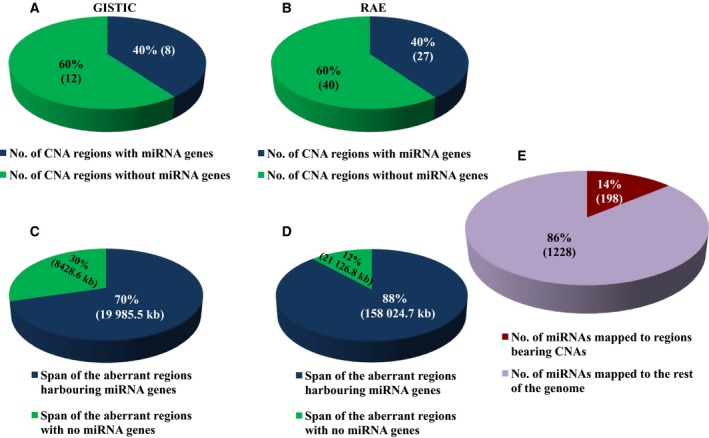
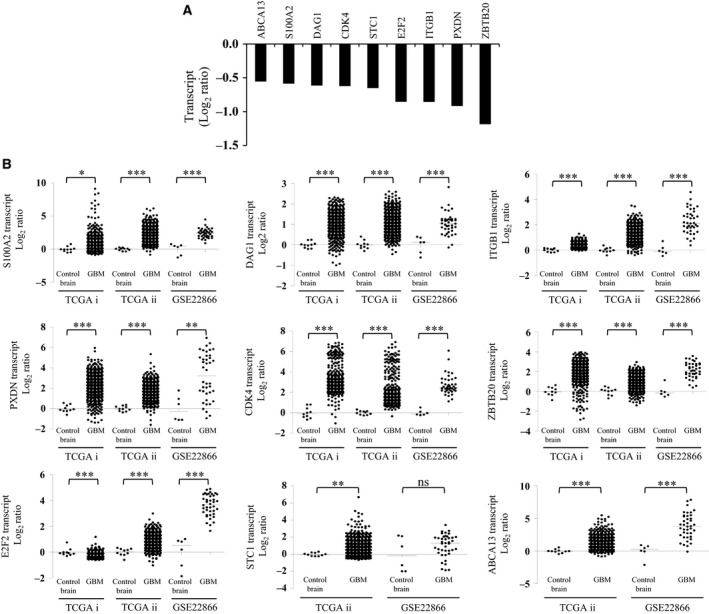
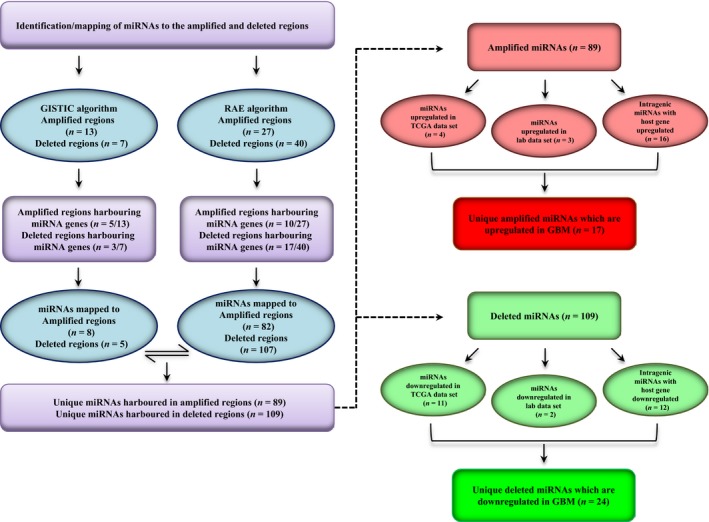
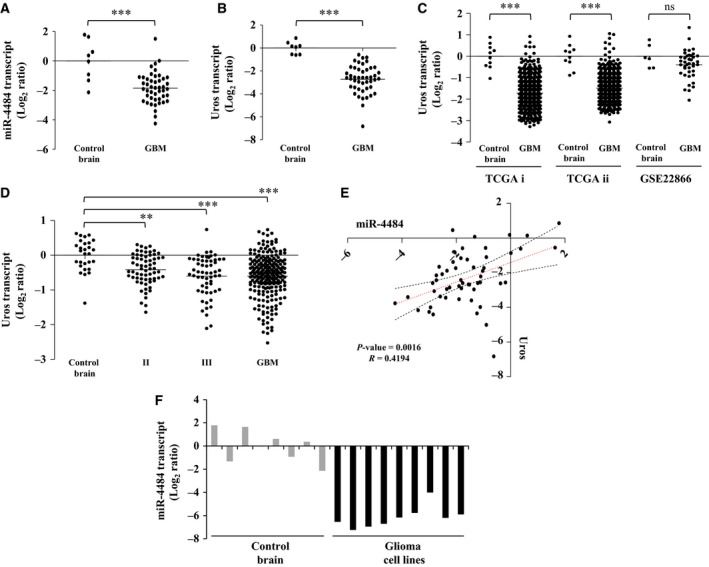
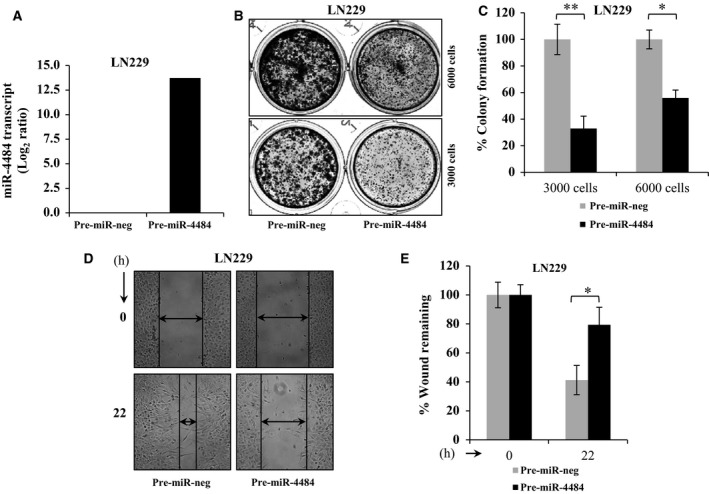
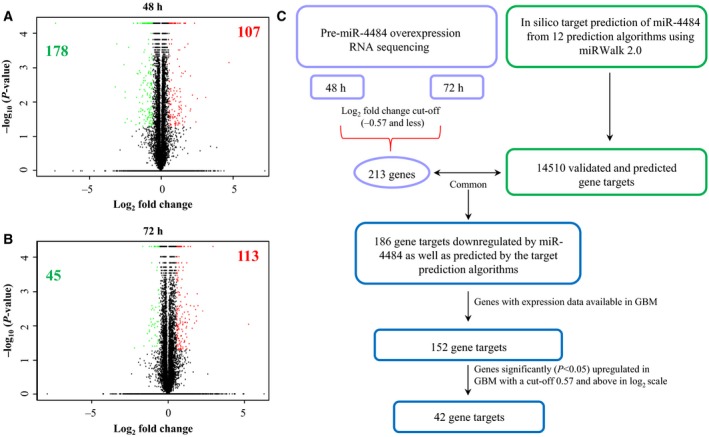
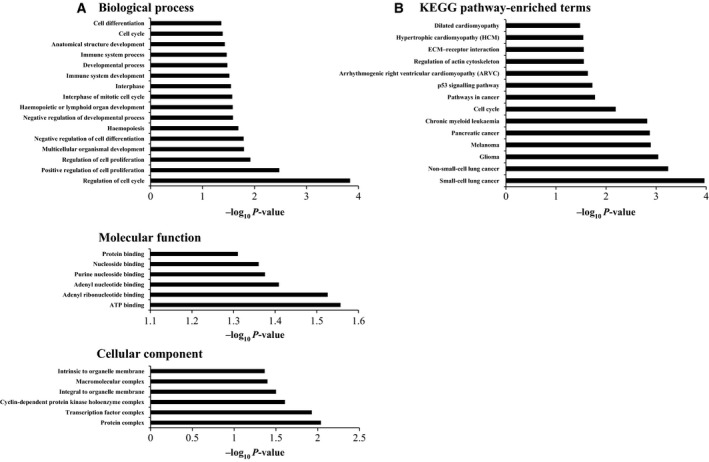
Glioblastoma (GBM) is the most frequent and most malignant primary brain tumour in adults. GBMs have a unique landscape of somatic copy number alterations (SCNAs), with the concomitant appearance of numerous driver amplifications and deletions. Here, we examined the genomic regions harbouring SCNAs and their impact on the GBM miRNome. We found that 40% of SCNA events covering 70-88% of the genomically altered regions, as identified by GISTIC and RAE algorithms, carried miRNA genes. Of 1426 annotated mature miRNAs analysed, ~ 14% (n = 198) were mapped to such fragile loci. Further, we identified an intragenic miRNA, miR-4484 located on chromosome-10, as a deleted and downregulated miRNA in GBM. miR-4484 exhibited a strong positive correlation with the expression of its host gene uroporphyrinogen III synthase (UROS), thereby indicating that the loss of miR-4484 is a codeletion event in GBM. Overexpression of miR-4484 reduced the colony-forming ability and suppressed the migratory capacity of glioma cells. Analysis of the RNA-seq-derived transcriptome upon exogenous miR-4484 overexpression in conjunction with an integrative bioinformatics approach revealed several putative targets of miR-4484. Unbiased functional enrichment of these targets through DAVID identified a cohort of important gene ontology terms, which possibly explain the functional role of miR-4484 in gliomagenesis. Selected targets were validated and, importantly, were found to be upregulated in GBM. In brief, our study identified a panel of miRNAs that are likely to be regulated by genomic deletions and amplifications. Further, miR-4484 was found to be deleted and acts as a tumour suppressor miRNA in GBM.
胶质母细胞瘤(GBM)是成人中最常见且最具恶性的原发性脑肿瘤。GBM具有独特的体细胞拷贝数改变(SCNA)格局,同时伴有大量驱动基因的扩增和缺失。在此,我们研究了含有SCNA的基因组区域及其对GBM微小RNA组(miRNome)的影响。我们发现,通过GISTIC和RAE算法确定的覆盖70 - 88%基因组改变区域的40%的SCNA事件携带了微小RNA基因。在分析的1426个注释成熟微小RNA中,约14%(n = 198)被定位到此类脆弱位点。此外,我们鉴定出位于10号染色体上的一个基因内微小RNA miR - 4484,它在GBM中是一个缺失且表达下调的微小RNA。miR - 4484与其宿主基因尿卟啉原III合成酶(UROS)的表达呈强正相关,从而表明miR - 4484的缺失是GBM中的一个共缺失事件。miR - 4484的过表达降低了胶质瘤细胞的集落形成能力并抑制了其迁移能力。对外源miR - 4484过表达后的RNA测序衍生转录组进行分析,并结合综合生物信息学方法,揭示了miR - 4484的几个假定靶标。通过DAVID对这些靶标进行无偏功能富集,确定了一组重要的基因本体学术语,这可能解释了miR - 4484在胶质瘤发生中的功能作用。选定的靶标得到了验证,重要的是,发现在GBM中它们是上调的。简而言之,我们的研究鉴定出一组可能受基因组缺失和扩增调控的微小RNA。此外,发现miR - 4484在GBM中缺失并作为一种肿瘤抑制微小RNA发挥作用。