Wang Maonan, Zhao Jingzhou, Zhang Lishen, Wei Fang, Lian Yu, Wu Yingfeng, Gong Zhaojian, Zhang Shanshan, Zhou Jianda, Cao Ke, Li Xiayu, Xiong Wei, Li Guiyuan, Zeng Zhaoyang, Guo Can
Key Laboratory of Carcinogenesis of Ministry of Health, Xiangya Hospital, Central South University, Changsha, Hunan 410078, China;; Key Laboratory of Carcinogenesis and Cancer Invasion of Ministry of Education, Cancer Research Institute, Central South University, Changsha, Hunan 410078, China.
Key Laboratory of Carcinogenesis and Cancer Invasion of Ministry of Education, Cancer Research Institute, Central South University, Changsha, Hunan 410078, China.
J Cancer. 2017 Feb 25;8(5):761-773. doi: 10.7150/jca.17648. eCollection 2017.
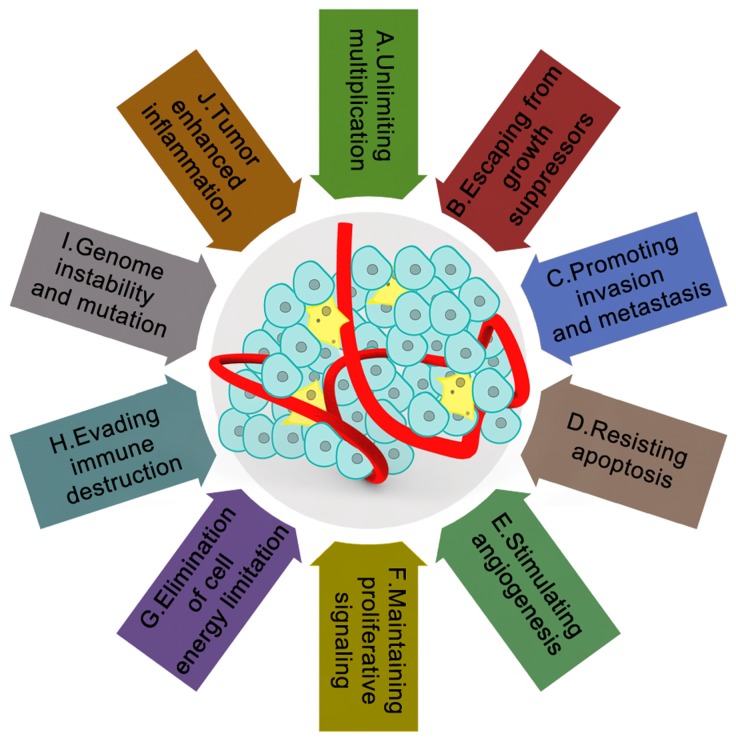
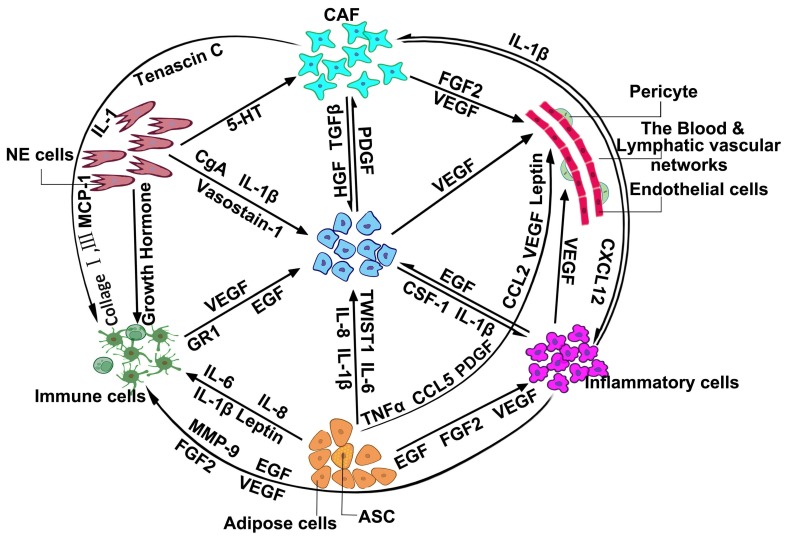
Tumorigenesis is a complex and dynamic process, consisting of three stages: initiation, progression, and metastasis. Tumors are encircled by extracellular matrix (ECM) and stromal cells, and the physiological state of the tumor microenvironment (TME) is closely connected to every step of tumorigenesis. Evidence suggests that the vital components of the TME are fibroblasts and myofibroblasts, neuroendocrine cells, adipose cells, immune and inflammatory cells, the blood and lymphatic vascular networks, and ECM. This manuscript, based on the current studies of the TME, offers a more comprehensive overview of the primary functions of each component of the TME in cancer initiation, progression, and invasion. The manuscript also includes primary therapeutic targeting markers for each player, which may be helpful in treating tumors.
肿瘤发生是一个复杂且动态的过程,包括三个阶段:起始、进展和转移。肿瘤被细胞外基质(ECM)和基质细胞包围,肿瘤微环境(TME)的生理状态与肿瘤发生的每一步都密切相关。有证据表明,TME的重要组成部分是成纤维细胞和肌成纤维细胞、神经内分泌细胞、脂肪细胞、免疫和炎症细胞、血液和淋巴管网络以及ECM。基于目前对TME的研究,本手稿更全面地概述了TME各组成部分在癌症起始、进展和侵袭中的主要功能。该手稿还包括每个参与者的主要治疗靶点标志物,这可能有助于治疗肿瘤。