Han Jihua, Xie Changming, Pei Tiemin, Wang Jiabei, Lan Yaliang, Huang Kaihua, Cui Yifeng, Wang Fengyue, Zhang Jiewu, Pan Shangha, Liang Yingjian, Zhen Tongsen, Song Ruipeng, Sun Boshi, Li Yuejin, Shi Huawen, Yang Guangchao, Liu Xirui, Zhu Mingxi, Wang Yan, Li Keyu, Liu Yao, Meng Fanzheng, Liao Fei, Meng Xianzhi, Hong Xuehui, Liu Lianxin
Key Laboratory of Hepatosplenic Surgery, Ministry of Education, Department of General Surgery, the First Affiliated Hospital of Harbin Medical University, Harbin, China.
Department of Head and Neck Surgery, The Third Affiliated Hospital of Harbin Medical University, Harbin, China.
Cell Death Dis. 2017 Apr 6;8(4):e2736. doi: 10.1038/cddis.2017.126.
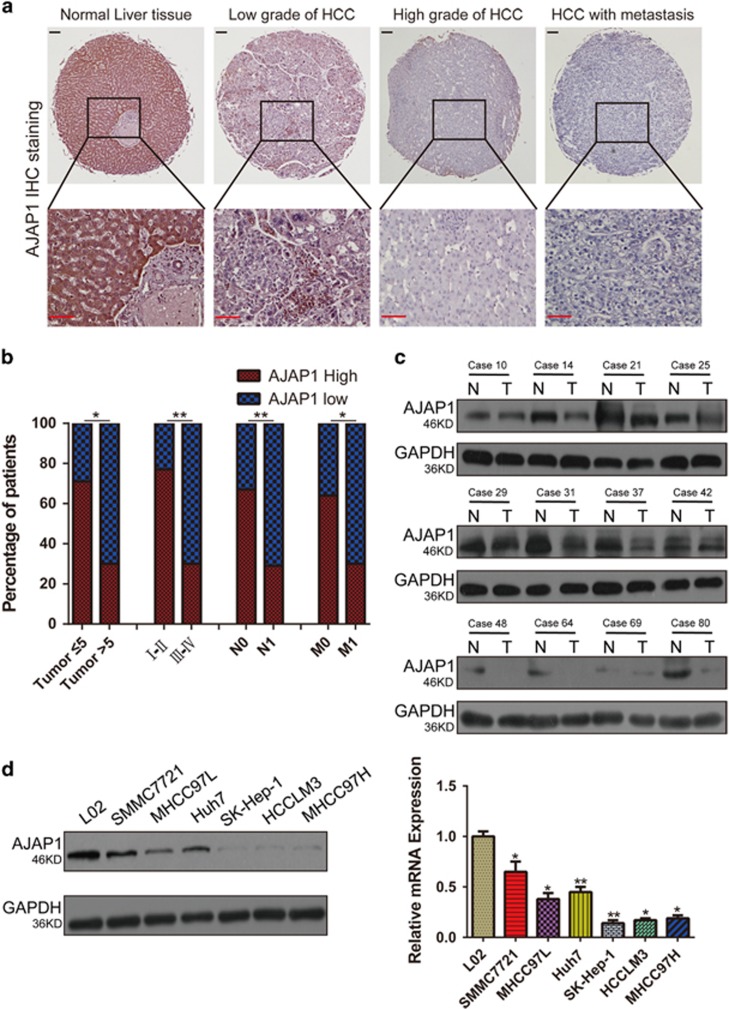
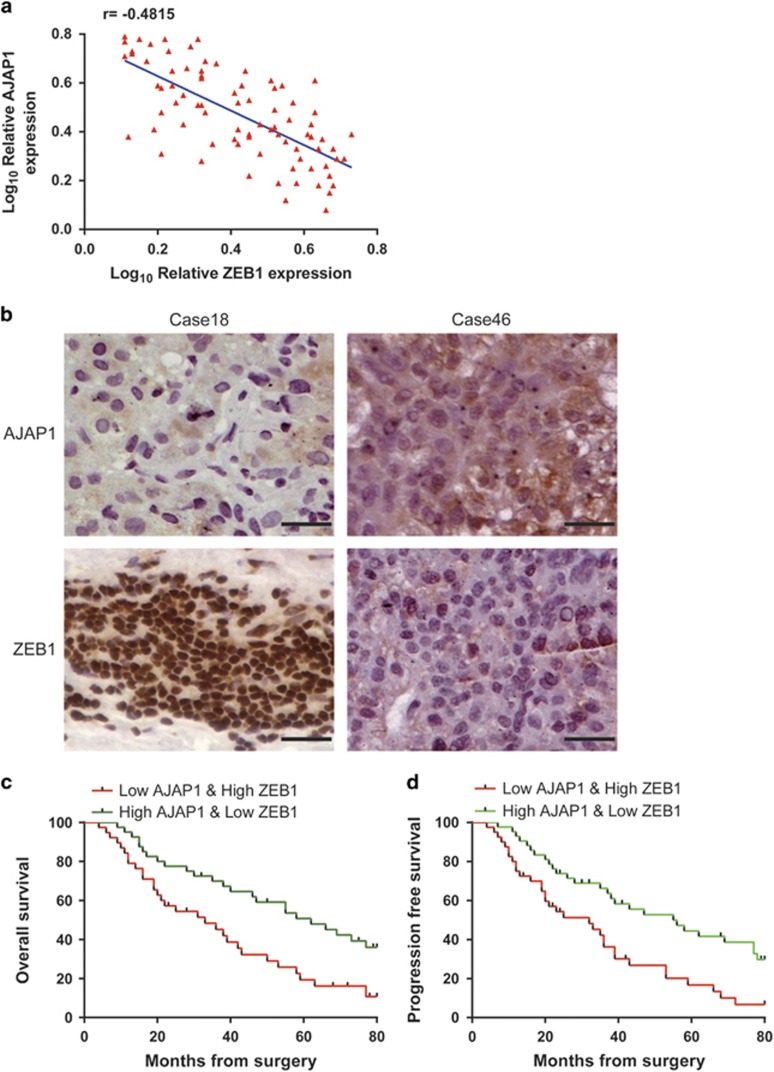
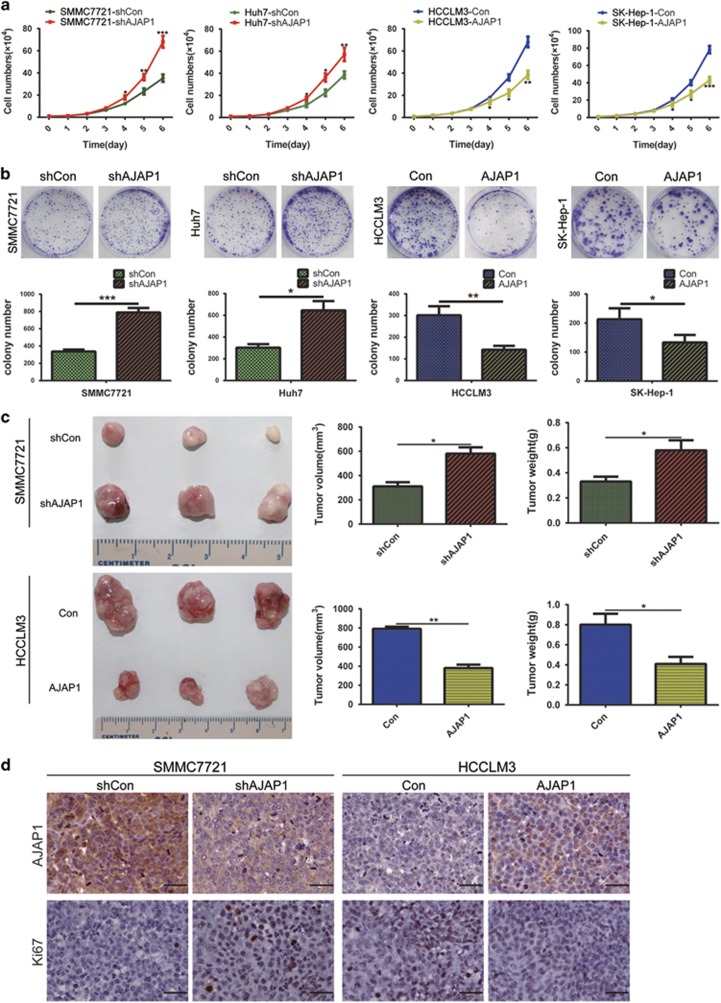
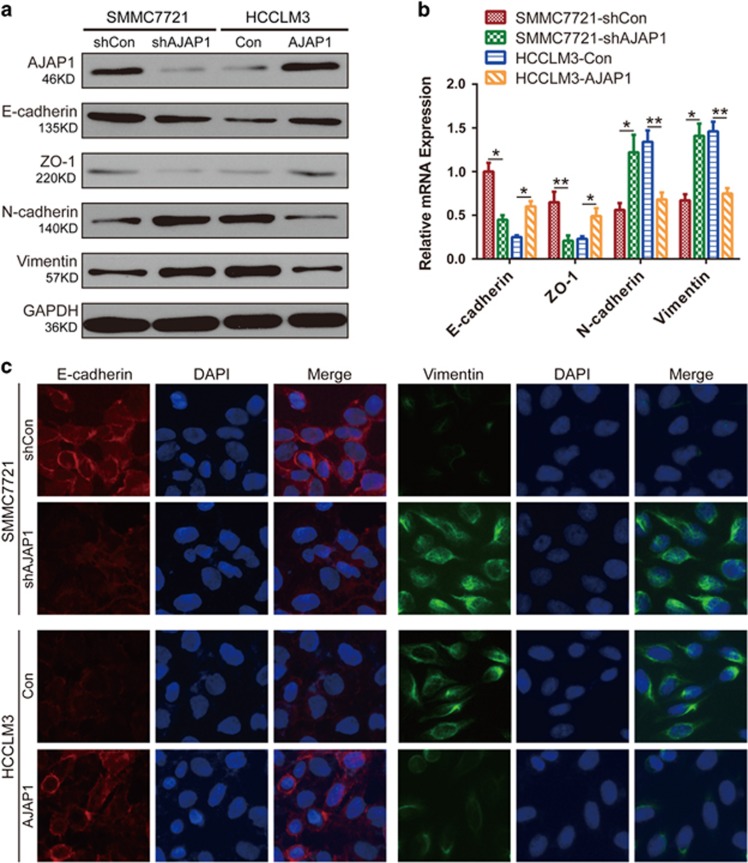
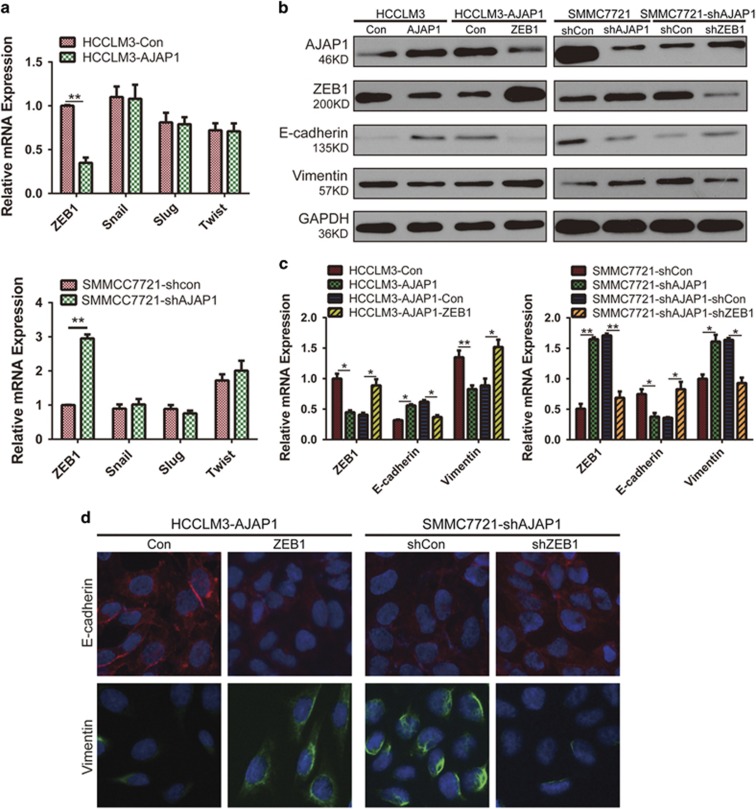
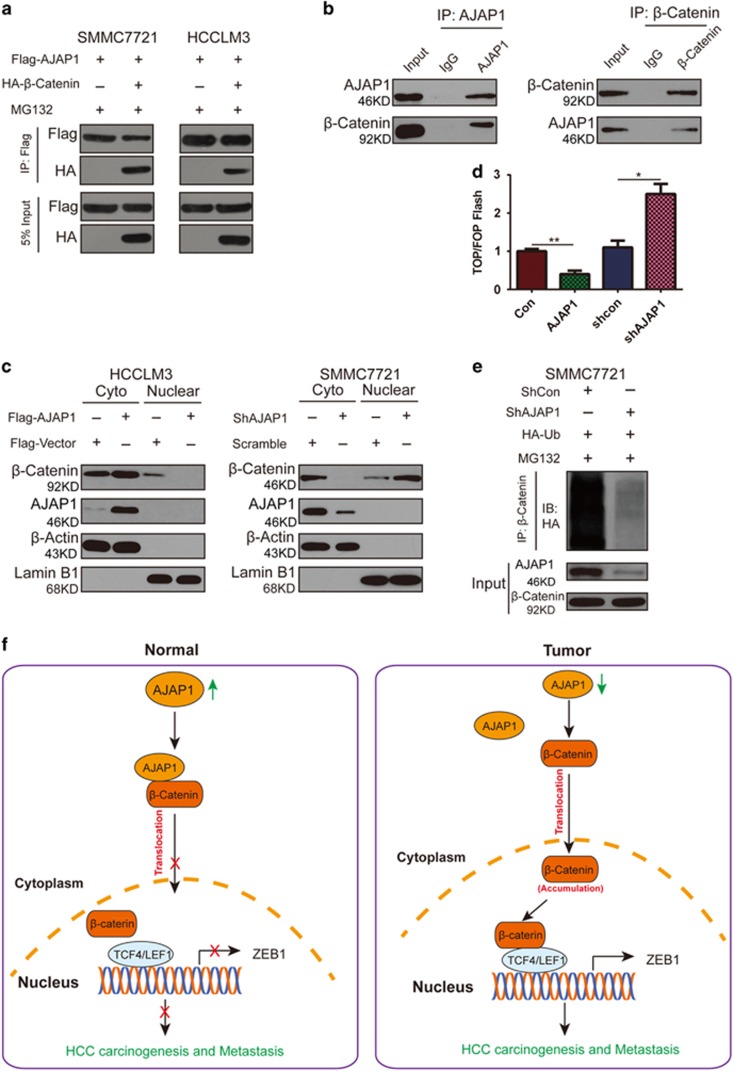
Adherens junctions-associated protein 1 (AJAP1) is an integral membrane protein that is thought to function as a tumor suppressor in various malignancies. Downregulation of AJAP1 mRNA levels may predict recurrence in hepatocellular carcinoma (HCC) patients, but the underlying molecular mechanism is unknown. This was addressed in the present study by examining the role of AJAP1 in HCC cell proliferation, migration, and invasion in vitro as well as in human specimens and mouse xenograft model. We found that AJAP1 expression was reduced in HCC cells and human HCC tissue, which was associated with metastasis. AJAP1 overexpression inhibited HCC progression and metastasis, while its silencing had the opposite effect both in vitro and in vivo. Furthermore, AJAP1 blocked epithelial-to-mesenchymal transition by interacting with β-catenin and inhibiting its nuclear translocation, which suppressed zinc finger E-box binding homeobox 1 (ZEB1) transcription. These results indicate that AJAP1 inhibits HCC metastasis, and is thus a potential therapeutic target for HCC treatment.
黏着连接相关蛋白1(AJAP1)是一种整合膜蛋白,被认为在多种恶性肿瘤中发挥肿瘤抑制作用。AJAP1 mRNA水平的下调可能预测肝细胞癌(HCC)患者的复发,但其潜在分子机制尚不清楚。本研究通过检测AJAP1在体外HCC细胞增殖、迁移和侵袭以及人类标本和小鼠异种移植模型中的作用来解决这一问题。我们发现AJAP1在HCC细胞和人类HCC组织中的表达降低,这与转移相关。AJAP1过表达抑制HCC进展和转移,而其沉默在体外和体内均产生相反的效果。此外,AJAP1通过与β-连环蛋白相互作用并抑制其核转位来阻断上皮-间质转化,从而抑制锌指E盒结合同源框1(ZEB1)转录。这些结果表明AJAP1抑制HCC转移,因此是HCC治疗的潜在治疗靶点。