Xing Hai, Mallon Jordan C, Currie Margaret L
Beijing Museum of Natural History, Beijing Academy of Science and Technology, Beijing, China.
Palaeobiology, Canadian Museum of Nature, Ottawa, Ontario, Canada.
PLoS One. 2017 Apr 6;12(4):e0175253. doi: 10.1371/journal.pone.0175253. eCollection 2017.
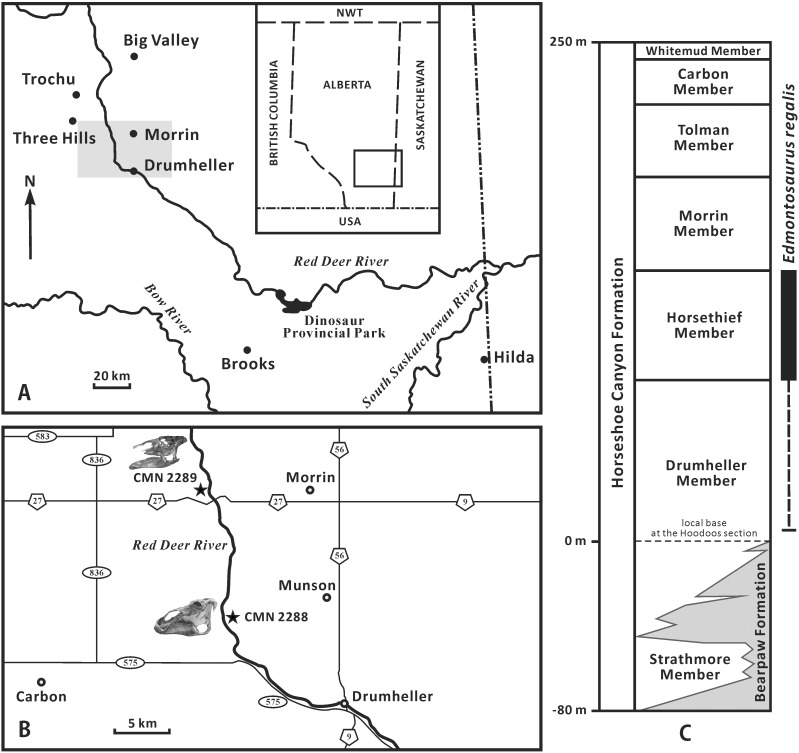
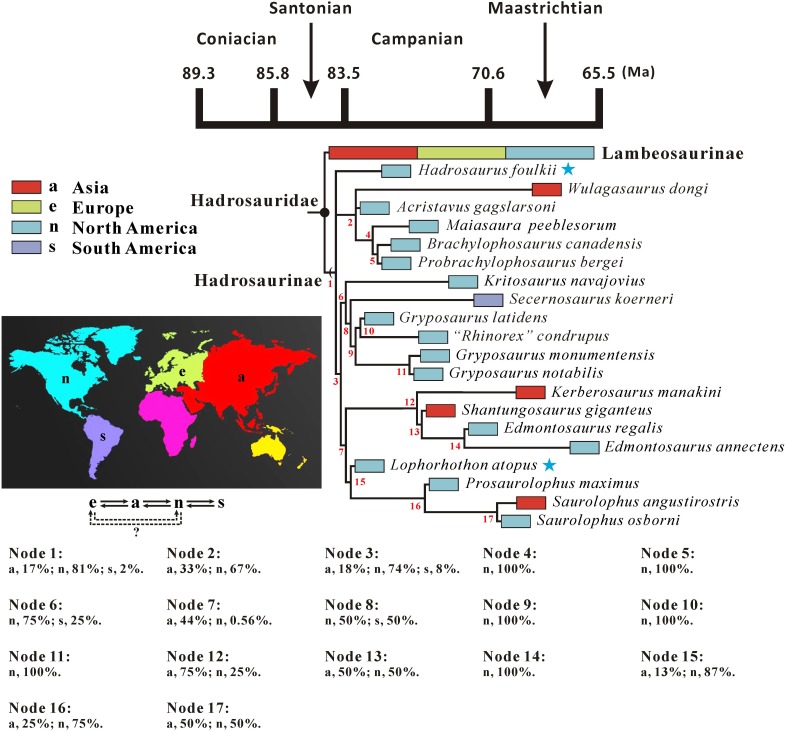
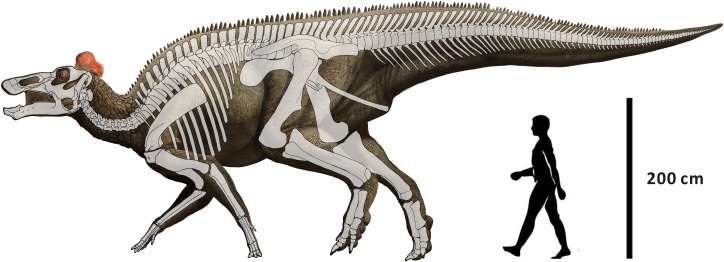
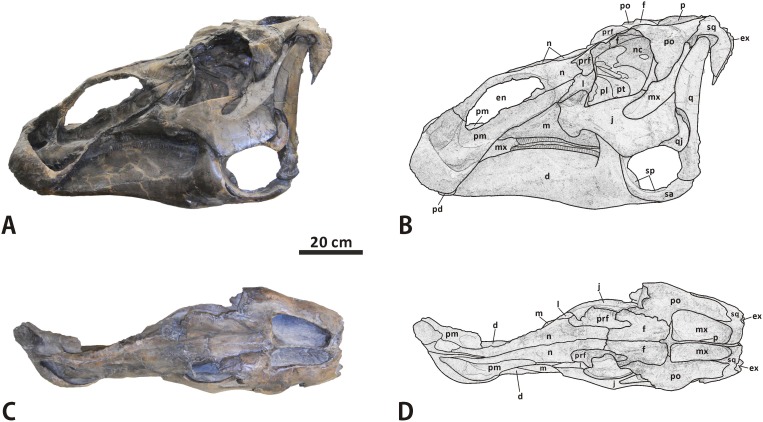
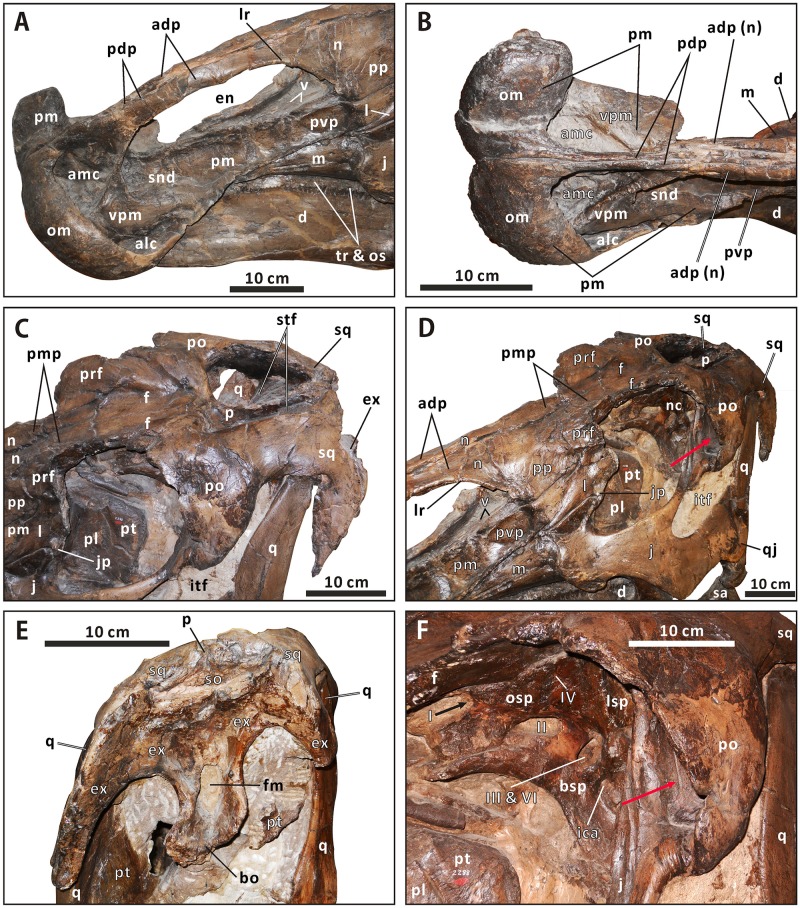
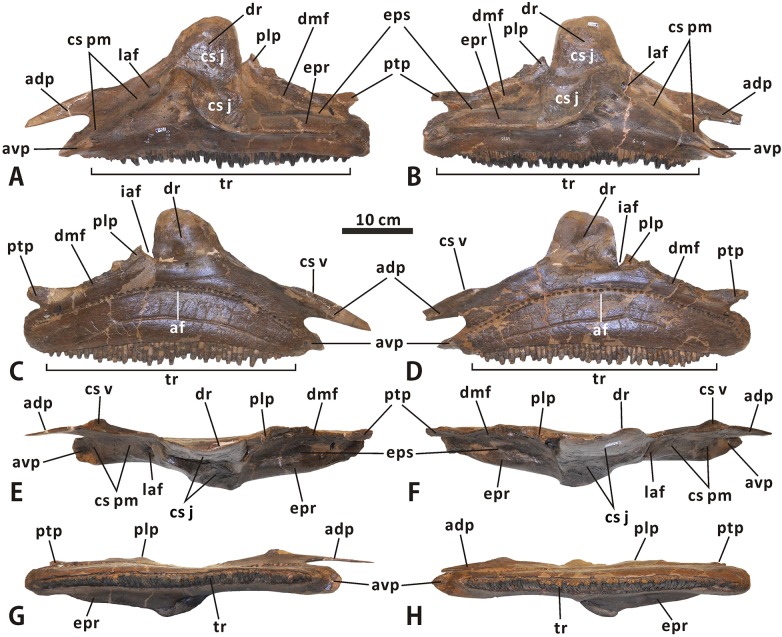
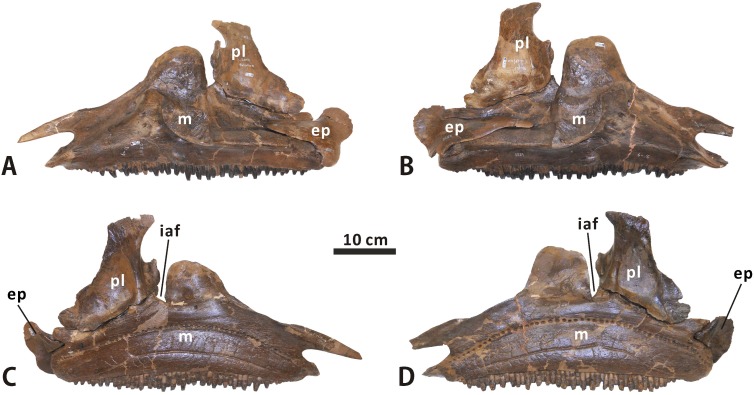
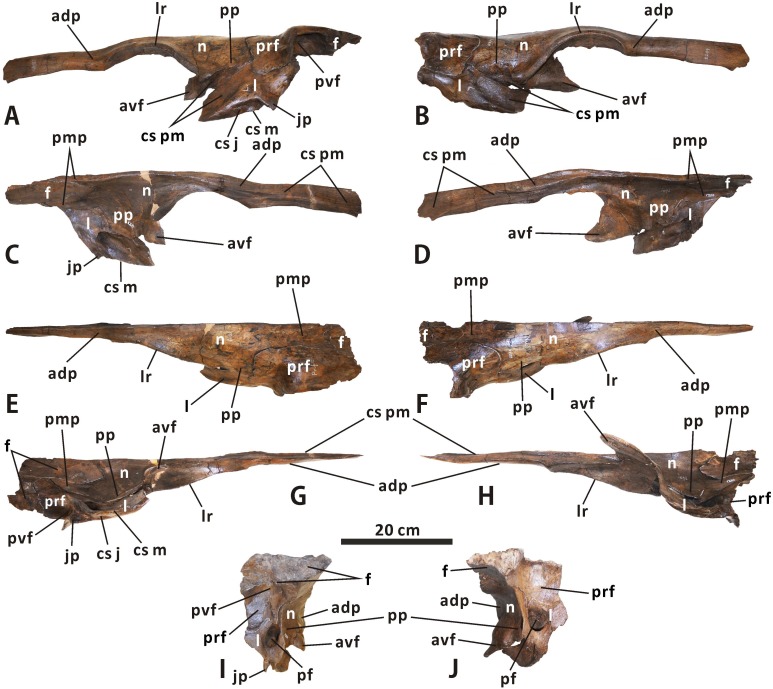
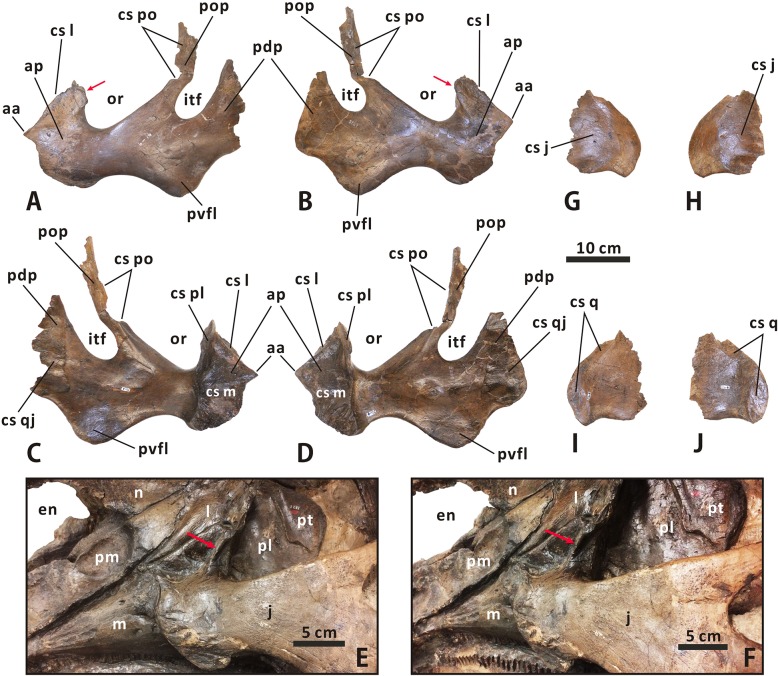
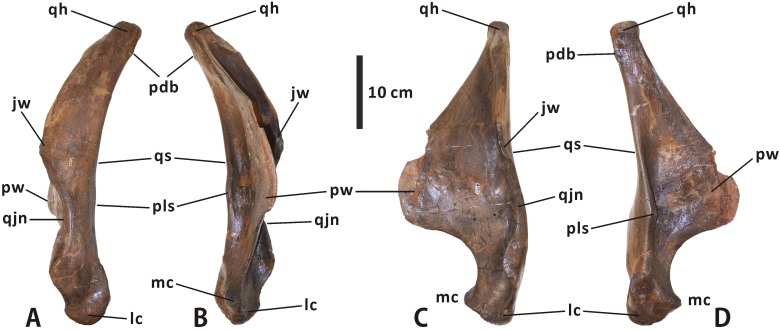
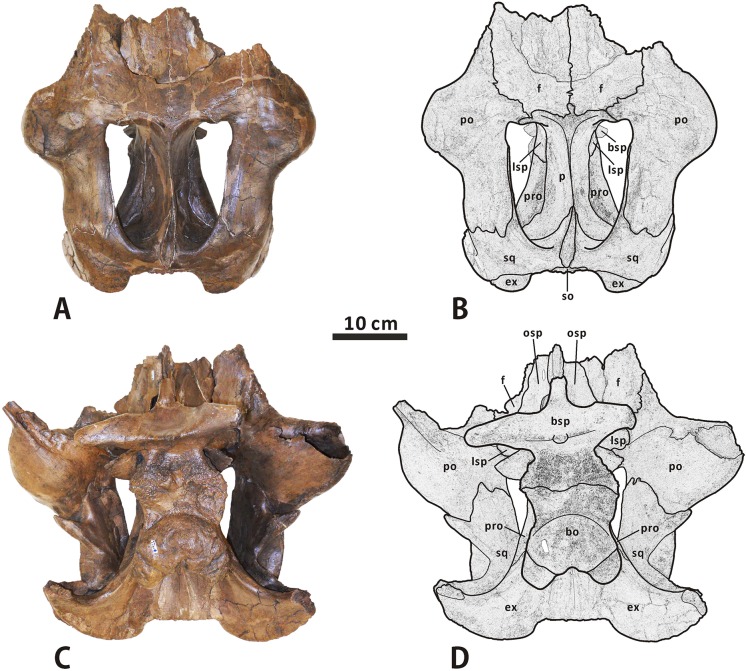
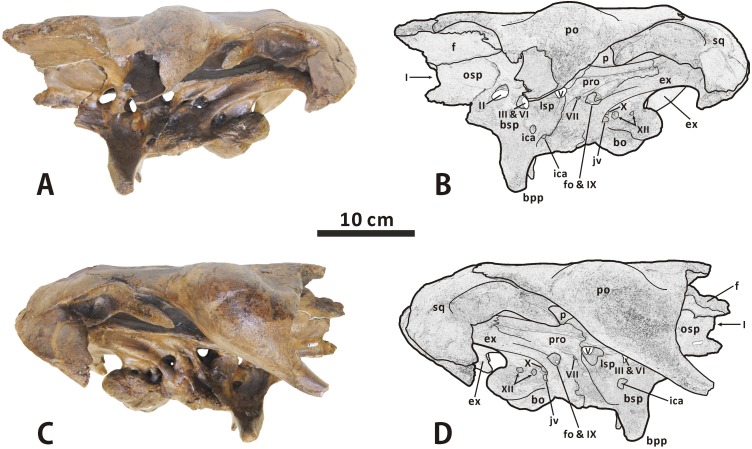
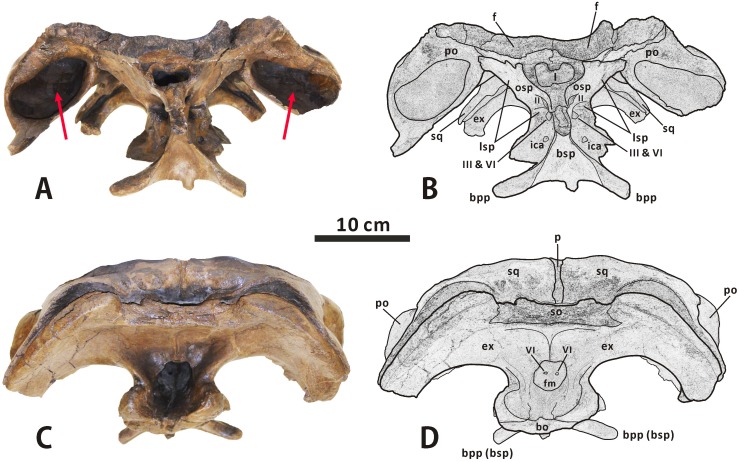
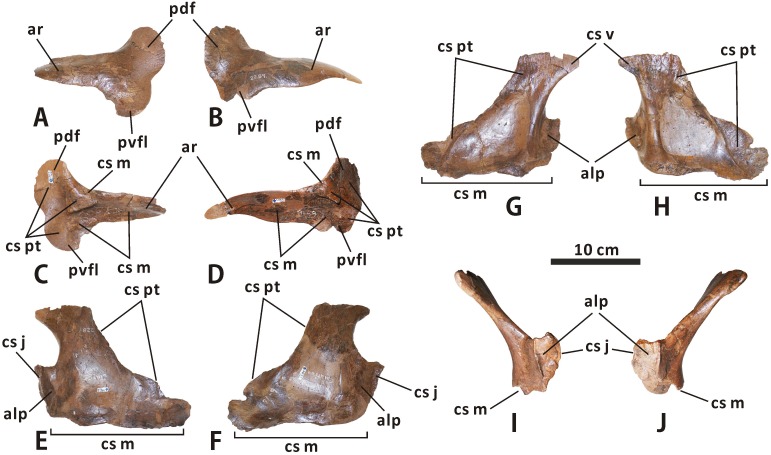
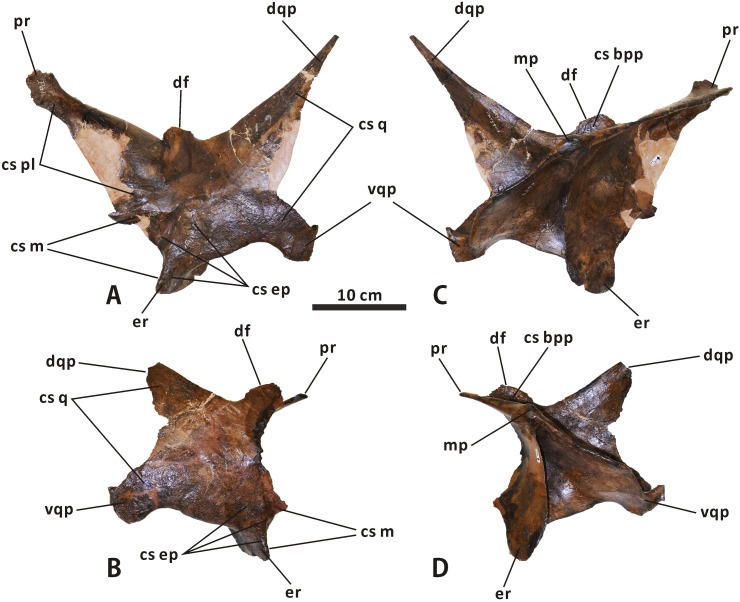
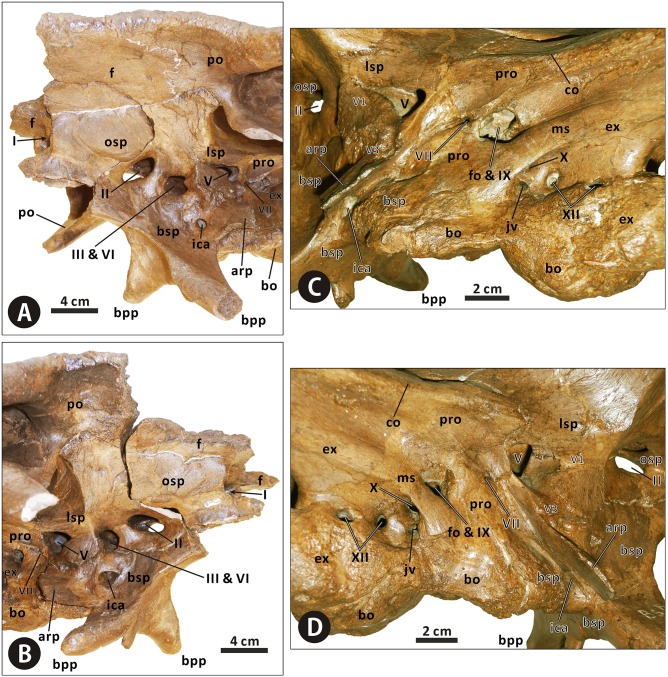
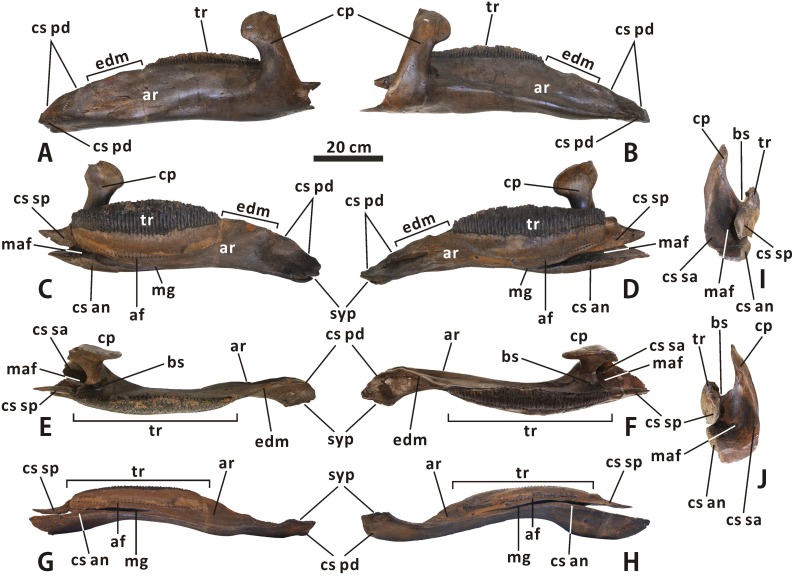
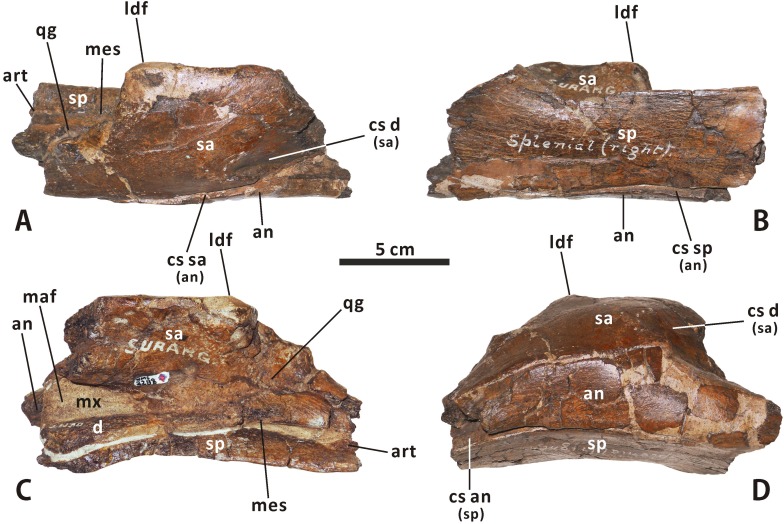
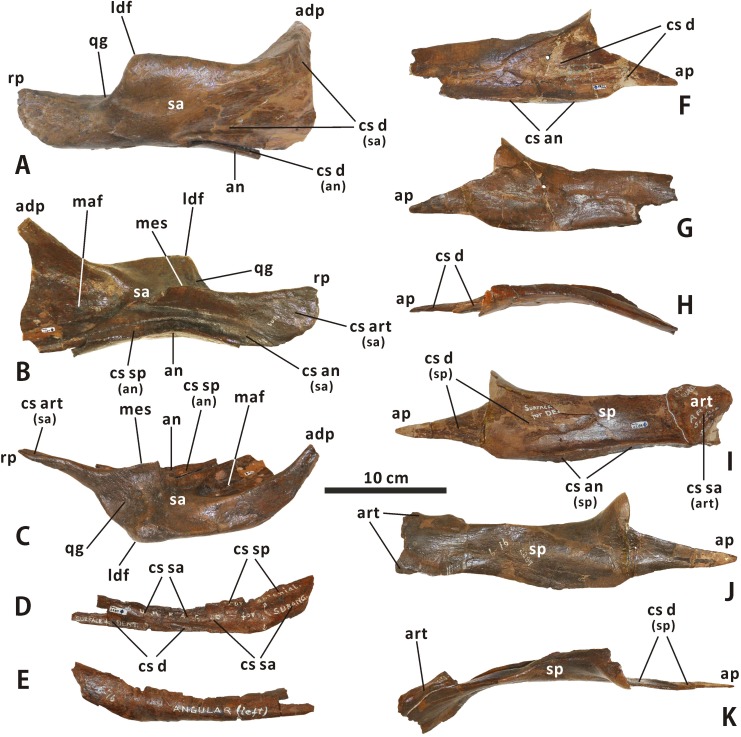
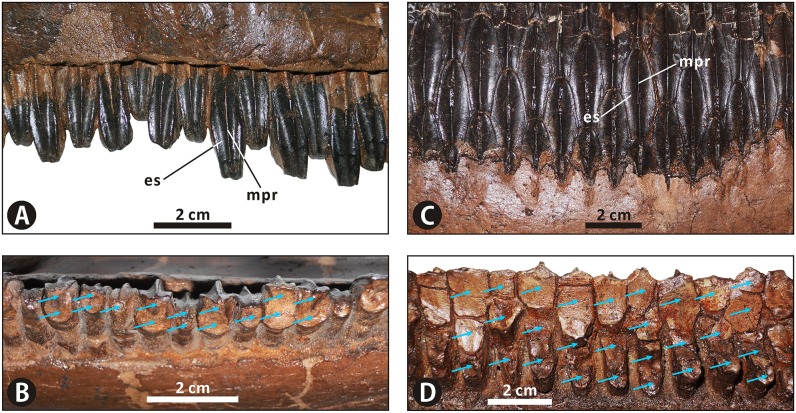
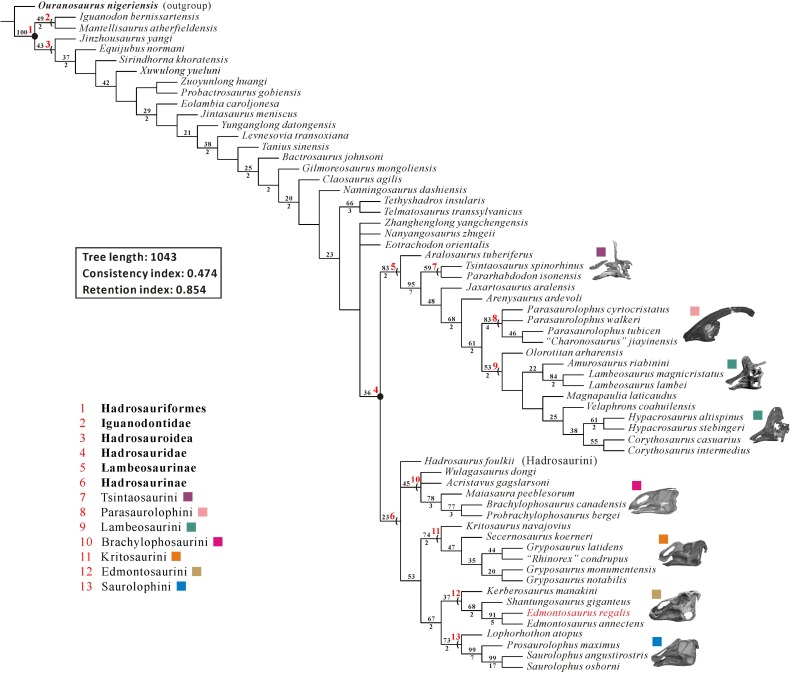
The cranial anatomy of the flat-skulled hadrosaurine Edmontosaurus regalis (Ornithischia: Hadrosauridae) is extensively described here, based on the holotype and paratype collected from the middle part of the Horseshoe Canyon Formation in southern Alberta. Focus is given to previously undocumented features of ontogenetic and phylogenetic importance. This description facilitates overall osteological comparisons between E. regalis and other hadrosaurids (especially E. annectens), and revises the diagnosis of E. regalis, to which a new autapomorphy (the dorsal half of the jugal anterior process bearing a sharp posterolateral projection into the orbit) is added. We consider the recently named Ugrunaaluk kuukpikensis from the upper Campanian/lower Maastrichtian of Alaska a nomen dubium, and conservatively regard the Alaskan material as belonging to Edmontosaurus sp.. A phylogenetic analysis of Hadrosauroidea using maximum parsimony further corroborates the sister-taxon relationship between E. regalis and E. annectens. In the strict consensus tree, Hadrosaurus foulkii occurs firmly within the clade comprising all non-lambeosaurine hadrosaurids, supporting the taxonomic scheme that divides Hadrosauridae into Hadrosaurinae and Lambeosaurinae. Within Edmontosaurini, Kerberosaurus is posited as the sister taxon to the clade of Shantungosaurus + Edmontosaurus. The biogeographic reconstruction of Hadrosaurinae in light of the time-calibrated cladogram and probability calculation of ancestral areas for all internal nodes reveals a significantly high probability for the North American origin of the clade. However, the Laramidia-Appalachia dispersals around the Santonian-Campanian boundary, inferred from the biogeographic scenario for the North American origin of Hadrosaurinae, are in conflict with currently accepted paleogeographic models. By contrast, the Asian origin of Hadrosaurinae with its relatively low probability resulting from the biogeographic analysis is worth seriously considering, despite the lack of fossil material from the Santonian and lower Campanian of Asia. Extra fossil collecting in appropriate geographic locations and stratigraphic intervals of Asia and Europe will help to clarify the biogeographic dynamics of hadrosaurine dinosaurs in the near future.
本文基于从艾伯塔省南部马蹄峡谷组中部采集的正模标本和副模标本,对扁平头骨的鸭嘴龙科埃德蒙顿龙(鸟臀目:鸭嘴龙科)的颅骨解剖结构进行了详细描述。重点关注了以前未记录的具有个体发育和系统发育重要性的特征。这一描述有助于对帝王埃德蒙顿龙与其他鸭嘴龙科(尤其是阿氏埃德蒙顿龙)进行全面的骨骼学比较,并修订了帝王埃德蒙顿龙的诊断,增加了一个新的自近裔性状(颧骨前突的背侧半部有一个尖锐的后外侧突起伸入眼眶)。我们认为最近命名的来自阿拉斯加坎帕阶上部/马斯特里赫特阶下部的乌格鲁纳卢克库库皮肯西斯是一个疑名,并保守地将阿拉斯加的材料视为属于埃德蒙顿龙属。使用最大简约法对鸭嘴龙超科进行的系统发育分析进一步证实了帝王埃德蒙顿龙与阿氏埃德蒙顿龙之间的姐妹分类单元关系。在严格合意树中,福氏鸭嘴龙稳固地位于包含所有非赖氏龙亚科鸭嘴龙科的分支内,支持了将鸭嘴龙科分为鸭嘴龙亚科和赖氏龙亚科的分类方案。在埃德蒙顿龙族内,克氏龙被认为是山东龙 + 埃德蒙顿龙分支的姐妹分类单元。根据时间校准的分支图和所有内部节点祖先区域的概率计算对鸭嘴龙亚科进行的生物地理重建显示,该分支起源于北美的概率非常高。然而,从鸭嘴龙亚科北美起源的生物地理情景推断出的在桑托阶 - 坎帕阶边界附近的拉腊米迪亚 - 阿巴拉契亚扩散与目前公认的古地理模型相冲突。相比之下,尽管缺乏亚洲桑托阶和坎帕阶下部的化石材料,但生物地理分析得出的鸭嘴龙亚科亚洲起源概率相对较低这一情况值得认真考虑。在亚洲和欧洲适当的地理位置和地层间隔进行额外的化石采集将有助于在不久的将来阐明鸭嘴龙亚科恐龙的生物地理动态。