Paul Cornelis P L, de Graaf Magda, Bisschop Arno, Holewijn Roderick M, van de Ven Peter M, van Royen Barend J, Mullender Margriet G, Smit Theodoor H, Helder Marco N
Department of Orthopaedic Surgery, VU University Medical Center, Amsterdam Movement Sciences, The Netherlands.
Department of Epidemiology and Biostatistics, VU University Medical Center, Amsterdam, The Netherlands.
PLoS One. 2017 Apr 6;12(4):e0174278. doi: 10.1371/journal.pone.0174278. eCollection 2017.
Lumbar hernias occur mostly in the posterolateral region of IVDs and mechanical loading is an important risk factor. Studies show that dynamic and static overloading affect the nucleus and annulus of the IVD differently. We hypothesize there is also variance in the effect of overloading on the IVD's anterior, lateral and posterior annulus, which could explain the predilection of herniations in the posterolateral region. We assessed the regional mechanical and cellular responses of lumbar caprine discs to dynamic and static overloading.
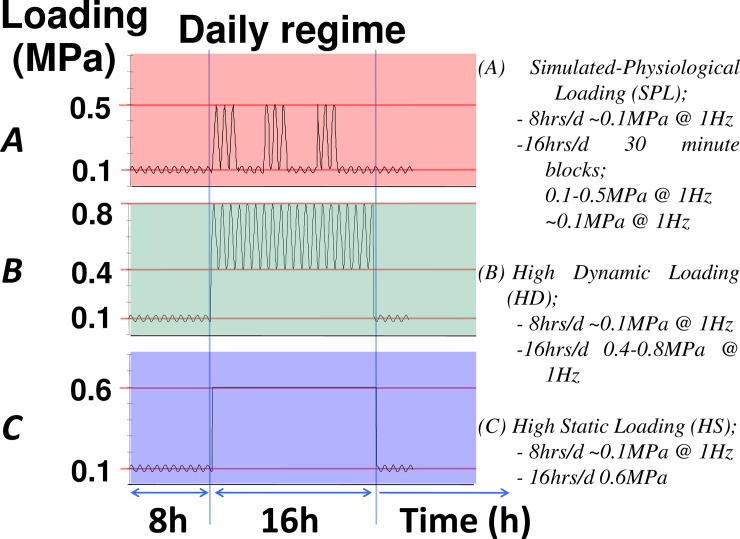
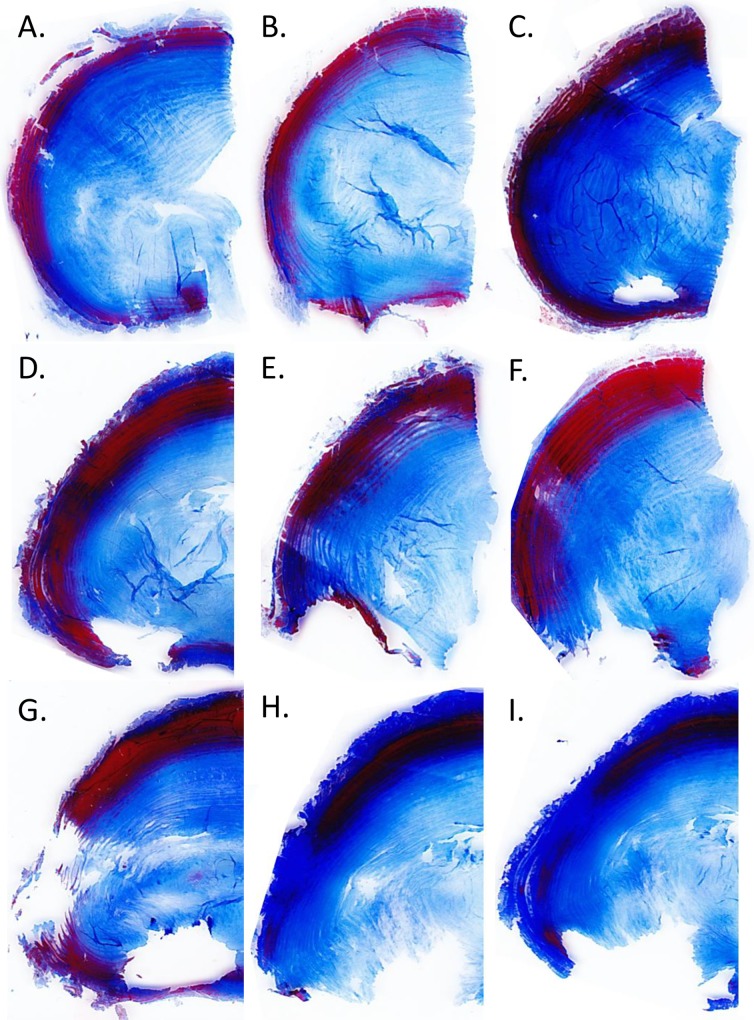
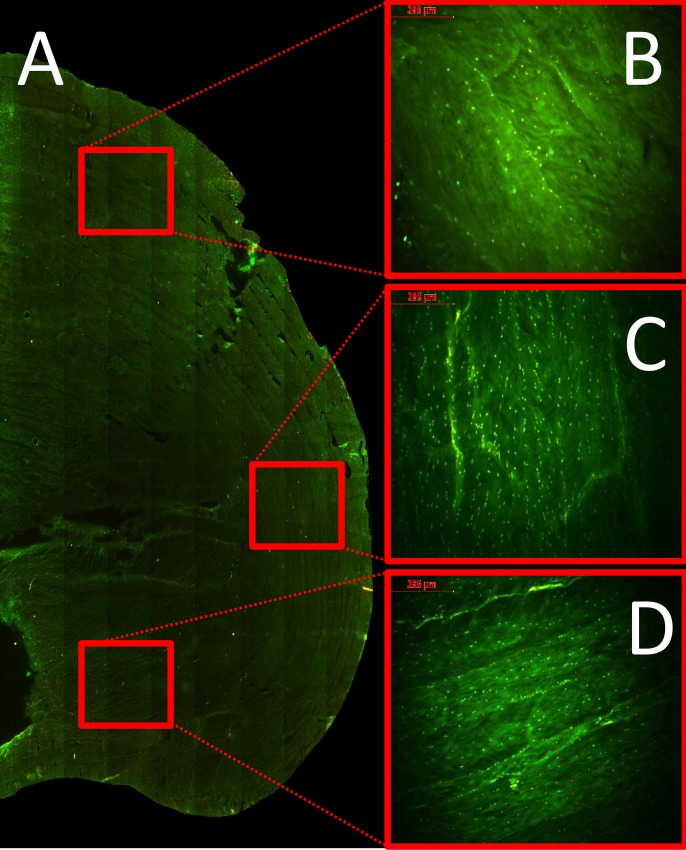
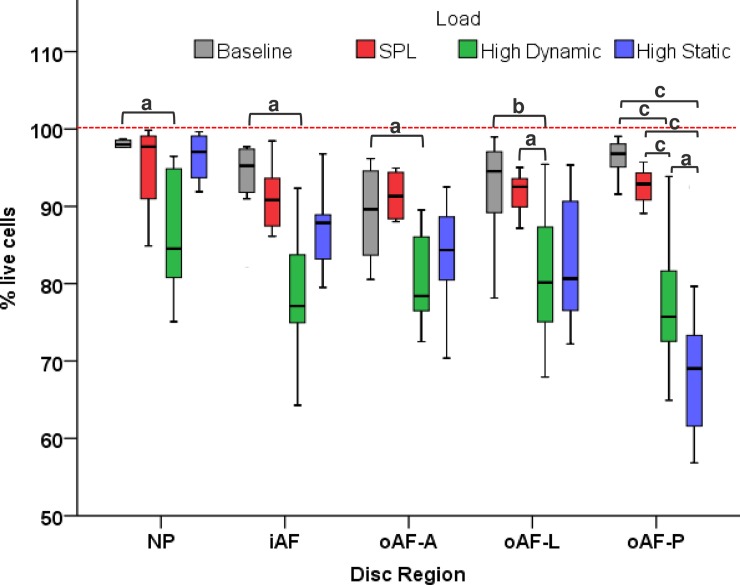
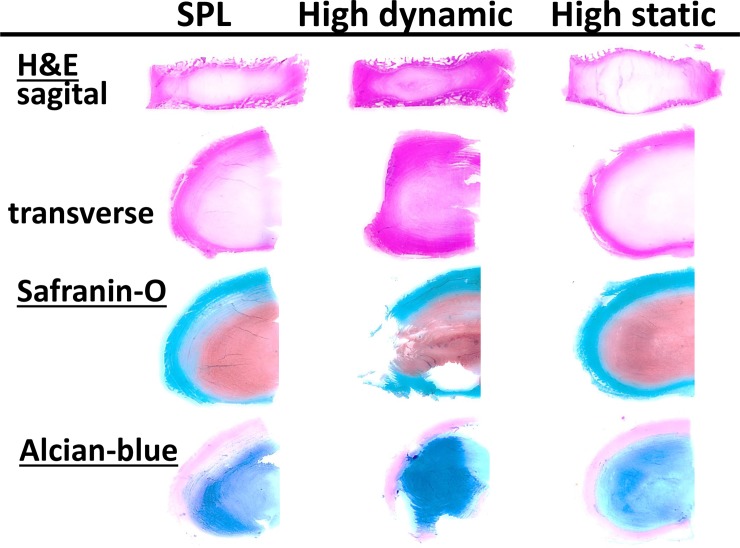
IVDs (n = 125) were cultured in a bioreactor and subjected to simulated-physiological loading (SPL), high dynamic (HD), or high static (HS) overloading. The effect of loading was determined in five disc regions: nucleus, inner-annulus and anterior, lateral and posterior outer-annulus. IVD height loss and external pressure transfer during loading were measured, cell viability was mapped and quantified, and matrix integrity was assessed.
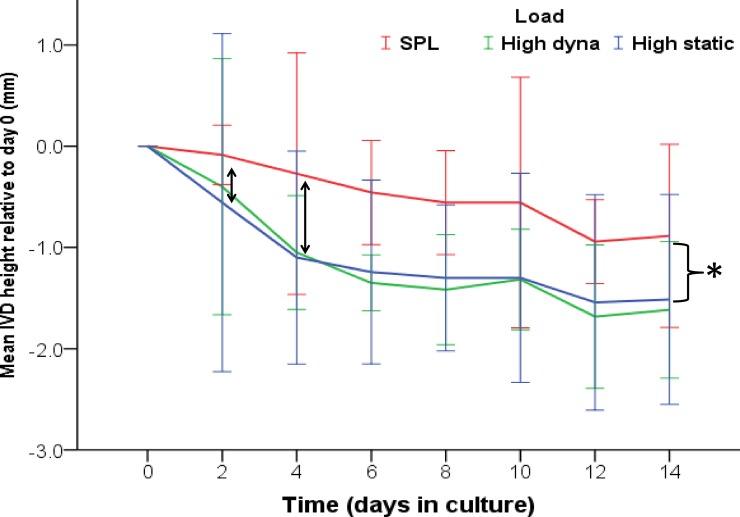
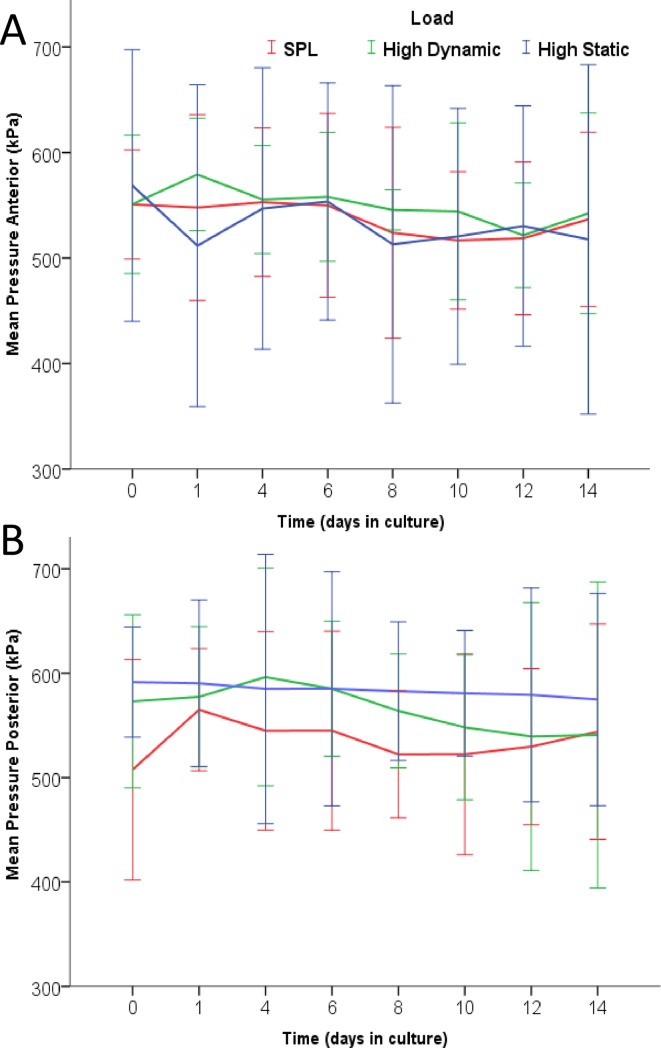
During culture, overloaded IVDs lost a significant amount of height, yet the distribution of axial pressure remained unchanged. HD loading caused cell death and disruption of matrix in all IVD regions, whereas HS loading particularly affected cell viability and matrix integrity in the posterior region of the outer annulus.
Axial overloading is detrimental to the lumbar IVD. Static overloading affects the posterior annulus more strongly, while the nucleus is relatively spared. Hence, static overloading predisposes the disc for posterior herniation. These findings could have implications for working conditions, in particular of sedentary occupations, and the design of interventions aimed at prevention and treatment of early intervertebral disc degeneration.
腰椎间盘突出大多发生在椎间盘的后外侧区域,机械负荷是一个重要的风险因素。研究表明,动态和静态过载对椎间盘的髓核和纤维环的影响不同。我们假设,过载对椎间盘前、外侧和后纤维环的影响也存在差异,这可以解释后外侧区域突出的偏好。我们评估了山羊腰椎间盘对动态和静态过载的局部力学和细胞反应。
将125个椎间盘在生物反应器中培养,并施加模拟生理负荷(SPL)、高动态(HD)或高静态(HS)过载。在五个椎间盘区域测定负荷的影响:髓核、内环以及前、外侧和后外环。测量加载过程中椎间盘高度损失和外部压力传递,绘制并量化细胞活力图,并评估基质完整性。
在培养过程中,过载的椎间盘损失了大量高度,但轴向压力分布保持不变。HD加载导致所有椎间盘区域的细胞死亡和基质破坏,而HS加载尤其影响外环后区域的细胞活力和基质完整性。
轴向过载对腰椎间盘有害。静态过载对后纤维环的影响更强,而髓核相对幸免。因此,静态过载使椎间盘易于发生后突。这些发现可能对工作条件,特别是久坐职业的工作条件,以及旨在预防和治疗早期椎间盘退变的干预措施设计产生影响。