Dezfulian Mohammad H, Foreman Curtis, Jalili Espanta, Pal Mrinal, Dhaliwal Rajdeep K, Roberto Don Karl A, Imre Kathleen M, Kohalmi Susanne E, Crosby William L
Department of Biological Sciences, University of Windsor, Windsor, ON, Canada.
Present address: Department of Genetics, Harvard Medical School, Boston, MA, 02115, USA.
BMC Plant Biol. 2017 Apr 7;17(1):71. doi: 10.1186/s12870-017-1022-6.
Branched-chain amino acids (BCAAs) are synthesized by plants, fungi, bacteria, and archaea with plants being the major source of these amino acids in animal diets. Acetolactate synthase (ALS) is the first enzyme in the BCAA synthesis pathway. Although the functional contribution of ALS to BCAA biosynthesis has been extensively characterized, a comprehensive understanding of the regulation of this pathway at the molecular level is still lacking.
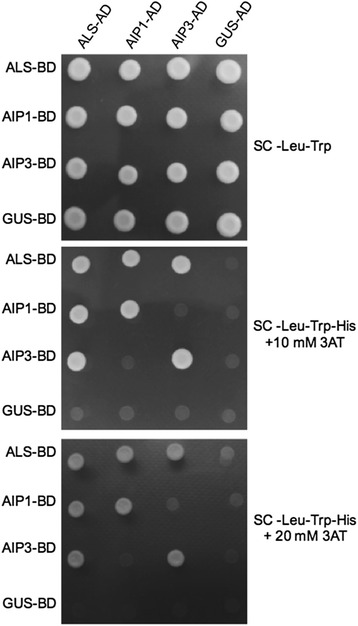
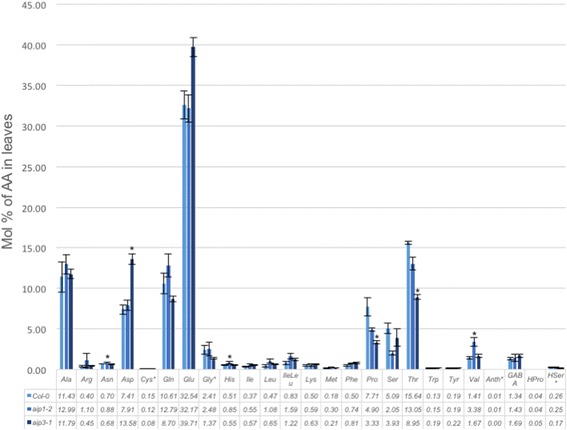
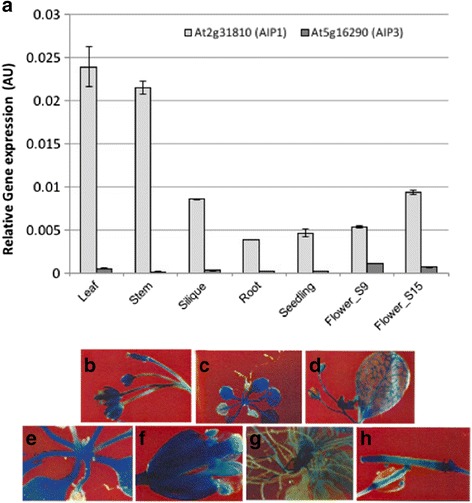
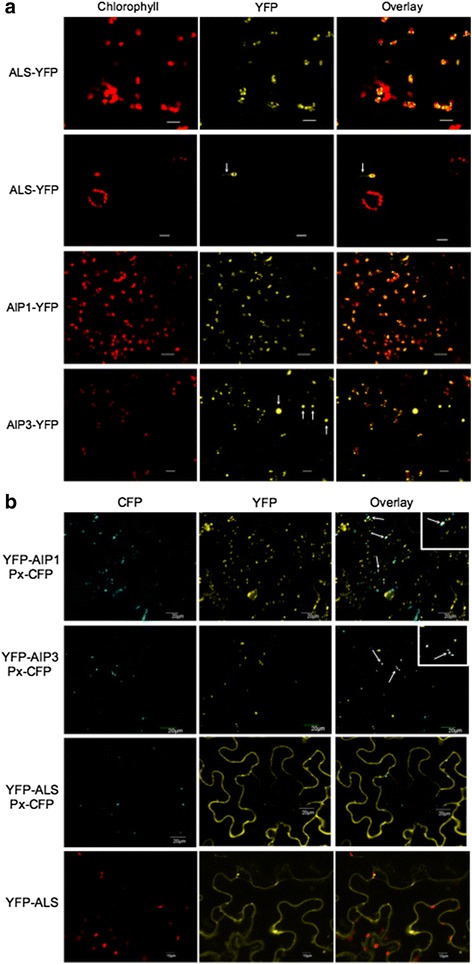
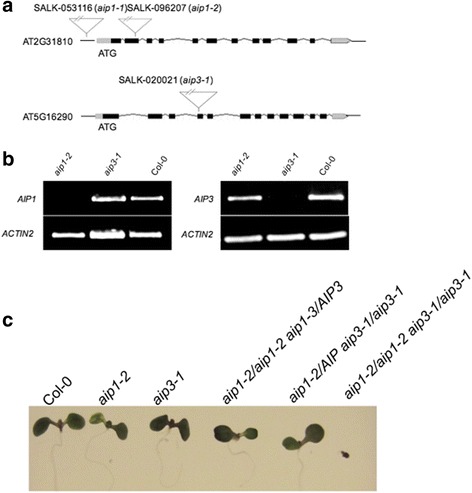
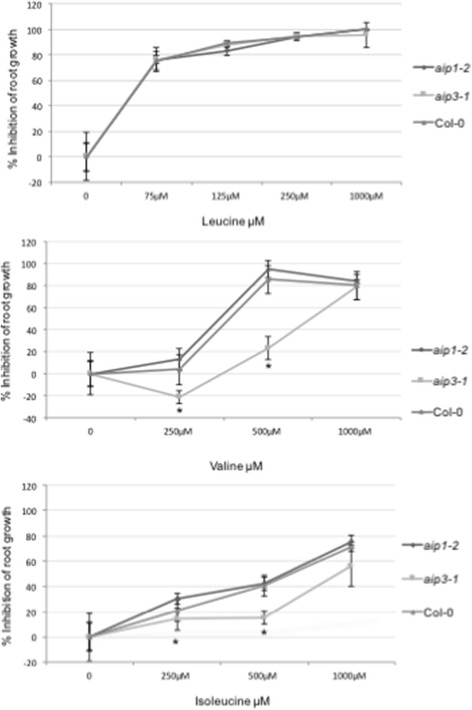
To characterize the regulatory processes governing ALS activity we utilized several complementary approaches. Using the ALS catalytic protein subunit as bait we performed a yeast two-hybrid (Y2H) screen which resulted in the identification of a set of interacting proteins, two of which (denoted as ALS-INTERACTING PROTEIN1 and 3 [AIP1 and AIP3, respectively]) were found to be evolutionarily conserved orthologues of bacterial feedback-regulatory proteins and therefore implicated in the regulation of ALS activity. To investigate the molecular role AIPs might play in BCAA synthesis in Arabidopsis thaliana, we examined the functional contribution of aip1 and aip3 knockout alleles to plant patterning and development and BCAA synthesis under various growth conditions. Loss-of-function genetic backgrounds involving these two genes exhibited differential aberrant growth responses in valine-, isoleucine-, and sodium chloride-supplemented media. While BCAA synthesis is believed to be localized to the chloroplast, both AIP1 and AIP3 were found to localize to the peroxisome in addition to the chloroplast. Analysis of free amino acid pools in the mutant backgrounds revealed that they differ in the absolute amount of individual BCAAs accumulated and exhibit elevated levels of BCAAs in leaf tissues. Despite the phenotypic differences observed in aip1 and aip3 backgrounds, functional redundancy between these loci was suggested by the finding that aip1/aip3 double knockout mutants are severely developmentally compromised.
Taken together the data suggests that the two regulatory proteins, in conjunction with ALS, have overlapping but distinct functions in BCAA synthesis, and also play a role in pathways unrelated to BCAA synthesis such as sodium-ion homeostasis, extending to broader aspects of patterning and development.
支链氨基酸(BCAAs)由植物、真菌、细菌和古生菌合成,植物是动物饮食中这些氨基酸的主要来源。乙酰乳酸合酶(ALS)是BCAA合成途径中的首个酶。尽管ALS对BCAA生物合成的功能贡献已得到广泛表征,但在分子水平上对该途径调控的全面理解仍很缺乏。
为了表征调控ALS活性的过程,我们采用了几种互补方法。以ALS催化蛋白亚基为诱饵进行酵母双杂交(Y2H)筛选,结果鉴定出一组相互作用蛋白,其中两个(分别表示为ALS相互作用蛋白1和3 [AIP1和AIP3])被发现是细菌反馈调节蛋白的进化保守直系同源物,因此与ALS活性的调节有关。为了研究AIPs在拟南芥BCAA合成中可能发挥的分子作用,我们检测了aip1和aip3敲除等位基因在各种生长条件下对植物形态建成和发育以及BCAA合成的功能贡献。涉及这两个基因的功能丧失遗传背景在补充缬氨酸、异亮氨酸和氯化钠的培养基中表现出不同的异常生长反应。虽然BCAA合成被认为定位于叶绿体,但除叶绿体之外,还发现AIP1和AIP3都定位于过氧化物酶体。对突变背景中游离氨基酸库的分析表明,它们在积累的单个BCAAs的绝对量上有所不同,并且在叶片组织中表现出BCAAs水平升高。尽管在aip1和aip3背景中观察到表型差异,但这些基因座之间的功能冗余由aip1/aip3双敲除突变体在发育上严重受损这一发现表明。
综合这些数据表明,这两种调节蛋白与ALS一起在BCAA合成中具有重叠但不同的功能,并且在与BCAA合成无关的途径(如钠离子稳态)中也发挥作用,延伸到形态建成和发育的更广泛方面。