Department of Clinical Pharmacy, School of Pharmacy, Taipei Medical University, Taipei, Taiwan.
Graduate Institute of Medical Sciences, College of Medicine, Taipei Medical University, Taipei, Taiwan.
Sci Rep. 2017 Apr 7;7(1):732. doi: 10.1038/s41598-017-00826-0.
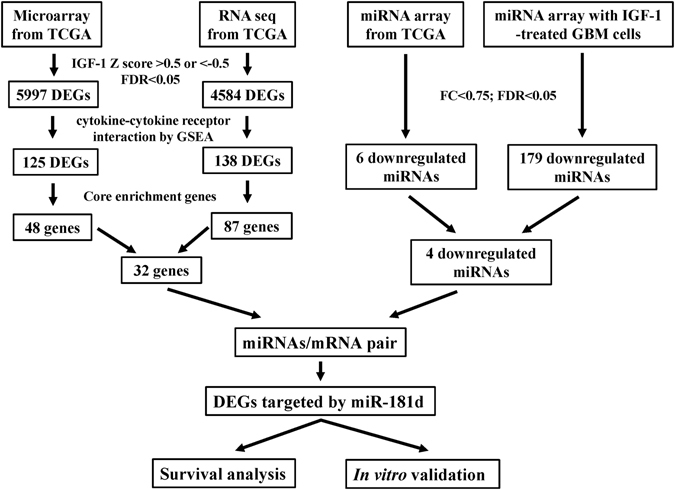
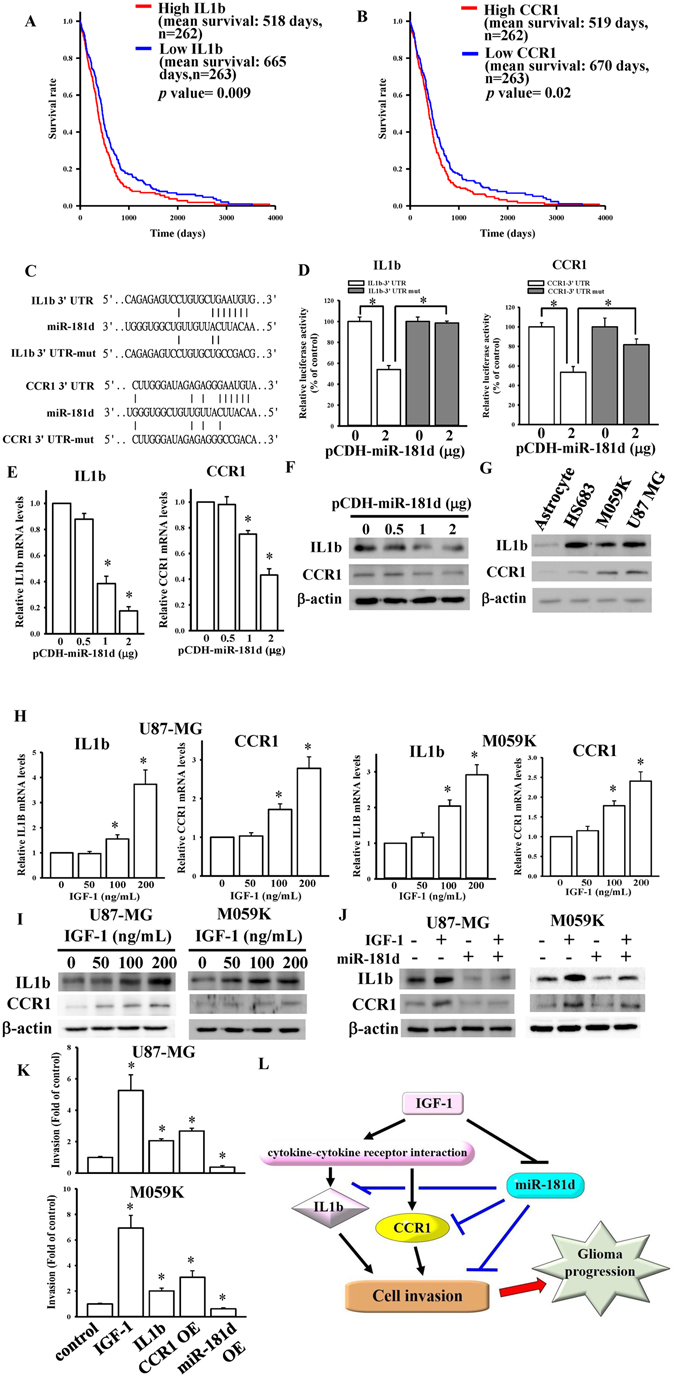
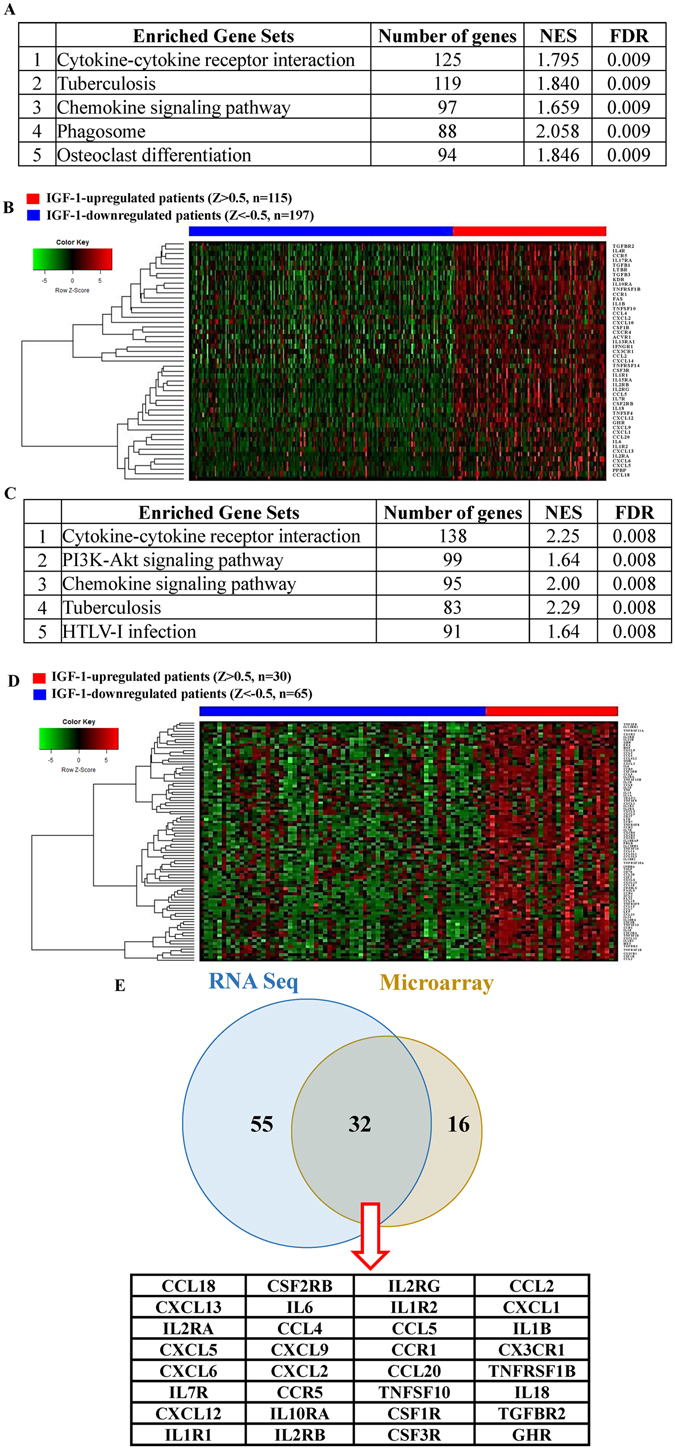
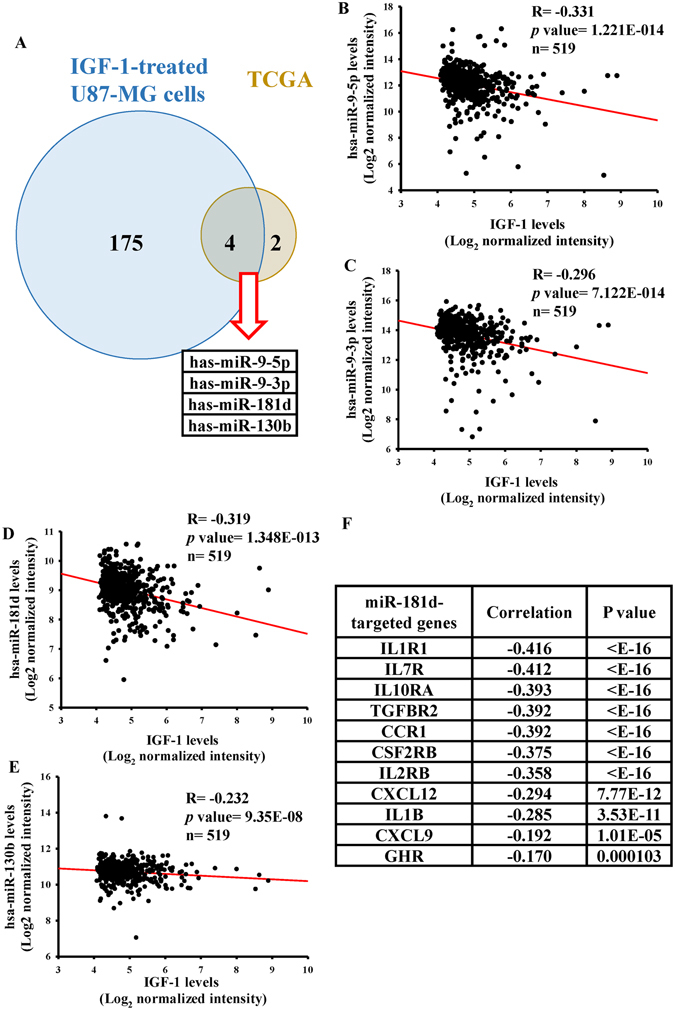
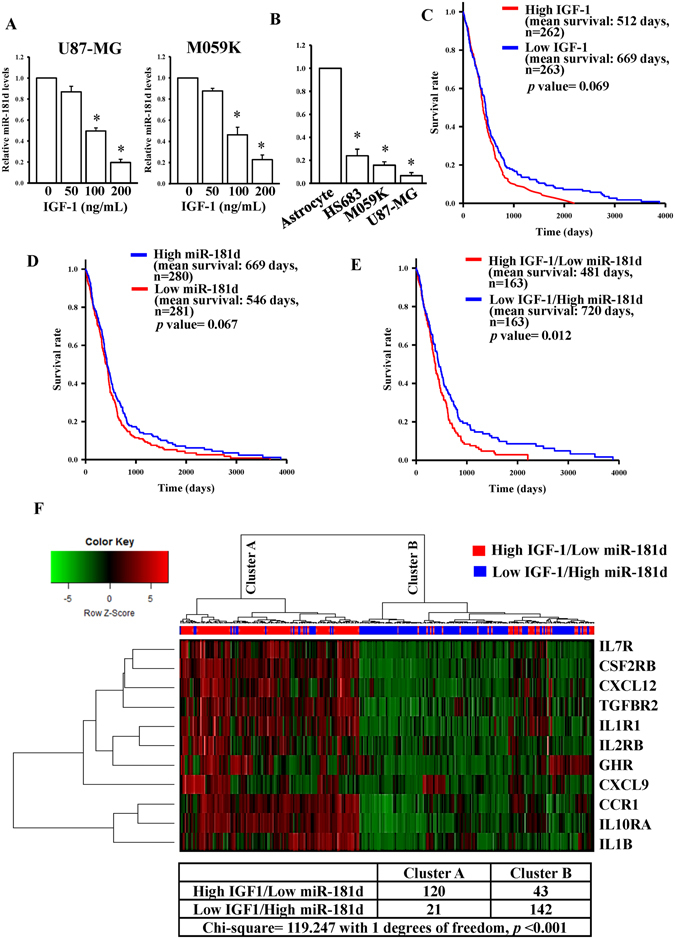
The insulin-like growth factor (IGF)-1 signaling is relevant in regulating cell growth and cytokine secretions by glioblastomas. MicroRNAs determine the cell fate in glioblastomas. However, relationships between IGF-1 signaling and miRNAs in glioblastoma pathogenesis are still unclear. Our aim was to validate the IGF-1-mediated mRNA/miRNA regulatory network in glioblastomas. Using in silico analyses of mRNA array and RNA sequencing data from The Cancer Genome Atlas (TCGA), we identified 32 core enrichment genes that were highly associated with IGF-1-promoted cytokine-cytokine receptor interactions. To investigate the IGF-1-downregulated miRNA signature, microarray-based approaches with IGF-1-treated U87-MG cells and array data in TCGA were used. Four miRNAs, including microRNA (miR)-9-5p, miR-9-3p, miR-181d, and miR-130b, exhibited an inverse correlation with IGF-1 levels. The miR-181d, that targeted the most IGF-1-related cytokine genes, was significantly reduced in IGF-1-treated glioma cells. Statistical models incorporating both high-IGF-1 and low-miR-181d statuses better predicted poor patient survival, and can be used as an independent prognostic factor in glioblastomas. The C-C chemokine receptor type 1 (CCR1) and interleukin (IL)-1b demonstrated inverse correlations with miR-181d levels and associations with patient survival. miR-181d significantly attenuated IGF-1-upregulated CCR1 and IL-1b gene expressions. These findings demonstrate a distinct role for IGF-1 signaling in glioma progression via miR-181d/cytokine networks.
胰岛素样生长因子 (IGF)-1 信号通路在调节神经胶质瘤细胞生长和细胞因子分泌方面发挥着重要作用。microRNAs 决定了神经胶质瘤细胞的命运。然而,IGF-1 信号通路与神经胶质瘤发病机制中的 microRNAs 之间的关系尚不清楚。我们的目的是验证 IGF-1 介导的神经胶质瘤中 mRNA/miRNA 调控网络。通过对癌症基因组图谱 (TCGA) 中 mRNA 芯片和 RNA 测序数据的计算机分析,我们鉴定出 32 个核心富集基因,这些基因与 IGF-1 促进的细胞因子-细胞因子受体相互作用高度相关。为了研究 IGF-1 下调的 microRNA 特征,我们使用了基于 microarray 的方法对 IGF-1 处理的 U87-MG 细胞进行分析,并使用 TCGA 中的 microarray 数据进行分析。包括 microRNA (miR)-9-5p、miR-9-3p、miR-181d 和 miR-130b 在内的 4 个 microRNA 与 IGF-1 水平呈负相关。靶向最多 IGF-1 相关细胞因子基因的 miR-181d 在 IGF-1 处理的神经胶质瘤细胞中显著减少。纳入高 IGF-1 和低 miR-181d 状态的统计模型更好地预测了患者的不良预后,可作为神经胶质瘤的独立预后因素。C-C 趋化因子受体 1 (CCR1) 和白细胞介素 (IL)-1b 与 miR-181d 水平呈负相关,与患者的生存相关。miR-181d 显著抑制 IGF-1 上调的 CCR1 和 IL-1b 基因表达。这些发现表明,IGF-1 信号通路通过 miR-181d/细胞因子网络在神经胶质瘤进展中发挥独特作用。