Lavaur Jérémie, Le Nogue Déborah, Lemaire Marc, Pype Jan, Farjot Géraldine, Hirsch Etienne C, Michel Patrick P
Sorbonne Universités, UPMC Univ Paris 06, Inserm, CNRS, Institut du Cerveau et de la Moelle épinière (ICM), Hôpital Pitié-Salpêtrière, Paris, France.
Air Liquide Santé International, Medical R&D Paris, Saclay Research Center, Jouy-en Josas, France.
J Neurochem. 2017 Jul;142(1):14-28. doi: 10.1111/jnc.14041. Epub 2017 May 16.
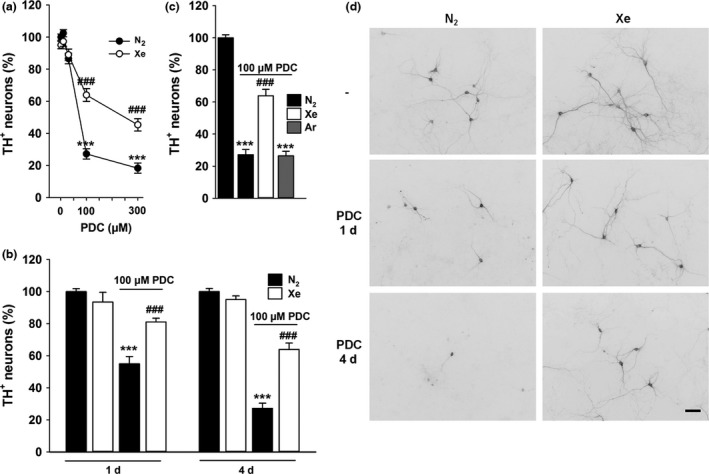
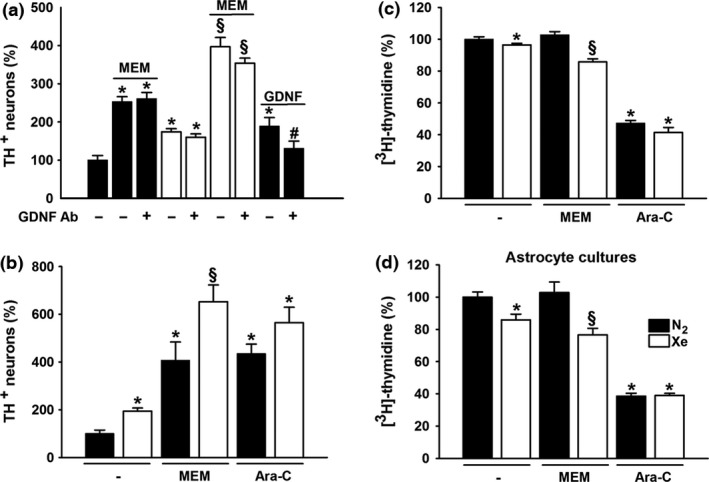
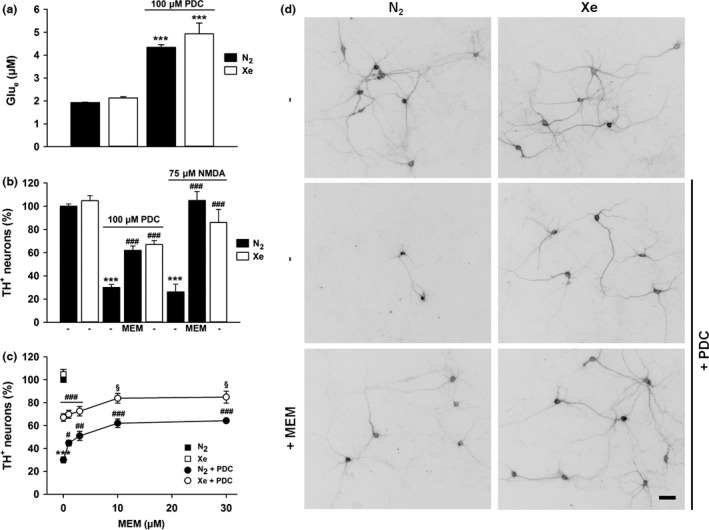
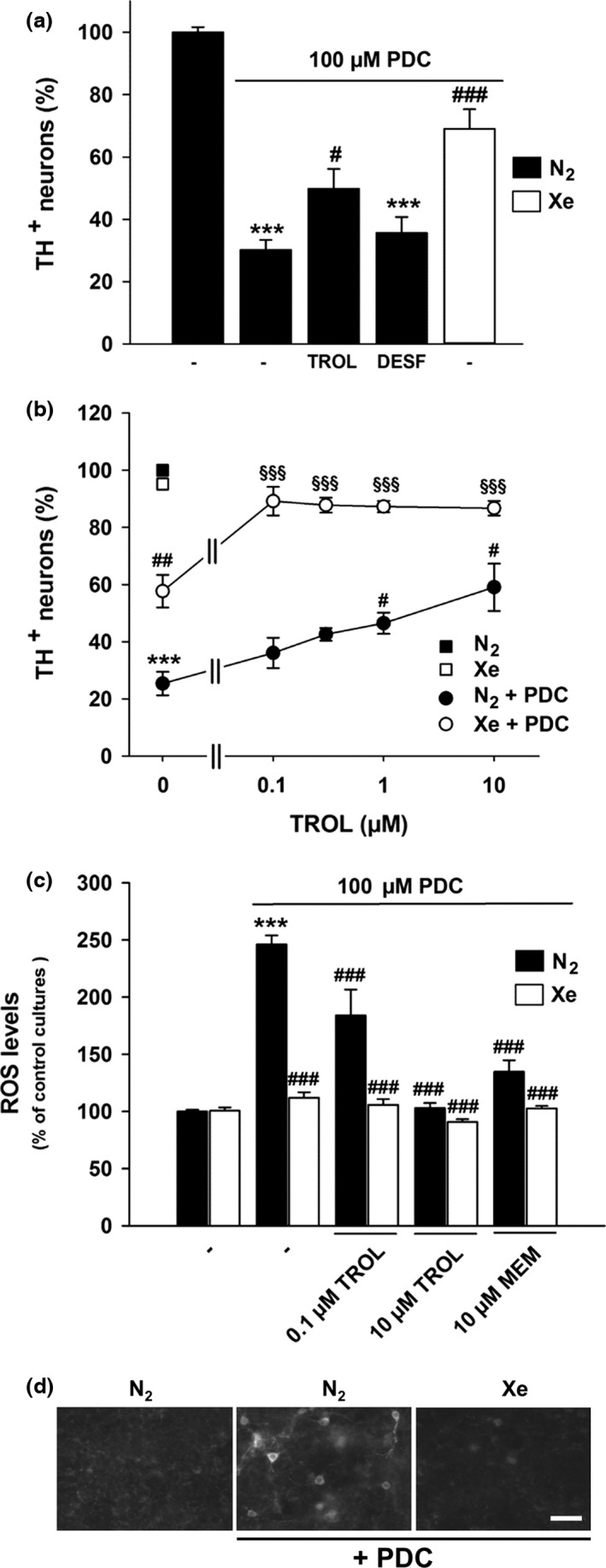
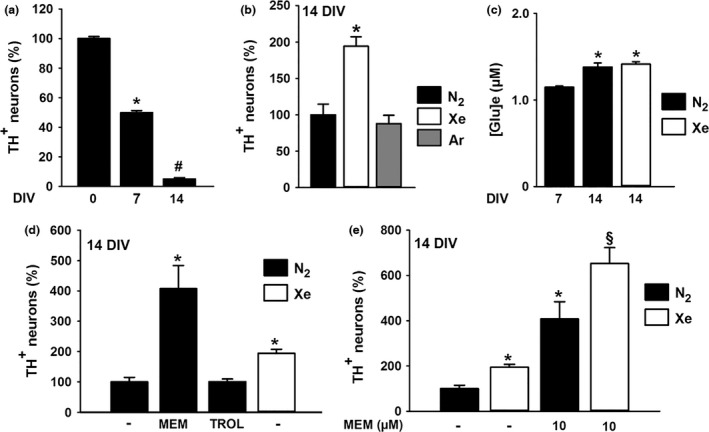
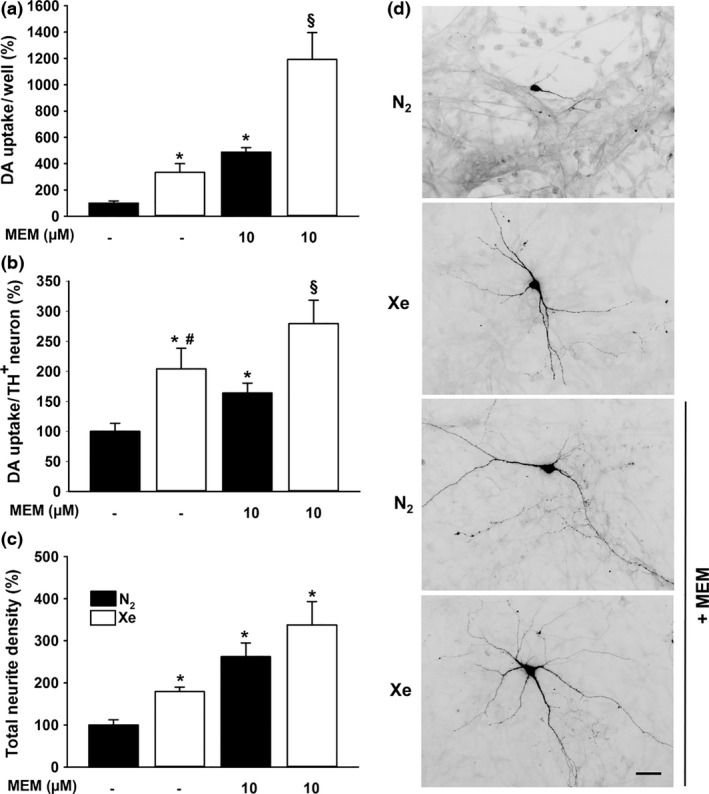
Despite its low chemical reactivity, the noble gas xenon possesses a remarkable spectrum of biological effects. In particular, xenon is a strong neuroprotectant in preclinical models of hypoxic-ischemic brain injury. In this study, we wished to determine whether xenon retained its neuroprotective potential in experimental settings that model the progressive loss of midbrain dopamine (DA) neurons in Parkinson's disease. Using rat midbrain cultures, we established that xenon was partially protective for DA neurons through either direct or indirect effects on these neurons. So, when DA neurons were exposed to l-trans-pyrrolidine-2,4-dicarboxylic acid so as to increase ambient glutamate levels and generate slow and sustained excitotoxicity, the effect of xenon on DA neurons was direct. The vitamin E analog Trolox also partially rescued DA neurons in this setting and enhanced neuroprotection by xenon. However, in the situation where DA cell death was spontaneous, the protection of DA neurons by xenon appeared indirect as it occurred through the repression of a mechanism mediated by proliferating glial cells, presumably astrocytes and their precursor cells. Xenon also exerted trophic effects for DA neurons in this paradigm. The effects of xenon were mimicked and improved by the N-methyl-d-aspartate glutamate receptor antagonist memantine and xenon itself appeared to work by antagonizing N-methyl-d-aspartate receptors. Note that another noble gas argon could not reproduce xenon effects. Overall, present data indicate that xenon can provide protection and trophic support to DA neurons that are vulnerable in Parkinson's disease. This suggests that xenon might have some therapeutic value for this disorder.
尽管稀有气体氙的化学反应活性较低,但它具有一系列显著的生物学效应。特别是,在缺氧缺血性脑损伤的临床前模型中,氙是一种强大的神经保护剂。在本研究中,我们希望确定在模拟帕金森病中脑多巴胺(DA)神经元逐渐丧失的实验环境中,氙是否保留其神经保护潜力。使用大鼠中脑培养物,我们确定氙通过对这些神经元的直接或间接作用对DA神经元具有部分保护作用。因此,当DA神经元暴露于L-反式-吡咯烷-2,4-二羧酸以增加周围谷氨酸水平并产生缓慢且持续的兴奋性毒性时,氙对DA神经元的作用是直接的。维生素E类似物托可索仑在这种情况下也部分挽救了DA神经元,并增强了氙的神经保护作用。然而,在DA细胞死亡是自发的情况下,氙对DA神经元的保护似乎是间接的,因为它是通过抑制由增殖的神经胶质细胞(可能是星形胶质细胞及其前体细胞)介导的机制而发生的。在这种模式下,氙对DA神经元也具有营养作用。氙的作用被N-甲基-D-天冬氨酸谷氨酸受体拮抗剂美金刚模拟并增强,并且氙本身似乎通过拮抗N-甲基-D-天冬氨酸受体起作用。请注意,另一种稀有气体氩不能重现氙的作用。总体而言,目前的数据表明氙可以为帕金森病中易受损的DA神经元提供保护和营养支持。这表明氙可能对这种疾病具有一定的治疗价值。