Sun Hailiang, Kaplan Bryan S, Guan Minhui, Zhang Guihong, Ye Jianqiang, Long Li-Ping, Blackmon Sherry, Yang Chun-Kai, Chiang Meng-Jung, Xie Hang, Zhao Nan, Cooley Jim, Smith David F, Liao Ming, Cardona Carol, Li Lei, Wang George Peng, Webby Richard, Wan Xiu-Feng
Department of Basic Sciences, College of Veterinary Medicine, Mississippi State University, Mississippi State, MS 39759, USA.
Department of Infectious Diseases, St Jude Children's Research Hospital, Memphis, TN 38105, USA.
Emerg Microbes Infect. 2017 Apr 12;6(4):e17. doi: 10.1038/emi.2017.3.
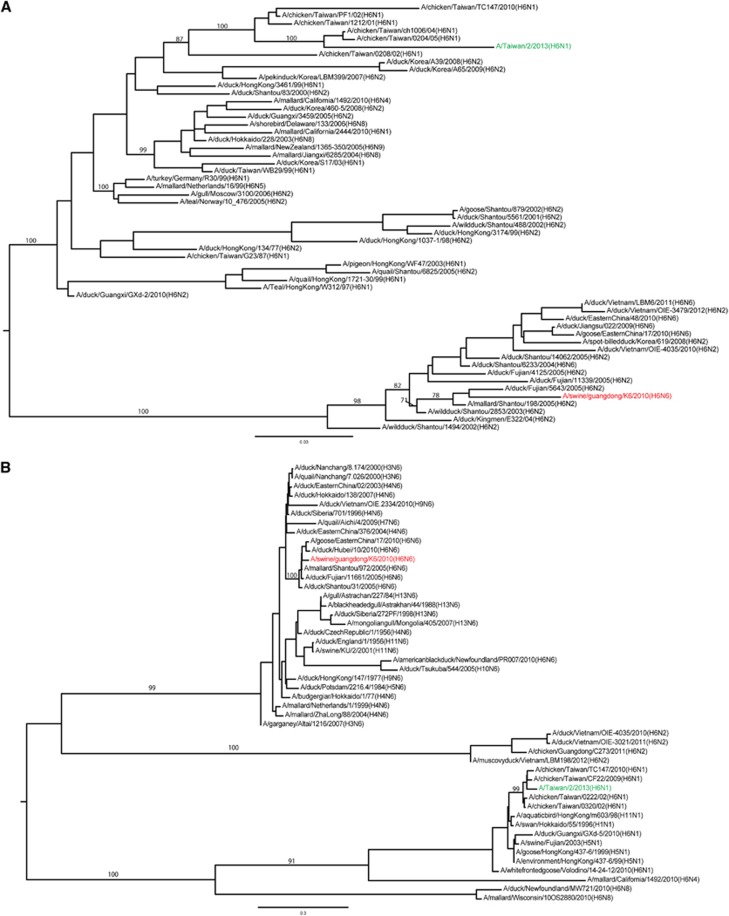
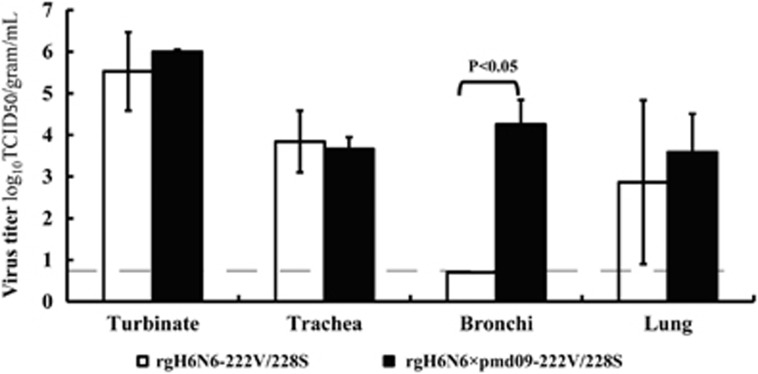
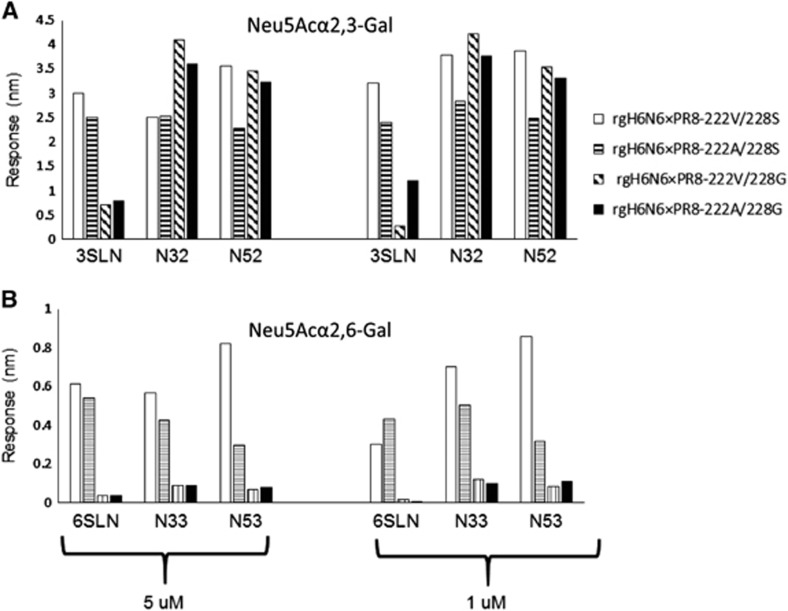
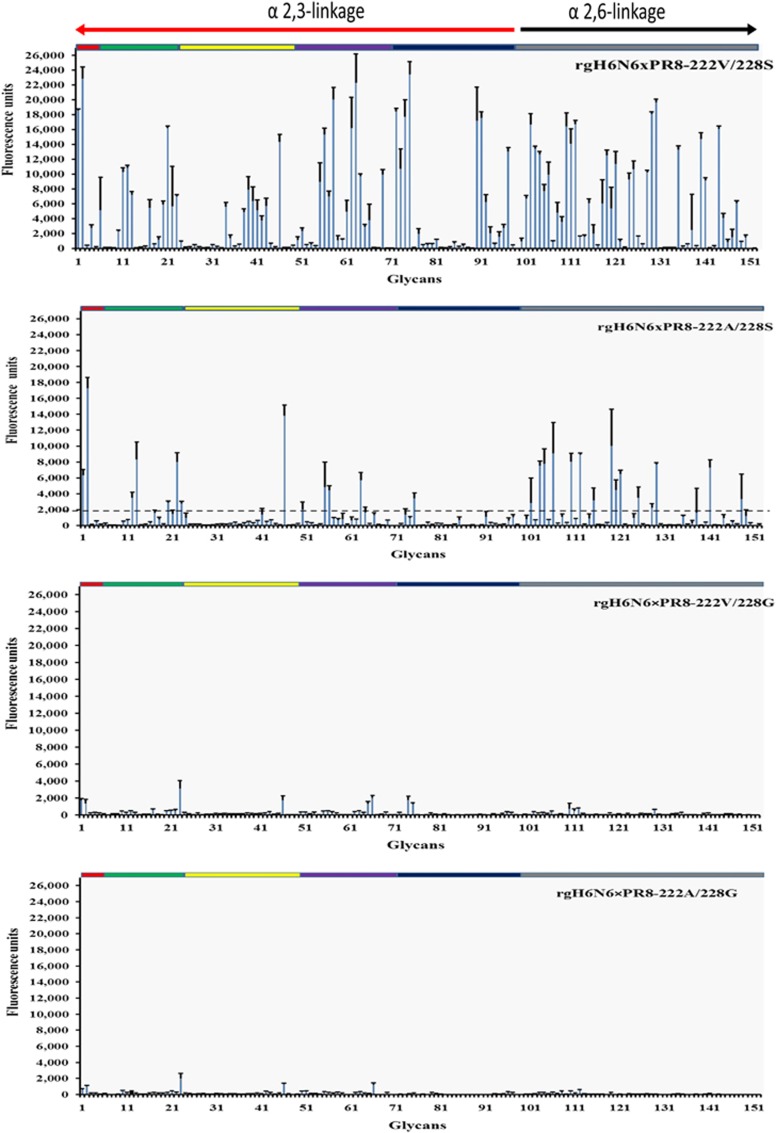
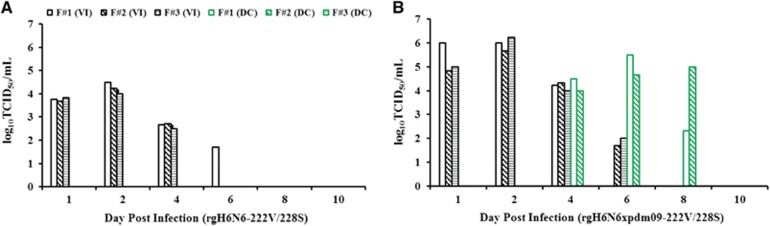
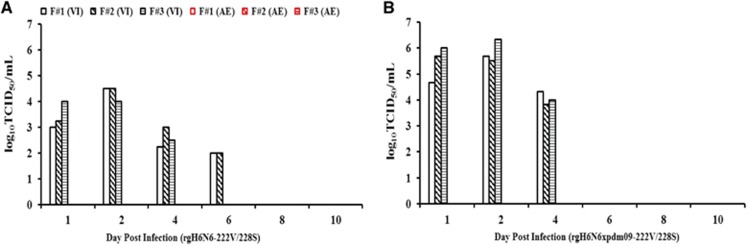
Subtype H6 influenza A viruses (IAVs) are commonly detected in wild birds and domestic poultry and can infect humans. In 2010, a H6N6 virus emerged in southern China, and since then, it has caused sporadic infections among swine. We show that this virus binds to α2,6-linked and α2,3-linked sialic acids. Mutations at residues 222 (alanine to valine) and 228 (glycine to serine) of the virus hemagglutinin (HA) affected its receptor-binding properties. Experiments showed that the virus has limited transmissibility between ferrets through direct contact or through inhalation of infectious aerosolized droplets. The internal genes of the influenza A(H1N1)pdm09 virus, which is prevalent in swine worldwide, increases the replication efficiency of H6N6 IAV in the lower respiratory tract of ferrets but not its transmissibility between ferrets. These findings suggest H6N6 swine IAV (SIV) currently poses a moderate risk to public health, but its evolution and spread should be closely monitored.
H6亚型甲型流感病毒(IAV)在野生鸟类和家禽中普遍被检测到,并且能够感染人类。2010年,一种H6N6病毒在中国南方出现,自那时起,它已在猪群中引起散发性感染。我们发现这种病毒能够结合α2,6-连接和α2,3-连接的唾液酸。病毒血凝素(HA)第222位残基(丙氨酸突变为缬氨酸)和第228位残基(甘氨酸突变为丝氨酸)的突变影响了其受体结合特性。实验表明,该病毒通过直接接触或吸入感染性气溶胶飞沫在雪貂之间的传播能力有限。在全球猪群中流行的甲型(H1N1)pdm09流感病毒的内部基因,提高了H6N6 IAV在雪貂下呼吸道中的复制效率,但并未提高其在雪貂之间的传播能力。这些发现表明,H6N6猪IAV(SIV)目前对公共卫生构成中度风险,但其进化和传播情况应受到密切监测。