Anastasopoulos Panagiotis P, Alexiadis George, Spyridonos Sarantis, Fandridis Emmanouil
Hand Surgery-Upper Limb and Microsurgery Department, KAT General Hospital, Nikis 2 Str, Kifisia 145-61, Athens, Greece.
Open Orthop J. 2017 Feb 28;11:77-94. doi: 10.2174/1874325001711010077. eCollection 2017.
Massive rotator cuff tears pose a difficult and complex challenge even for the experienced surgeon; inability to repair these tears by conventional means designates them as irreparable, while management becomes quite taxing. Several operative options have been suggested for the management of such lesions with varying degrees of success, while it is imperative to match patient demands and expectations to the predicted outcome.
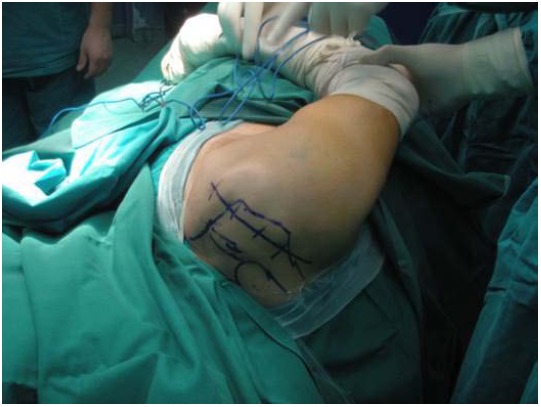
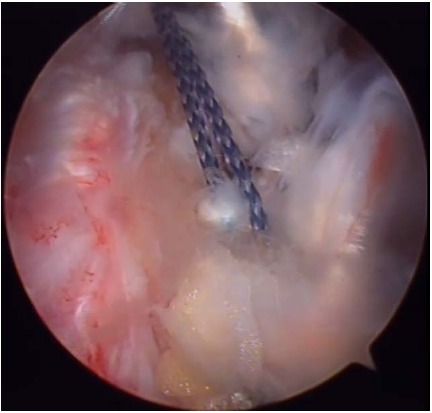
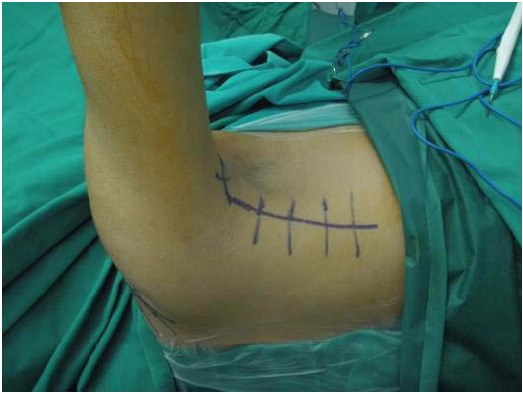
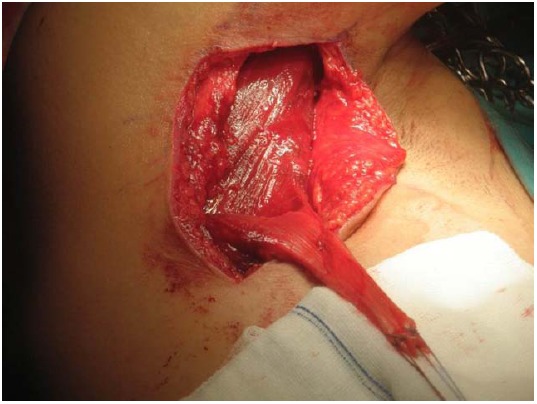
Research articles are examined and key concepts are discussed, in order to provide an evidence based review of the available literature. The anatomy and pathomechanics along with the indications, contraindications and surgical techniques are reported.
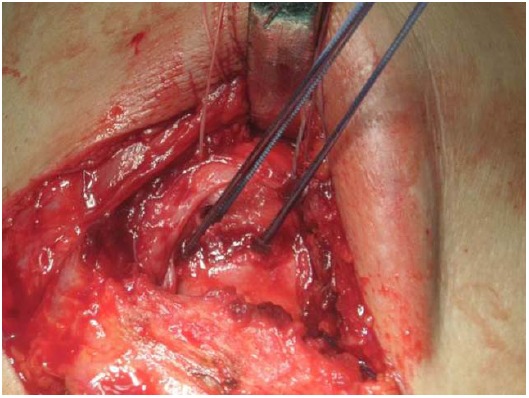
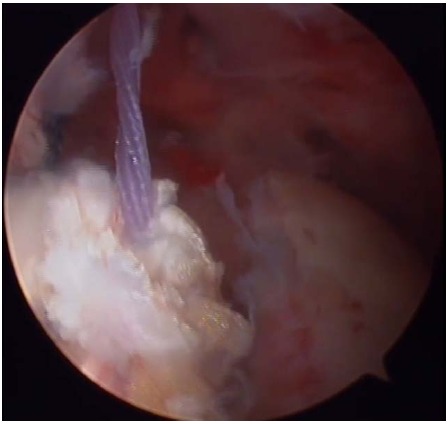
Transfer of the Latissimus dorsi has been used with success to restore shoulder function in deficits of the posterior rotator cuff. Although it can be used in a variety of settings, the ideal patient for a Latissimus dorsi tendon transfer is a young and active individual, with no glenohumeral osteoarthritis that has a severe disability and weakness related to an irreparable posterior cuff tear.
Tendon transfers have proved to be a successful treatment option in salvaging this difficult problem, providing pain relief and restoring shoulder function. Despite the excellent functional outcomes and pain suppression following operation, a variety of factors may affect the outcome; thus making indications and preoperative assessment a valuable component.
即使对于经验丰富的外科医生来说,巨大的肩袖撕裂也构成了一个困难而复杂的挑战;无法通过传统方法修复这些撕裂将其定义为不可修复,而治疗变得相当繁重。已经提出了几种手术选择来处理此类病变,取得了不同程度的成功,同时必须使患者的需求和期望与预测结果相匹配。
对研究文章进行审查并讨论关键概念,以便对现有文献进行基于证据的综述。报告了解剖结构和病理力学以及适应症、禁忌症和手术技术。
背阔肌转移已成功用于恢复后肩袖缺损时的肩部功能。虽然它可用于多种情况,但背阔肌肌腱转移的理想患者是年轻且活跃的个体,没有肱骨头关节炎,因不可修复的后袖带撕裂而导致严重残疾和无力。
肌腱转移已被证明是解决这一难题的成功治疗选择,可缓解疼痛并恢复肩部功能。尽管术后有出色的功能结果和疼痛抑制,但多种因素可能影响结果;因此,适应症和术前评估是重要的组成部分。