Ziveri Jason, Barel Monique, Charbit Alain
Sorbonne Paris Cité, Université Paris DescartesParis, France; Institut National de la Santé et de la Recherche Médicale U1151 - Centre National de la Recherche Scientifique UMR 8253, Institut Necker-Enfants Malades, Team 11: Pathogenesis of Systemic InfectionsParis, France.
Front Cell Infect Microbiol. 2017 Mar 28;7:96. doi: 10.3389/fcimb.2017.00096. eCollection 2017.
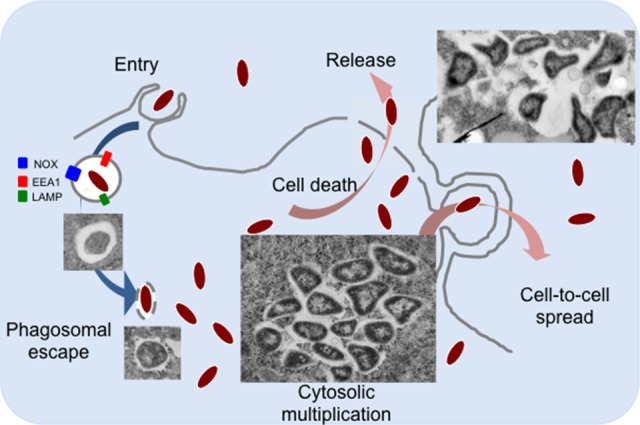
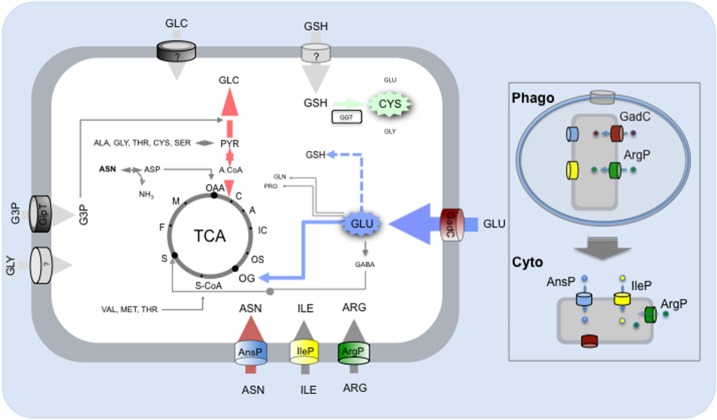
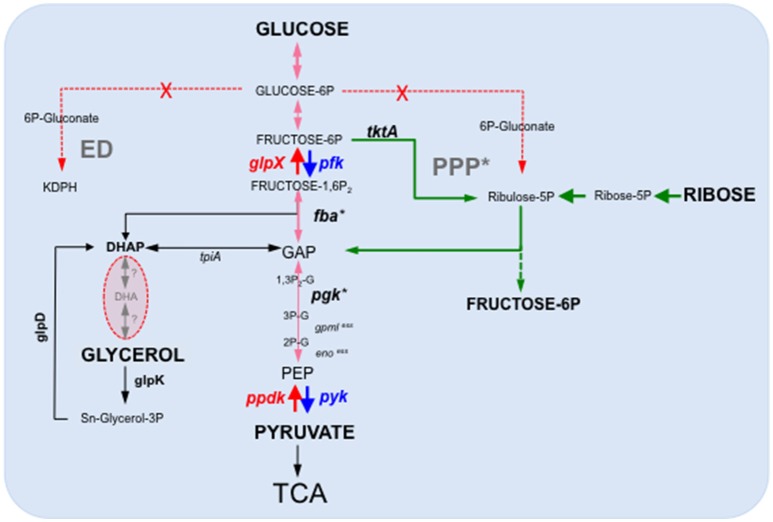
is a highly infectious Gram-negative bacterium and the causative agent of the zoonotic disease tularemia. This bacterial pathogen can infect a broad variety of animal species and can be transmitted to humans in numerous ways with various clinical outcomes. Although, possesses the capacity to infect numerous mammalian cell types, the macrophage constitutes the main intracellular niche, used for bacterial dissemination. To survive and multiply within infected macrophages, must imperatively escape from the phagosomal compartment. In the cytosol, the bacterium needs to control the host innate immune response and adapt its metabolism to this nutrient-restricted niche. Our laboratory has shown that intracellular mainly relied on host amino acid as major gluconeogenic substrates and provided evidence that the host metabolism was also modified upon infection. We will review here our current understanding of how copes with the available nutrient sources provided by the host cell during the course of infection.
是一种高度传染性的革兰氏阴性细菌,也是人畜共患病兔热病的病原体。这种细菌病原体可感染多种动物物种,并能通过多种途径传播给人类,导致各种临床结果。尽管它有能力感染多种哺乳动物细胞类型,但巨噬细胞是其主要的细胞内生存龛,用于细菌传播。为了在受感染的巨噬细胞内存活和繁殖,它必须从吞噬体区室中逃脱。在细胞质中,这种细菌需要控制宿主的先天免疫反应,并使其代谢适应这种营养受限的生存龛。我们实验室已经表明,细胞内的这种细菌主要依赖宿主氨基酸作为主要的糖异生底物,并提供证据表明宿主代谢在这种细菌感染后也会发生改变。我们将在此回顾我们目前对这种细菌在感染过程中如何应对宿主细胞提供的可用营养源的理解。