Kelemen András, Tóthmérész Béla, Valkó Orsolya, Miglécz Tamás, Deák Balázs, Török Péter
MTA's Post Doctoral Research Program MTA TKI Budapest Hungary; Department of Ecology University of Debrecen Debrecen Hungary.
Department of Ecology University of Debrecen Debrecen Hungary; MTA-DE Biodiversity and Ecosystem Services Research Group Debrecen Hungary.
Ecol Evol. 2017 Mar 12;7(7):2432-2440. doi: 10.1002/ece3.2869. eCollection 2017 Apr.
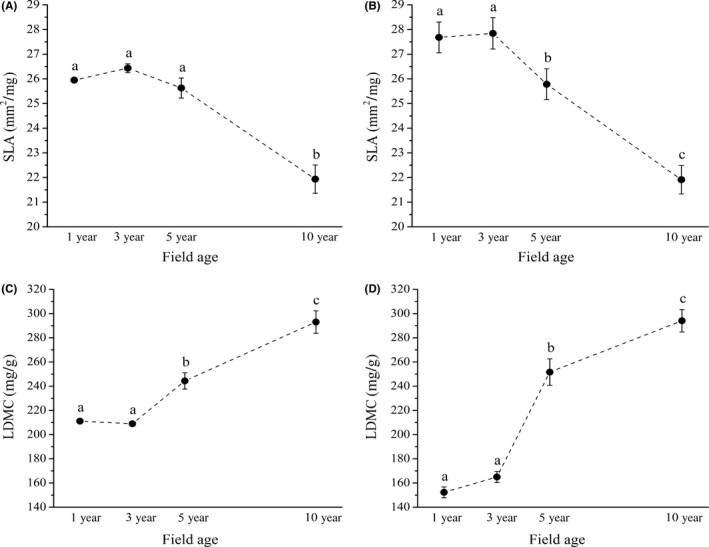
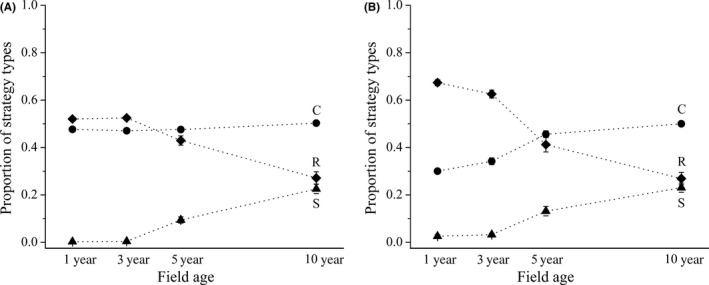
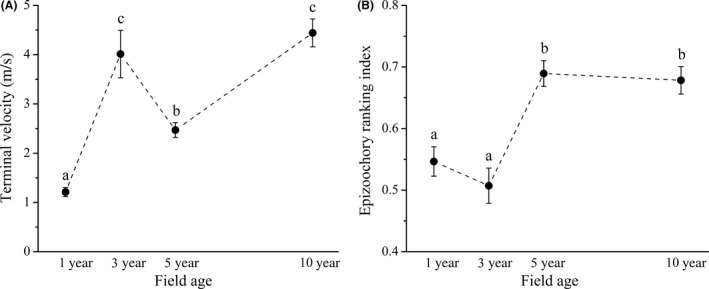
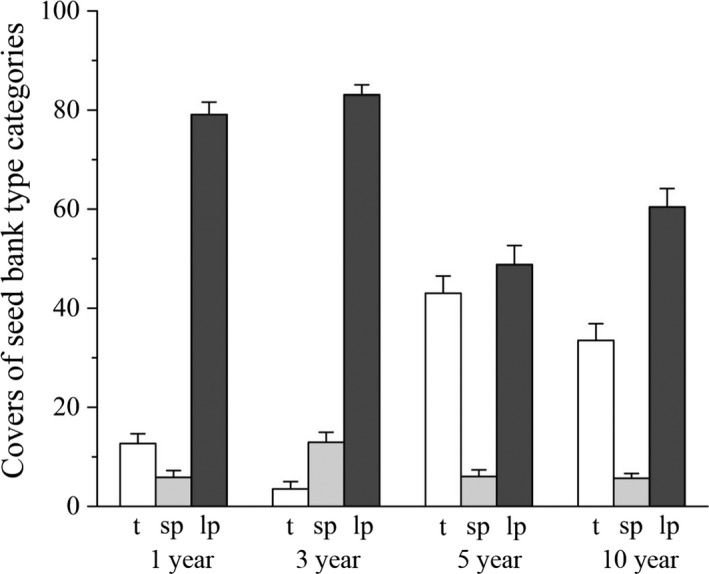
Classical old-field succession studies focused on vegetation changes after the abandonment of annual croplands or on succession after the elimination of cultivated crops. Perennial-crop-mediated succession, where fields are initially covered by perennial crops, reveals alternative aspects of old-field succession theories. We tested the validity of classical theories of old-field succession for perennial-crop-mediated succession. We formulated the following hypotheses: (1) functional diversity increases with increasing field age; (2) resource acquisition versus conservation trade-off shifts toward conservation at community level during the succession; (3) the importance of spatial and temporal seed dispersal decreases during the succession; and (4) competitiveness and stress-tolerance increases and ruderality decreases at community level during the succession. We studied functional diversity, trait distributions and plant strategies in differently aged old-fields using chronosequence method. We found increasing functional richness and functional divergence, but also unchanged or decreasing functional evenness. We detected a shift from resource acquisition to resource conservation strategy of communities during the succession. The role of spatial and temporal seed dispersal was found to be important not only at the initial but also at latter successional stages. We found an increasing stress-tolerance and a decreasing ruderality during succession, while the competitiveness remained unchanged at the community level. Despite the markedly different starting conditions, we found that classical and perennial-crop-mediated old-field successions have some similarities regarding the changes of functional diversity, resource acquisition versus conservation trade-off, and seed dispersal strategies. However, we revealed also the subsequent differences. The competitive character of communities remained stable during the succession; hence, the initial stages of perennial-crop-mediated succession can be similar to the middle stages of classical old-field succession. Moreover, the occupied functional niche space and differentiation were larger in the older stages, but resources were not effectively utilized within this space, suggesting that the stabilization of the vegetation requires more time.
经典的弃耕地演替研究主要关注一年生农田撂荒后的植被变化,或栽培作物消除后的演替过程。多年生作物介导的演替,即田地最初被多年生作物覆盖,揭示了弃耕地演替理论的其他方面。我们检验了经典弃耕地演替理论对多年生作物介导演替的有效性。我们提出了以下假设:(1)功能多样性随田地年龄的增加而增加;(2)在演替过程中,群落水平上资源获取与保护的权衡向保护方向转变;(3)空间和时间种子传播的重要性在演替过程中降低;(4)在演替过程中,群落水平上的竞争力和耐逆性增加,杂草性降低。我们使用年代序列法研究了不同年龄弃耕地上的功能多样性、性状分布和植物策略。我们发现功能丰富度和功能离散度增加,但功能均匀度不变或降低。我们检测到群落演替过程中从资源获取策略向资源保护策略的转变。发现空间和时间种子传播的作用不仅在初始阶段而且在演替后期都很重要。我们发现演替过程中耐逆性增加,杂草性降低,而群落水平上的竞争力保持不变。尽管起始条件明显不同,但我们发现经典的和多年生作物介导的弃耕地演替在功能多样性变化、资源获取与保护的权衡以及种子传播策略方面有一些相似之处。然而,我们也揭示了随后的差异。群落的竞争特征在演替过程中保持稳定;因此,多年生作物介导演替的初始阶段可能类似于经典弃耕地演替的中期阶段。此外,在较老阶段占据的功能生态位空间和分化更大,但在这个空间内资源没有得到有效利用,这表明植被的稳定需要更多时间。