Maliniemi Pilvi, Laukkanen Kirsi, Väkevä Liisa, Dettmer Katja, Lipsanen Tuomas, Jeskanen Leila, Bessede Alban, Oefner Peter J, Kadin Marshall E, Ranki Annamari
Department of Dermatology and Allergology, University of Helsinki and Helsinki University Central Hospital , Helsinki, Finland.
Institute of Functional Genomics, University of Regensburg , Regensburg, Germany.
Oncoimmunology. 2017 Feb 10;6(3):e1273310. doi: 10.1080/2162402X.2016.1273310. eCollection 2017.
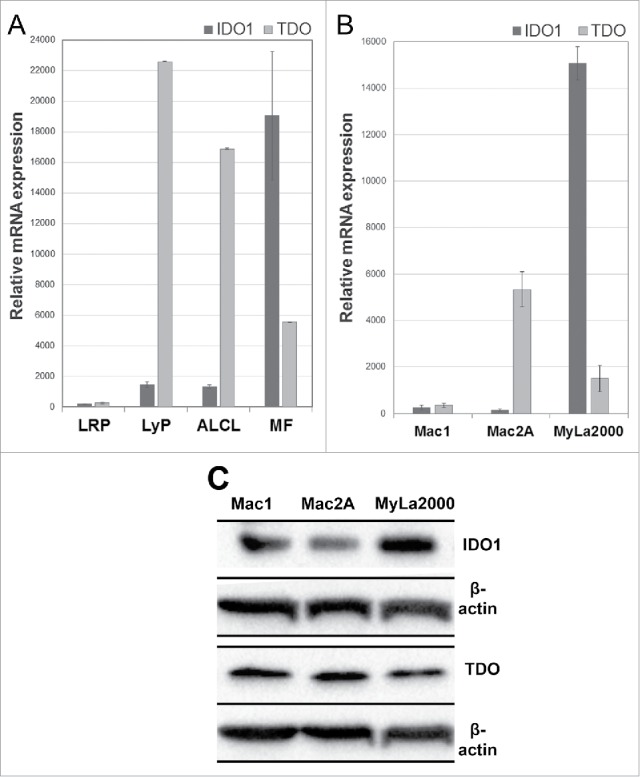
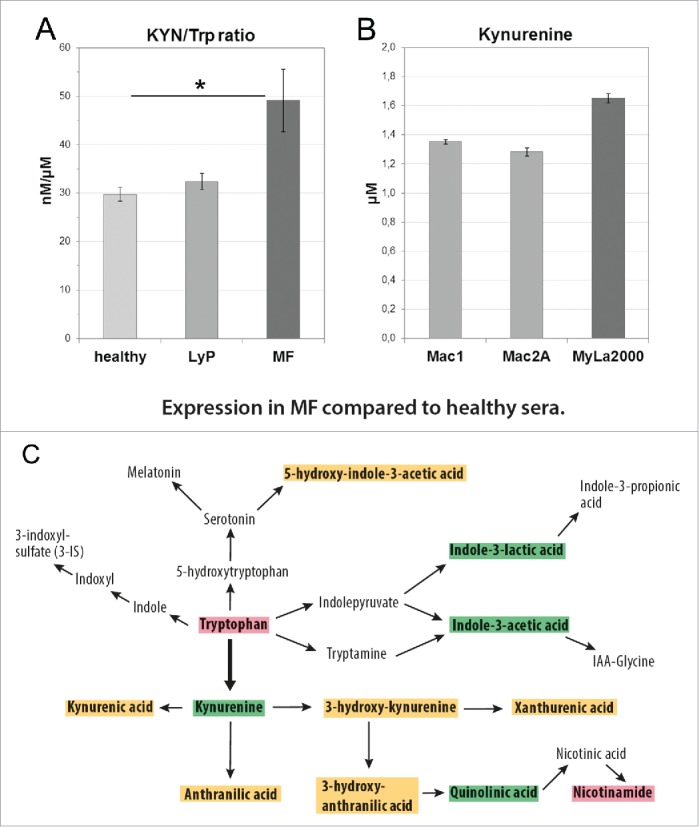
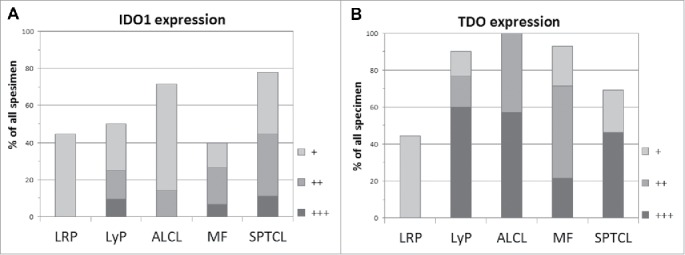
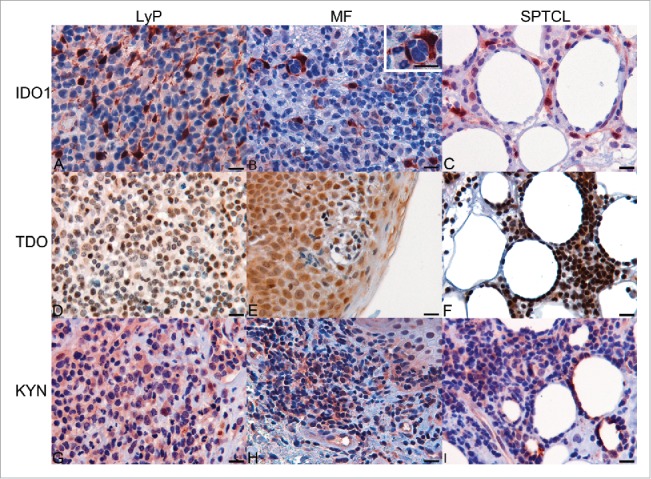
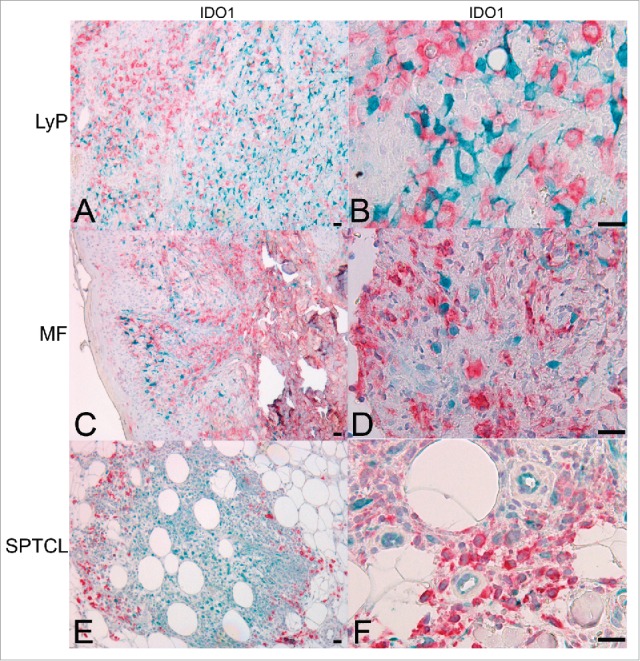
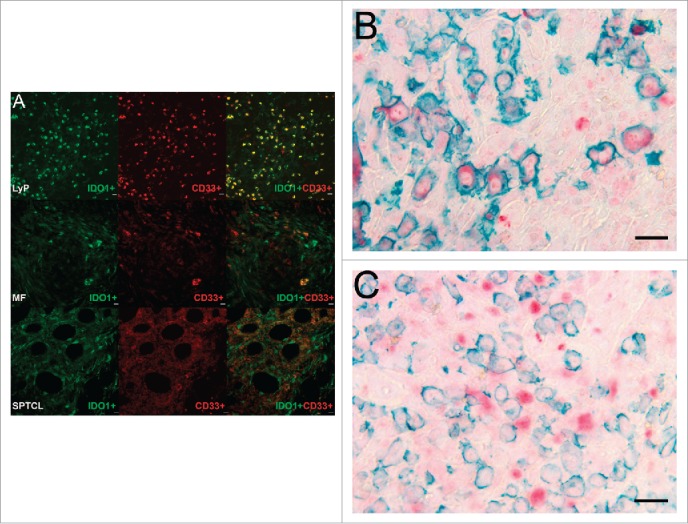
Indoleamine 2,3-deoxygenase 1 (IDO1) induces immune tolerance in the tumor microenvironment (TME) and is recognized as a potential therapeutic target. We studied the expression of both IDO1 and the related tryptophan 2,3-dioxygenase (TDO) in several different subtypes of cutaneous T-cell lymphoma (CTCL), and evaluated the kynurenine (KYN) pathway in the local TME and in patient sera. Specimens from the total of 90 CTCL patients, including mycosis fungoides (MF, = 37), lymphomatoid papulosis (LyP, = 36), primary cutaneous anaplastic large cell lymphoma (pcALCL, = 4), subcutaneous panniculitis-like T-cell lymphoma (SPTCL = 13), and 10 patients with inflammatory lichen ruber planus (LRP), were analyzed by immunohistochemistry (IHC), immunofluorescence (IF), quantitative PCR, and/or liquid chromatography-tandem mass spectrometry (LC-MS/MS). Three CTCL cell lines also were studied. Expression of both and was upregulated in CTCL. In MF specimens and in the MF cell line MyLa2000, IDO1 expression exceeded that of TDO, whereas the opposite was true for LyP, ALCL, and corresponding Mac1/2A cell lines. The spectrum of IDO1-expressing cell types differed among CTCL subtypes and was reflected in the clinical behavior. In MF, SPTCL, and LyP, IDO1 was expressed by malignant cells and by CD33 myeloid-derived suppressor cells, whereas in SPTCL CD163 tumor-associated macrophages also expressed IDO1. Significantly elevated serum KYN/Trp ratios were found in patients with advanced stages of MF. Epacadostat, an IDO1 inhibitor, induced a clear decrease in KYN concentration in cell culture. These results show the importance of IDO1/TDO-induced immunosuppression in CTCL and emphasize its role as a new therapeutic target.
吲哚胺2,3-双加氧酶1(IDO1)在肿瘤微环境(TME)中诱导免疫耐受,被认为是一个潜在的治疗靶点。我们研究了IDO1和相关的色氨酸2,3-双加氧酶(TDO)在几种不同亚型皮肤T细胞淋巴瘤(CTCL)中的表达,并评估了局部TME和患者血清中的犬尿氨酸(KYN)途径。对总共90例CTCL患者的标本进行了分析,包括蕈样肉芽肿(MF,n = 37)、淋巴瘤样丘疹病(LyP,n = 36)、原发性皮肤间变性大细胞淋巴瘤(pcALCL,n = 4)、皮下脂膜炎样T细胞淋巴瘤(SPTCL,n = 13),以及10例炎症性扁平苔藓(LRP)患者,采用免疫组织化学(IHC)、免疫荧光(IF)、定量PCR和/或液相色谱-串联质谱(LC-MS/MS)进行分析。还研究了3种CTCL细胞系。CTCL中IDO1和TDO的表达均上调。在MF标本和MF细胞系MyLa2000中,IDO1的表达超过TDO,而在LyP、ALCL及相应的Mac1/2A细胞系中则相反。表达IDO1的细胞类型谱在CTCL亚型中有所不同,并反映在临床行为中。在MF、SPTCL和LyP中,IDO1由恶性细胞和CD33髓系来源的抑制细胞表达,而在SPTCL中,CD163肿瘤相关巨噬细胞也表达IDO1。在MF晚期患者中发现血清KYN/Trp比值显著升高。IDO1抑制剂依帕司他在细胞培养中可使KYN浓度明显降低。这些结果表明IDO1/TDO诱导的免疫抑制在CTCL中的重要性,并强调了其作为新治疗靶点的作用。