Joshi R, Buchanan J C, Tavana H
Department of Biomedical Engineering, The University of Akron, Akron, Ohio 44325, USA.
Integr Biol (Camb). 2017 May 22;9(5):418-426. doi: 10.1039/c7ib00038c.
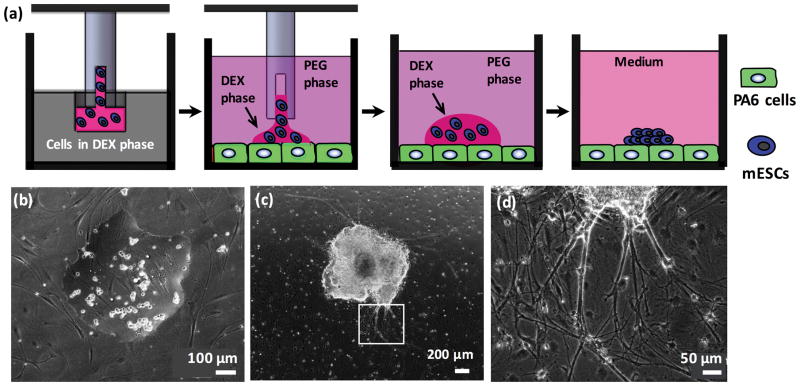
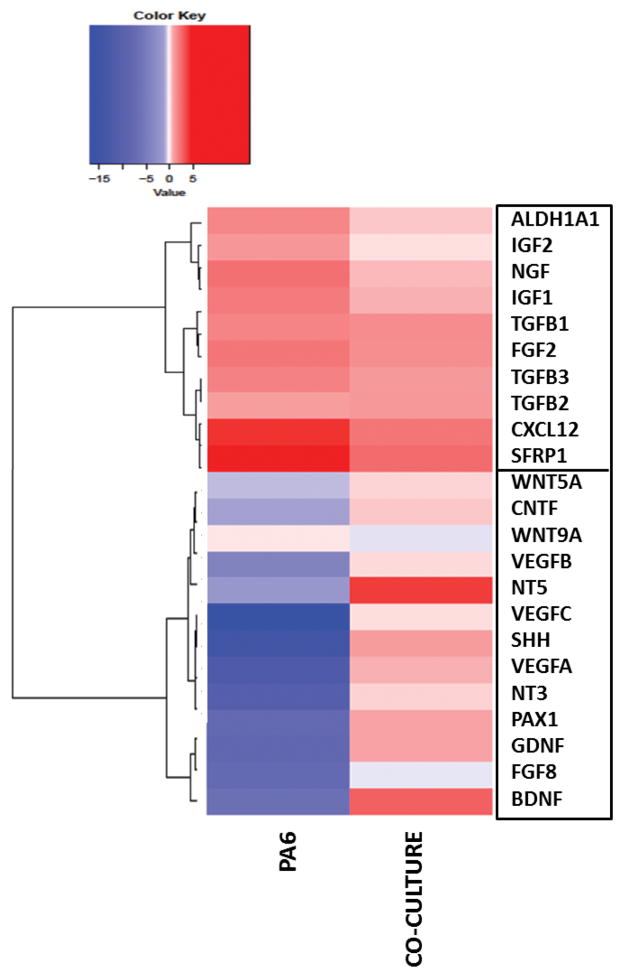
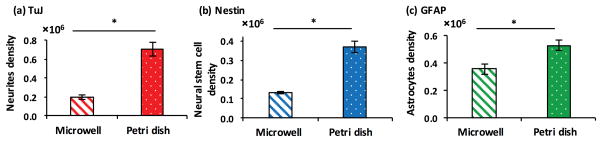
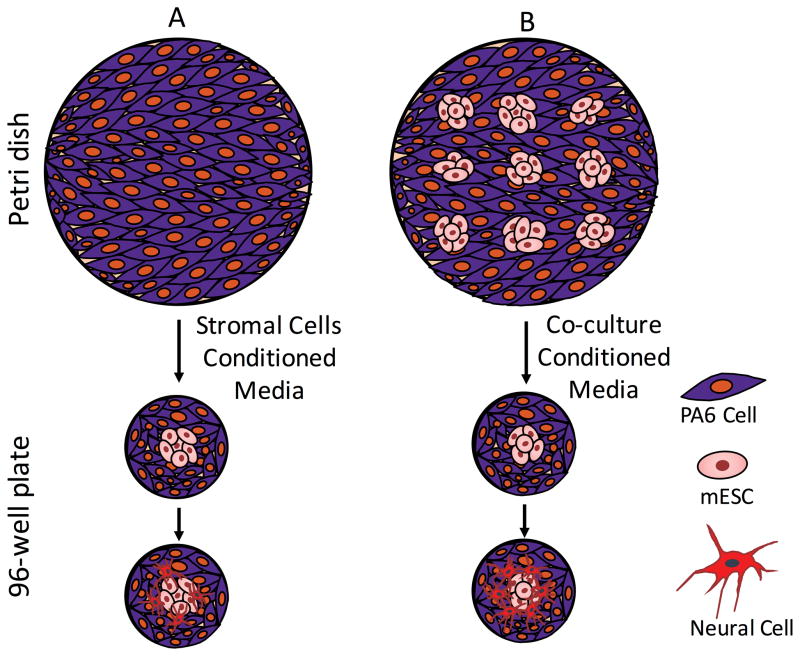
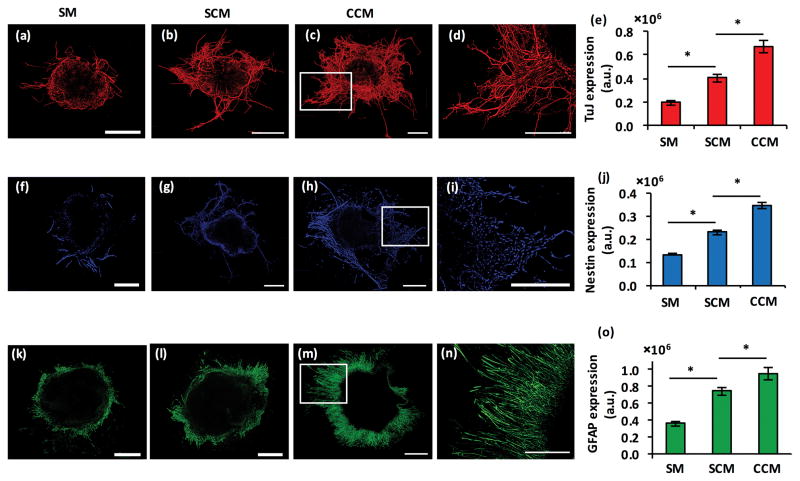
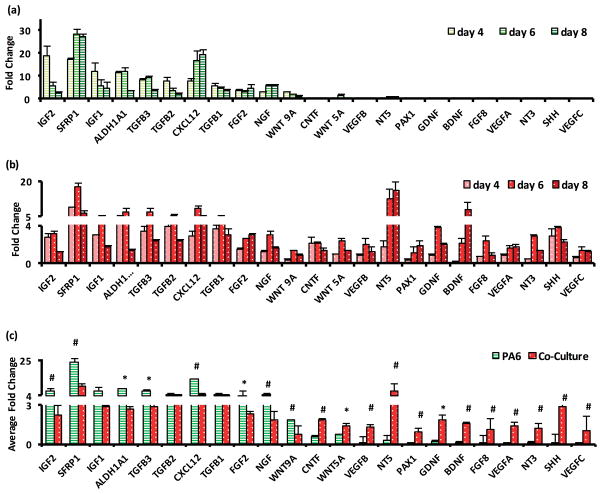
Embryonic stem cells (ESCs), due to their intrinsic capability to generate somatic cells of all three germ layers, are potential sources of neural cells for cell replacement therapies. However, the empirical differentiation protocols and the lack of mechanistic understanding of the neural differentiation of ESCs have limited the utility of ESCs as a developmental model or as a cell source for neural cell populations for replacement therapies. Co-culturing ESCs with stromal cells is one of the extensively used methods to induce neural differentiation. Despite several studies to identify neural inducing factors in stromal cell induced neural differentiation, the self-regulatory effects of ESCs in the neural differentiation process remain unexplored. For the first time, we elucidate the self-regulatory role of mESCs in their neural cell differentiation by supplementing conditioned media from differentiating mESCs to mESC-PA6 co-cultures and quantitatively evaluating the change in neural differentiation. Moreover, we use statistical tools to analyze the expression of various growth and trophic factors and distinguish the factors produced primarily by PA6 cells versus mESCs in co-culture. We observe that addition of the medium containing mESC-secreted factors to a single mESC colony co-cultured with PA6 cells significantly enhances the neural differentiation of mESCs compares to the medium extracted from the stromal cells only. Hierarchical clustering of gene expression data from PA6 and co-cultured mESCs segregates two groups of factors that are produced by the stromal cells and differentiating mESCs. Identifying the major soluble factors that drive and regulate the neural differentiation process in the mESC-PA6 co-culture niche will help understand molecular mechanisms of neural development. Moreover, it can be a major step toward developing novel protocols to differentiate stem cells with mESC derived factor supplementation without using feeder cells and with greater efficiency compared to existing approaches.
胚胎干细胞(ESCs)因其具有生成所有三个胚层体细胞的内在能力,是细胞替代疗法中神经细胞的潜在来源。然而,经验性的分化方案以及对ESCs神经分化机制理解的不足,限制了ESCs作为发育模型或作为替代疗法中神经细胞群体的细胞来源的效用。将ESCs与基质细胞共培养是广泛用于诱导神经分化的方法之一。尽管有多项研究旨在确定基质细胞诱导神经分化中的神经诱导因子,但ESCs在神经分化过程中的自我调节作用仍未得到探索。我们首次通过将分化中的mESCs的条件培养基添加到mESC-PA6共培养体系中,并定量评估神经分化的变化,阐明了mESCs在其神经细胞分化中的自我调节作用。此外,我们使用统计工具分析各种生长和营养因子的表达,并区分共培养中主要由PA6细胞与mESCs产生的因子。我们观察到,与仅从基质细胞中提取的培养基相比,将含有mESC分泌因子的培养基添加到与PA6细胞共培养的单个mESC集落中,可显著增强mESCs的神经分化。来自PA6和共培养的mESCs的基因表达数据的层次聚类分离出由基质细胞和分化中的mESCs产生的两组因子。确定在mESC-PA6共培养微环境中驱动和调节神经分化过程的主要可溶性因子,将有助于理解神经发育的分子机制。此外,这可能是朝着开发新方案迈出的重要一步,该方案通过补充mESC衍生因子来分化干细胞,无需使用饲养细胞,且与现有方法相比效率更高。