Fan Jingjing, Yang Xiaoqi, Li Jie, Shu Ziyang, Dai Jun, Liu Xingran, Li Biao, Jia Shaohui, Kou Xianjuan, Yang Yi, Chen Ning
Hubei Key Laboratory of Exercise Training and Monitoring, Hubei Provincial Collaborative Innovation Center for Exercise and Health Promotion, College of Health Science, Wuhan Sports University, Wuhan, China.
Graduate School, Wuhan Sports University, Wuhan, China.
Oncotarget. 2017 Mar 14;8(11):17475-17490. doi: 10.18632/oncotarget.15728.
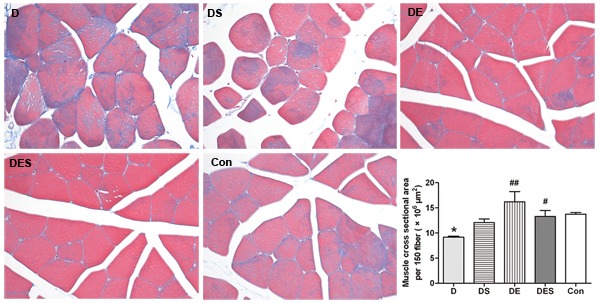
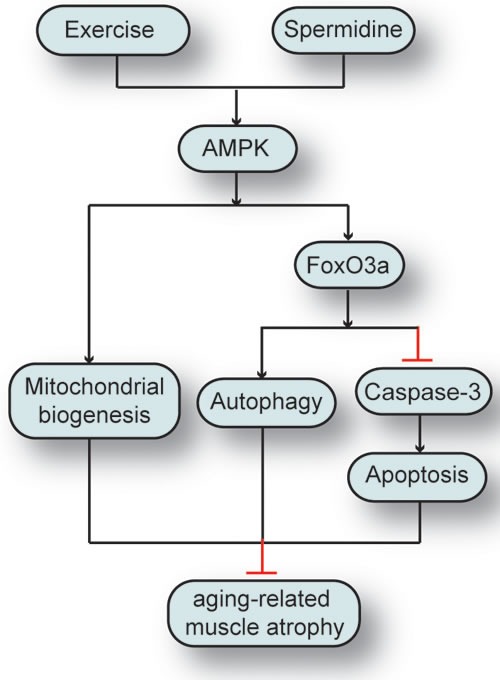
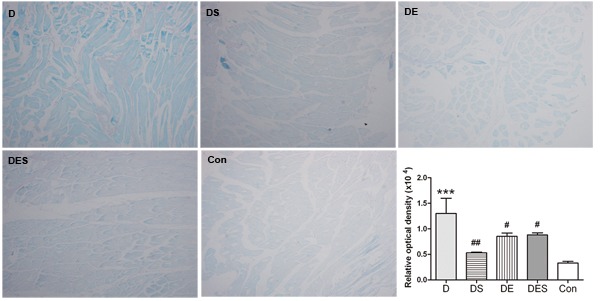
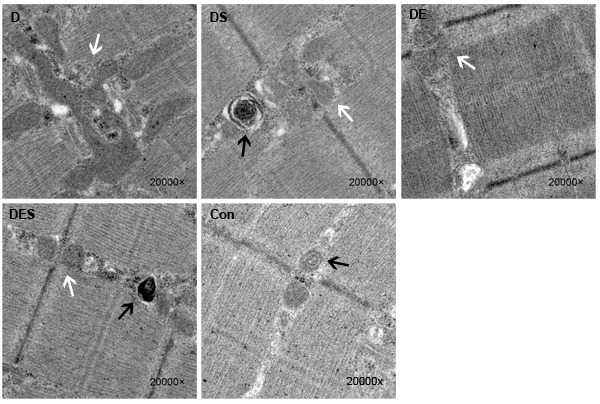
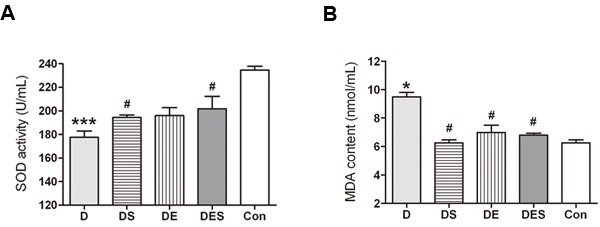
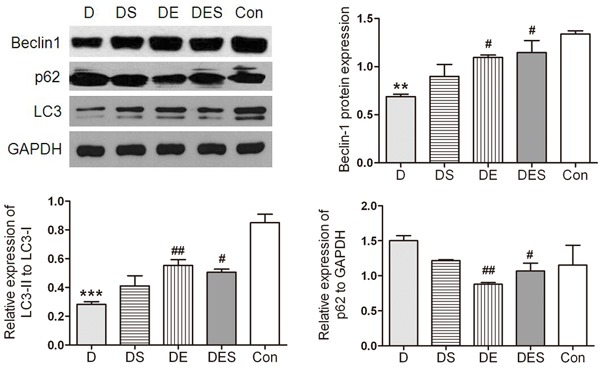
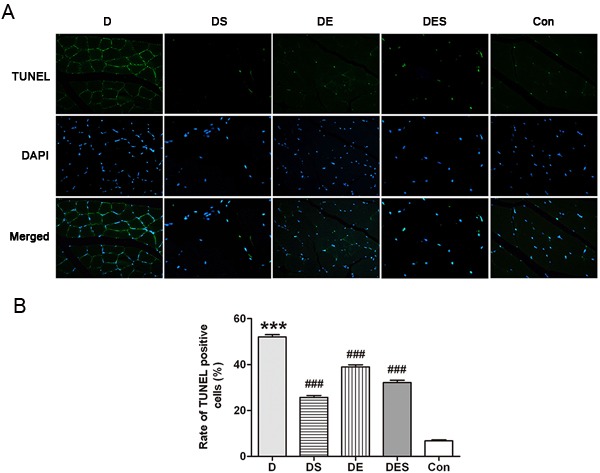
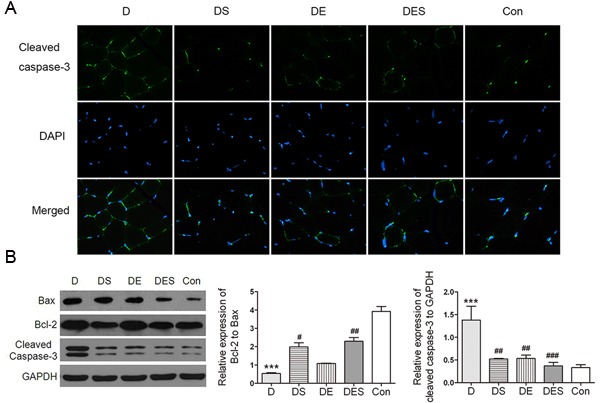
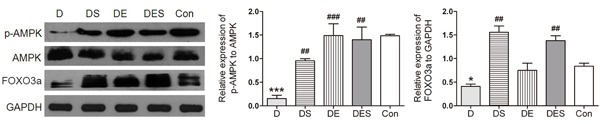
The quality control of skeletal muscle is a continuous requirement throughout the lifetime, although its functions and quality present as a declining trend during aging process. Dysfunctional or deficient autophagy and excessive apoptosis may contribute to the atrophy of senescent skeletal muscle. Spermidine, as a natural polyamine, can be involved in important cellular functions for lifespan extension and stress resistance in several model organisms through activating autophagy. Similarly, cellular autophagic responses to exercise have also been extensively investigated. In the present study, in order to confirm the mitigation or amelioration of skeletal muscle atrophy in aging rats through spermidine coupled with exercise intervention and explore corresponding mechanisms, the rat model with aging-related atrophy of skeletal muscle was established by intraperitoneal injection of D-galactose (D-gal) (200 mg/kg∙d), and model rats were subjected to the intervention with spermidine (5 mg/kg∙d)) or swimming (60 min/d, 5 d/wk) or combination for 42 days. Spermidine coupled with exercise could attenuate D-gal-induced aging-related atrophy of skeletal muscle through induced autophagy and reduced apoptosis with characteristics of more autophagosomes, activated mitophagy, enhanced mitochondrial quality, alleviated cell shrinkage, and less swollen mitochondria under transmission scanning microscopic observation. Meanwhile, spermidine coupled with exercise could induce autophagy through activating AMPK-FOXO3a signal pathway with characterization of increased Beclin1 and LC3-II/LC3-I ratio, up-regulated anti-apoptotic Bcl-2, down-regulated pro-apoptotic Bax and caspase-3, as well as activated AMPK and FOXO3a. Therefore, spermidine combined with exercise can execute the prevention or treatment of D-gal-induced aging-related skeletal muscle atrophy through enhanced autophagy and reduced apoptosis mediated by AMPK-FOXO3a signal pathway.
骨骼肌的质量控制在整个生命周期中都是持续需要的,尽管其功能和质量在衰老过程中呈下降趋势。自噬功能失调或不足以及过度凋亡可能导致衰老骨骼肌萎缩。亚精胺作为一种天然多胺,可通过激活自噬参与多种模式生物中延长寿命和抗应激的重要细胞功能。同样,细胞对运动的自噬反应也得到了广泛研究。在本研究中,为了证实通过亚精胺联合运动干预减轻或改善衰老大鼠骨骼肌萎缩并探索相应机制,通过腹腔注射D-半乳糖(D-gal)(200 mg/kg∙d)建立衰老相关骨骼肌萎缩的大鼠模型,并对模型大鼠进行亚精胺(5 mg/kg∙d)或游泳(60 min/d,5 d/周)或联合干预42天。亚精胺联合运动可通过诱导自噬和减少凋亡减轻D-gal诱导的衰老相关骨骼肌萎缩,在透射扫描显微镜观察下具有更多自噬体、激活线粒体自噬、提高线粒体质量、减轻细胞萎缩以及线粒体肿胀减轻等特征。同时,亚精胺联合运动可通过激活AMPK-FOXO3a信号通路诱导自噬,其特征为Beclin1和LC3-II/LC3-I比值增加、抗凋亡蛋白Bcl-2上调、促凋亡蛋白Bax和caspase-3下调以及AMPK和FOXO3a激活。因此,亚精胺联合运动可通过增强自噬和减少AMPK-FOXO3a信号通路介导的凋亡来预防或治疗D-gal诱导的衰老相关骨骼肌萎缩。