Walden Helen, Muqit Miratul M K
MRC Protein Phosphorylation and Ubiquitylation Unit, School of Life Sciences, University of Dundee, Dundee, U.K.
School of Medicine, Dentistry & Nursing, University of Dundee, Dundee, U.K.
Biochem J. 2017 Apr 13;474(9):1439-1451. doi: 10.1042/BCJ20160498.
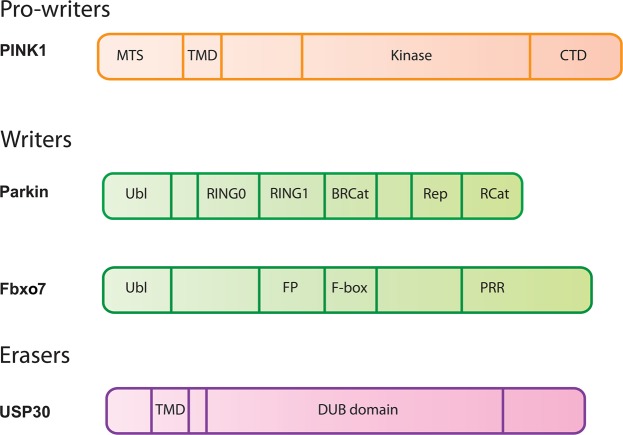
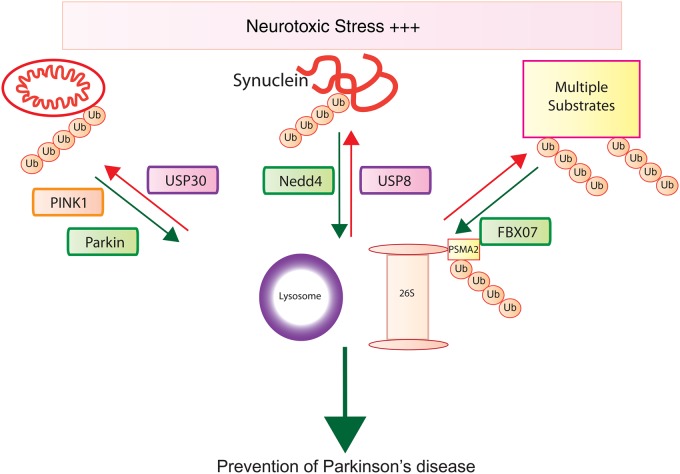
Biochemical alterations found in the brains of Parkinson's disease (PD) patients indicate that cellular stress is a major driver of dopaminergic neuronal loss. Oxidative stress, mitochondrial dysfunction, and ER stress lead to impairment of the homeostatic regulation of protein quality control pathways with a consequent increase in protein misfolding and aggregation and failure of the protein degradation machinery. Ubiquitin signalling plays a central role in protein quality control; however, prior to genetic advances, the detailed mechanisms of how impairment in the ubiquitin system was linked to PD remained mysterious. The discovery of mutations in the α-synuclein gene, which encodes the main protein misfolded in PD aggregates, together with mutations in genes encoding ubiquitin regulatory molecules, including PTEN-induced kinase 1 (PINK1), Parkin, and FBX07, has provided an opportunity to dissect out the molecular basis of ubiquitin signalling disruption in PD, and this knowledge will be critical for developing novel therapeutic strategies in PD that target the ubiquitin system.
在帕金森病(PD)患者大脑中发现的生化改变表明,细胞应激是多巴胺能神经元丧失的主要驱动因素。氧化应激、线粒体功能障碍和内质网应激导致蛋白质质量控制途径的稳态调节受损,进而导致蛋白质错误折叠和聚集增加以及蛋白质降解机制失效。泛素信号在蛋白质质量控制中起着核心作用;然而,在基因研究取得进展之前,泛素系统功能障碍与PD之间联系的详细机制仍然不明。编码在PD聚集体中错误折叠的主要蛋白质的α-突触核蛋白基因突变,以及编码泛素调节分子的基因突变,包括PTEN诱导激酶1(PINK1)、帕金蛋白和FBX07,为剖析PD中泛素信号破坏的分子基础提供了契机,而这一知识对于开发针对泛素系统的PD新型治疗策略至关重要。