Klein Gracjana, Raina Satish
Unit of Bacterial Genetics, Gdansk University of Technology, Narutowicza 11/12, 80-233 Gdansk, Poland.
Unit of Bacterial Genetics, Gdansk University of Technology, Narutowicza 11/12, 80-233 Gdansk, Poland
Biochem Soc Trans. 2017 Apr 15;45(2):417-425. doi: 10.1042/BST20160367.
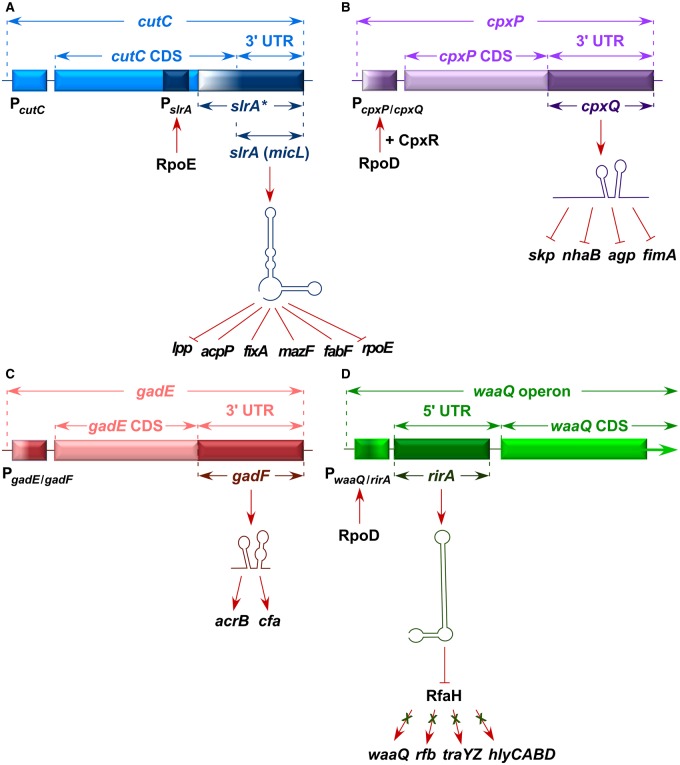
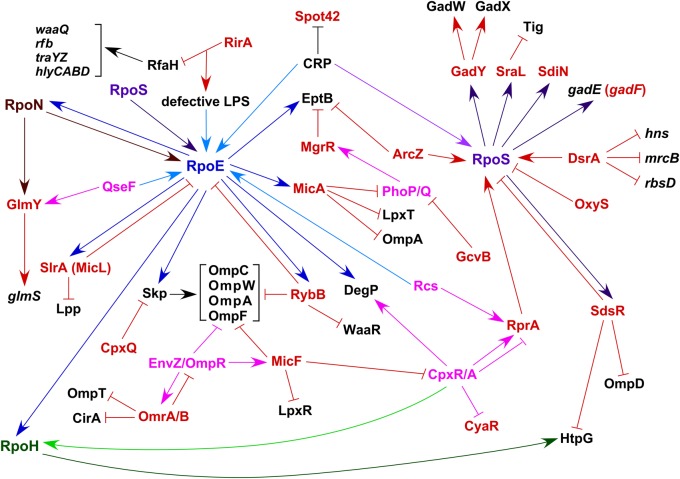
Most bacteria encode a large repertoire of RNA-based regulatory mechanisms. Recent discoveries have revealed that the expression of many genes is controlled by a plethora of base-pairing noncoding small regulatory RNAs (sRNAs), regulatory RNA-binding proteins and RNA-degrading enzymes. Some of these RNA-based regulated processes respond to stress conditions and are involved in the maintenance of cellular homeostasis. They achieve it by either direct posttranscriptional repression of several mRNAs, including blocking access to ribosome and/or directing them to RNA degradation when the synthesis of their cognate proteins is unwanted, or by enhanced translation of some key stress-regulated transcriptional factors. Noncoding RNAs that regulate the gene expression by binding to regulatory proteins/transcriptional factors often act negatively by sequestration, preventing target recognition. Expression of many sRNAs is positively regulated by stress-responsive sigma factors like RpoE and RpoS, and two-component systems like PhoP/Q, Cpx and Rcs. Some of these regulatory RNAs act via a feedback mechanism on their own regulators, which is best reflected by recent discoveries, concerning the regulation of cell membrane composition by sRNAs in and , which are highlighted here.
大多数细菌编码大量基于RNA的调控机制。最近的发现表明,许多基因的表达受大量碱基配对的非编码小调控RNA(sRNA)、调控性RNA结合蛋白和RNA降解酶的控制。其中一些基于RNA的调控过程对压力条件作出反应,并参与细胞稳态的维持。它们通过直接转录后抑制几种mRNA来实现这一点,包括在不需要其同源蛋白合成时阻止核糖体接近和/或将它们导向RNA降解,或者通过增强一些关键的应激调控转录因子的翻译。通过与调控蛋白/转录因子结合来调控基因表达的非编码RNA通常通过隔离起负向作用,阻止靶标识别。许多sRNA的表达受应激反应性σ因子如RpoE和RpoS以及双组分系统如PhoP/Q、Cpx和Rcs的正向调控。其中一些调控RNA通过反馈机制作用于它们自己的调控因子,这在最近关于[具体研究对象1]和[具体研究对象2]中sRNA对细胞膜组成的调控的发现中得到了最好的体现,在此予以强调。