Margel David, Mizrahi Mark, Regev-Shoshani Gili, Ko Mary, Moshe Maya, Ozalvo Rachel, Shavit-Grievink Liat, Baniel Jack, Kedar Daniel, Yossepowitch Ofer, Lifshitz David, Nadu Andrei, Greenberg David, Av-Gay Yossef
Division of Urology, Rabin Medical Center and Tel-Aviv University, Sackler School of Medicine, Petach-Tikva, Israel.
ENOX Ltd., Habarzel 38, Tel-Aviv, Israel.
PLoS One. 2017 Apr 14;12(4):e0174443. doi: 10.1371/journal.pone.0174443. eCollection 2017.
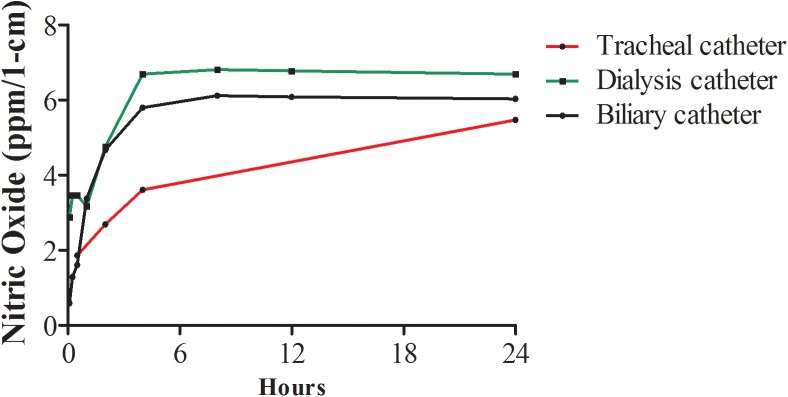
Catheter-Associated Hospital-Acquired Infections (HAI's) are caused by biofilm-forming bacteria. Using a novel approach, we generated anti-infective barrier on catheters by charging them with Nitric Oxide (NO), a naturally-produced gas molecule. NO is slowly released from the catheter upon contact with physiological fluids, and prevents bacterial colonization and biofilm formation onto catheter surfaces.
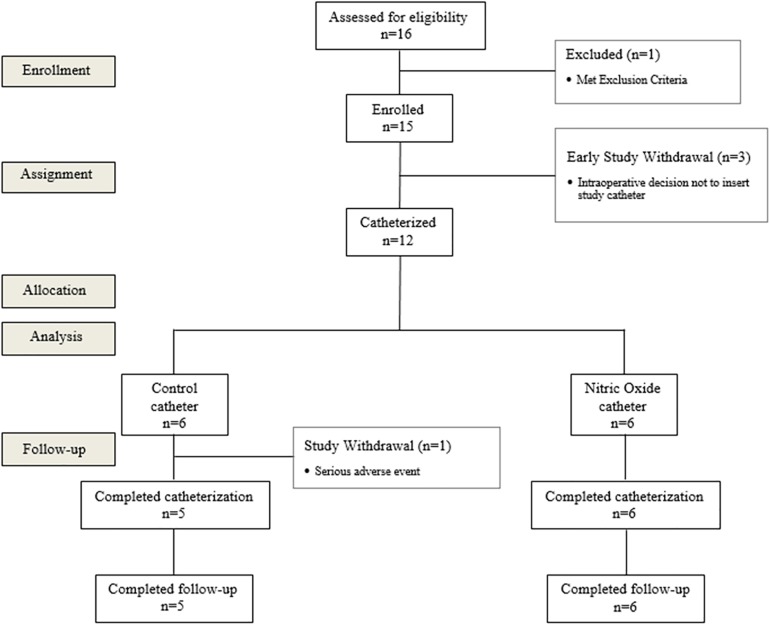
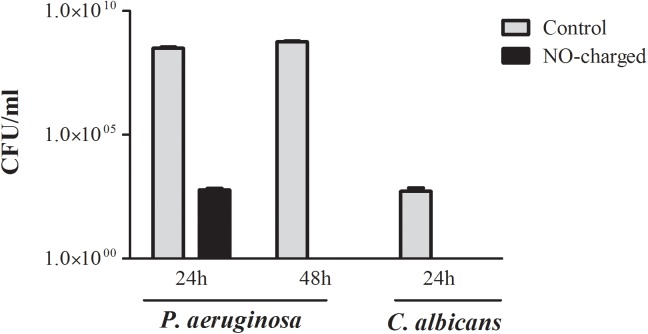
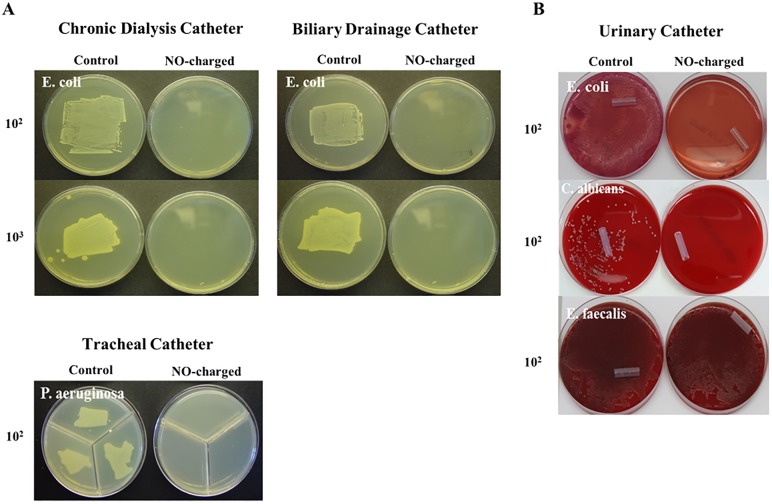
The aim of the study was to assess the anti-infective properties of NO-charged catheters exposed to low concentration (up to 103 CFU/ml) of microbial cells in-vitro. We assessed NO-charged tracheal tubes using Pseudomonas aeruginosa, dialysis and biliary catheters using Escherichia coli, and urinary catheters using E. coli, Candida albicans or Enterococcus faecalis. Safety and tolerability of NO-charged urinary catheters were evaluated in a phase 1 clinical study in 12 patients. Six patients were catheterized with NO-charged catheters (NO-group), followed by 6 patients catheterized with regular control catheters (CT-group). Comparison of safety parameters between the study groups was performed.
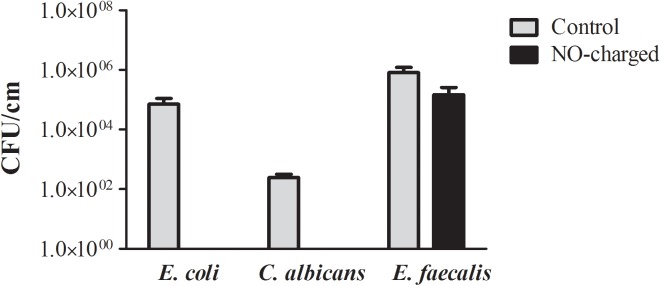
NO-charged tracheal, dialysis biliary and urinary catheters prevented P. aeruginosa, E. coli and C. albicans attachment and colonization onto their surfaces and eradicated corresponding planktonic microbial cells in the surrounding media after 24-48 hours, while E. faecalis colonization onto urinary catheters was reduced by 1 log compared to controls. All patients catheterized with an NO-charged urinary catheter successfully completed the study without experiencing NO-related AE's or serious AE's (SAE's).
These data highlight the potential of NO-based technology as potential platform for preventing catheter-associated HAI's.
导管相关医院获得性感染(HAI)由形成生物膜的细菌引起。我们采用一种新方法,通过向导管充入一氧化氮(NO)——一种天然产生的气体分子,在导管上形成抗感染屏障。NO在与生理液体接触时会从导管缓慢释放,防止细菌在导管表面定植和形成生物膜。
本研究的目的是评估在体外暴露于低浓度(高达10³CFU/ml)微生物细胞时,充入NO的导管的抗感染特性。我们使用铜绿假单胞菌评估充入NO的气管导管,使用大肠杆菌评估透析导管和胆管导管,使用大肠杆菌、白色念珠菌或粪肠球菌评估导尿管。在一项针对12名患者的1期临床研究中评估了充入NO的导尿管的安全性和耐受性。6名患者使用充入NO的导管进行插管(NO组),随后6名患者使用常规对照导管进行插管(CT组)。对研究组之间的安全参数进行了比较。
充入NO的气管导管、透析导管、胆管导管和导尿管可防止铜绿假单胞菌、大肠杆菌和白色念珠菌在其表面附着和定植,并在24 - 48小时后根除周围培养基中相应的浮游微生物细胞,而与对照组相比,粪肠球菌在导尿管上的定植减少了1个对数级。所有使用充入NO的导尿管进行插管的患者均成功完成研究,未出现与NO相关的不良事件或严重不良事件(SAE)。
这些数据突出了基于NO的技术作为预防导管相关HAI潜在平台的潜力。