Lindholm Daniel, Hagström Emil, James Stefan K, Becker Richard C, Cannon Christopher P, Himmelmann Anders, Katus Hugo A, Maurer Gerald, López-Sendón José Luis, Steg Philippe Gabriel, Storey Robert F, Siegbahn Agneta, Wallentin Lars
Department of Medical Sciences, Cardiology and Uppsala Clinical Research Center, Uppsala University, Uppsala, Sweden
Department of Medical Sciences, Cardiology and Uppsala Clinical Research Center, Uppsala University, Uppsala, Sweden.
J Am Heart Assoc. 2017 Apr 14;6(4):e005580. doi: 10.1161/JAHA.117.005580.
Growth differentiation factor-15 (GDF-15) is related to major bleeding when measured at initial presentation in patients with acute coronary syndromes (ACSs) treated with dual antiplatelet therapy. It is unknown whether follow-up measurements provide additional information. The objective of this study was to investigate whether GDF-15 measured 1 month after an ACS provides additional information beyond the baseline levels with regard to the risk of major bleeding.
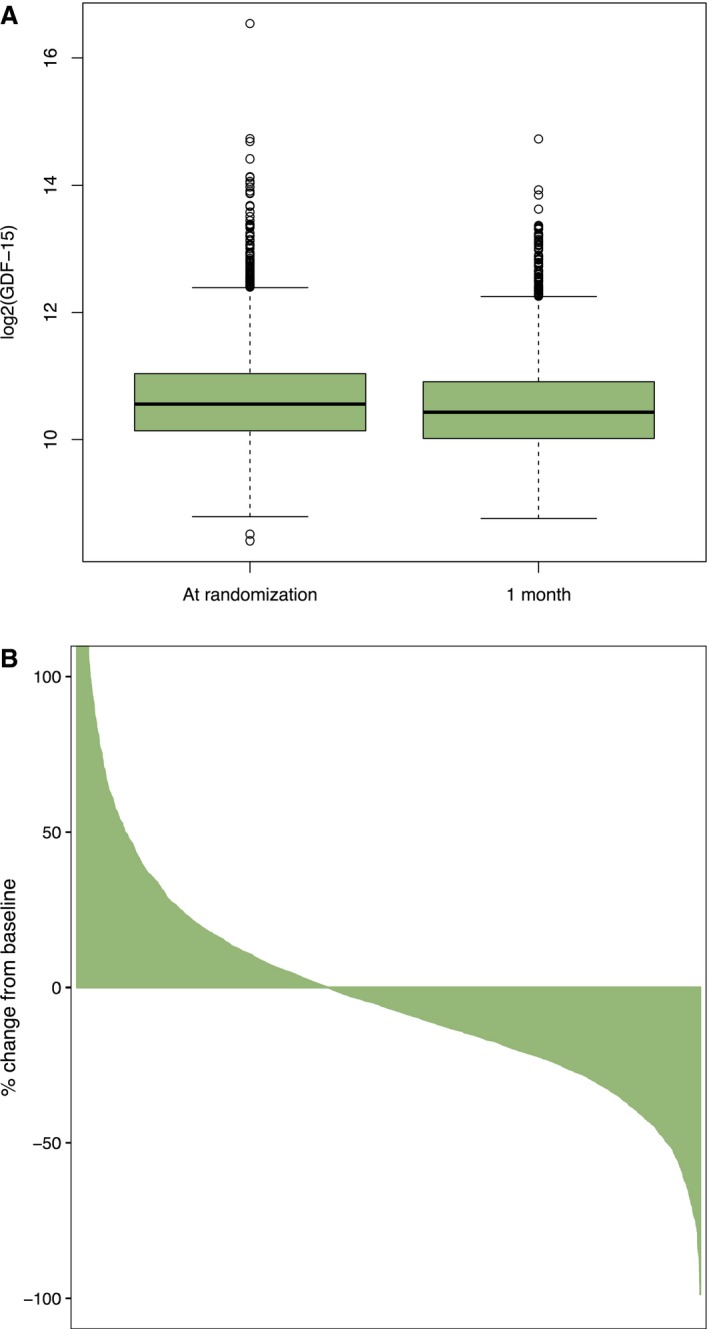
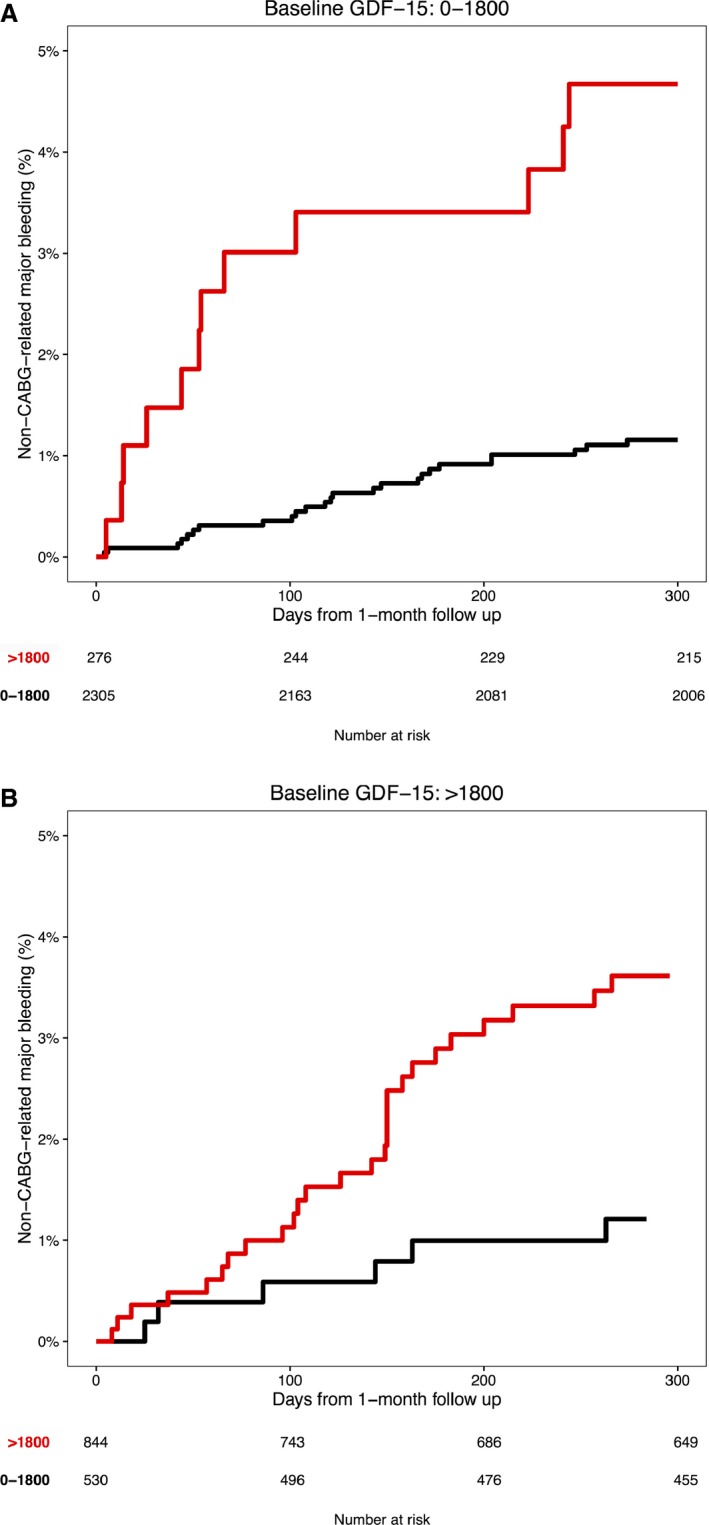
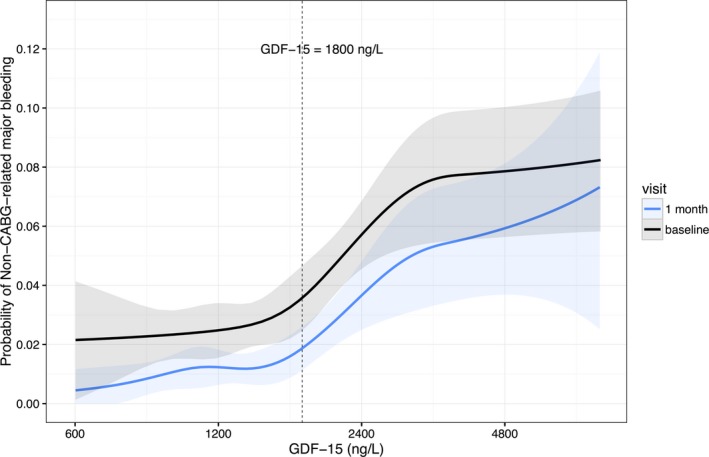
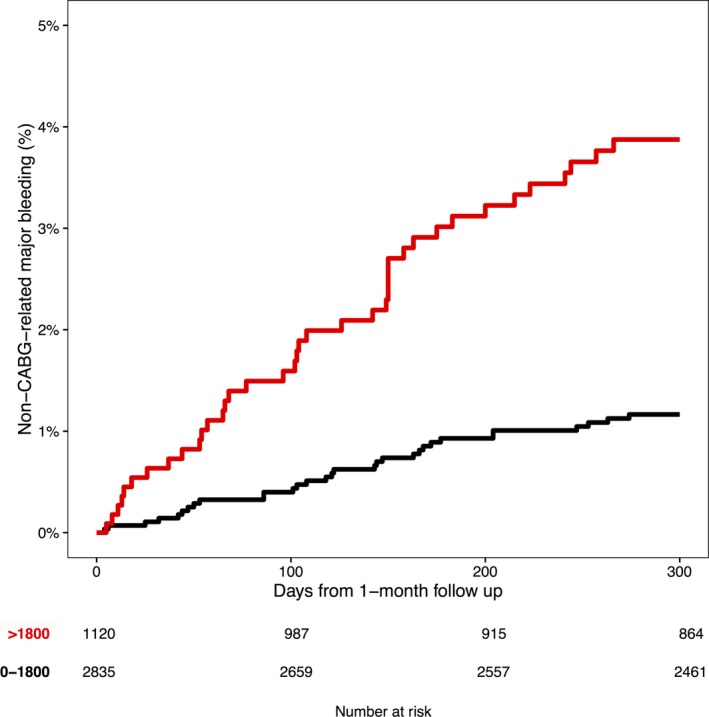
GDF-15 was measured at baseline and at 1 month after an ACS in 4049 patients included in the PLATelet inhibition and patient Outcomes (PLATO) trial. The association between 1-month GDF-15 level and non-coronary artery bypass grafting surgery-related major bleeding was assessed by a multivariable Cox model, adjusting for baseline GDF-15, age, anemia, impaired renal function, history of gastrointestinal bleeding, and sex. Elevated GDF-15 (>1800 ng/L) at 1 month was associated with an increased risk of non-coronary artery bypass grafting-related major bleeding (3.9% versus 1.2%; hazard ratio, 3.38; 95% CI, 1.89-6.06), independent of baseline GDF-15. Patients who had elevated GDF-15 levels at baseline and subsequent nonelevated GDF-15 at 1 month had a similar risk as patients who had nonelevated levels at both measurements.
GDF-15 at 1 month after an ACS is related to the risk of bleeding during DAPT and provides additional information on the bleeding risk beyond baseline GDF-15 levels. GDF-15 levels may therefore be useful as part of decision support concerning long-term antithrombotic treatment in patients post-ACS.
URL: http://www.clinicaltrials.gov. Unique identifier: NCT00391872.
在接受双联抗血小板治疗的急性冠状动脉综合征(ACS)患者初次就诊时检测,生长分化因子-15(GDF-15)与大出血相关。随访检测是否能提供更多信息尚不清楚。本研究的目的是调查ACS后1个月检测的GDF-15是否能提供超出基线水平的有关大出血风险的更多信息。
在血小板抑制与患者预后(PLATO)试验纳入的4049例患者中,于基线时和ACS后1个月检测GDF-15。采用多变量Cox模型评估1个月时GDF-15水平与非冠状动脉搭桥手术相关大出血之间的关联,并对基线GDF-15、年龄、贫血、肾功能受损、胃肠道出血史和性别进行校正。1个月时GDF-15升高(>1800 ng/L)与非冠状动脉搭桥手术相关大出血风险增加相关(3.9%对1.2%;风险比,3.38;95%CI,1.89-6.06),与基线GDF-15无关。基线时GDF-15水平升高而1个月时GDF-15未升高的患者与两次检测水平均未升高的患者风险相似。
ACS后1个月时的GDF-15与双联抗血小板治疗期间的出血风险相关,并能提供超出基线GDF-15水平的有关出血风险的更多信息。因此,GDF-15水平可能有助于作为ACS后患者长期抗栓治疗决策支持的一部分。