Kupcinskiene Kristina, Trepenaitis Darius, Petereit Ruta, Kupcinskas Juozas, Gudaityte Rita, Maleckas Almantas, Macas Andrius
Department of Anesthesiology, Lithuanian University of Health Sciences, Kaunas, Lithuania.
Department of Gastroenterology, Lithuanian University of Health Sciences, Kaunas, Lithuania.
Med Sci Monit. 2017 Apr 15;23:1819-1826. doi: 10.12659/msm.900769.
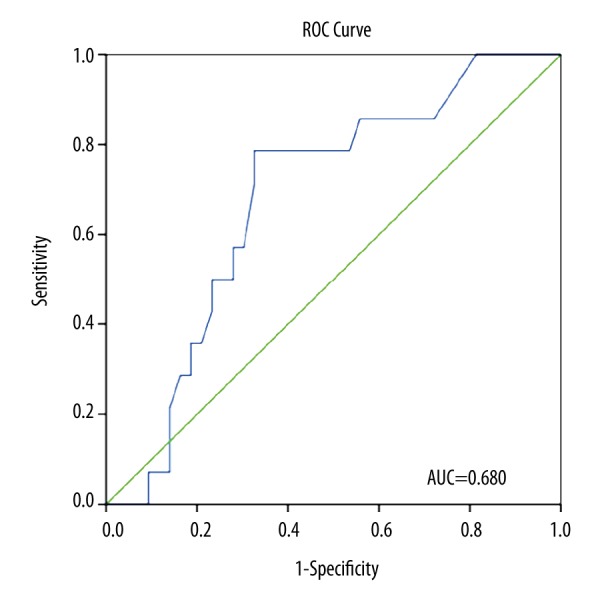
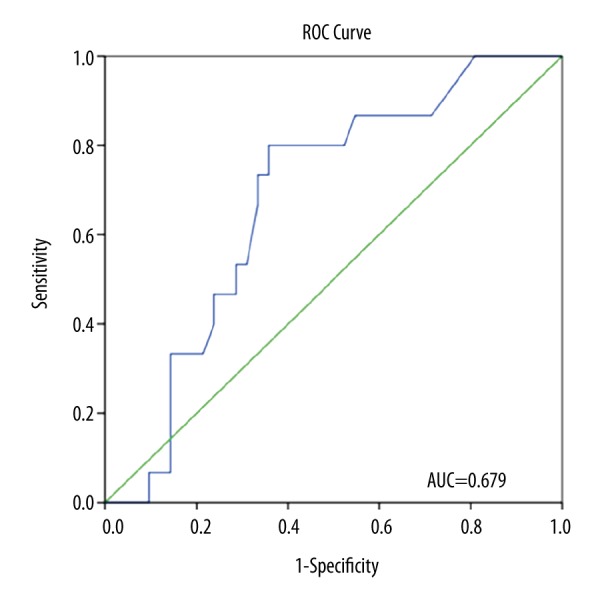
BACKGROUND Obesity is known as a major risk factor for postoperative vein thrombosis. Thromboelastography (TEG) is used to monitor viscoelastic features of blood clots. The aim of this study was to determine hypercoagulable states in patients undergoing bariatric surgery and to assess dynamics of coagulation parameters in the perioperative setting using TEG. MATERIAL AND METHODS We included 60 consecutive patients undergoing bariatric surgery. TEG alterations were assessed at 4 time points: at baseline, after the surgery, and on postoperative day 1 (POD1) and 2 (POD2). Hypercoagulable state was defined when patients showed clot strength (G) of ≥11 dynes/cm² or maximum amplitude (MA) ≥68 mm. RESULTS Fourteen patients (23.3%) out of 60 showed hypercoagulability prior to surgery on TEG. Fibrinogen levels were significantly higher in the G ≥11 group compared to the G <11 group, at 4.2 and 3.8 g/l, respectively (p=0.02). Seventeen patients (28.3%) had MA ≥68 mm at baseline. Fibrinogen levels increased significantly from 3.90 at baseline to 4.16 g/l in POD2 (p<0.001). There was an increase in mean reaction time from baseline (6.74 s) to POD2 (7.43 s, p=0.022). We found a correlation between baseline fibrinogen levels and MA (R=0.431, p=0.001) or G (R=0.387, p=0.003). ROC curve analysis showed that fibrinogen levels can predict clot strength (G) ≥11 dynes/cm² with AUC=0.680 (p=0.044). CONCLUSIONS A considerable proportion of patients referred to bariatric surgery show a trend towards hypercoagulability on TEG. This study shows the potential of hypercoagulation monitoring by TEG in the perioperative setting of bariatric surgery.
肥胖是术后静脉血栓形成的主要危险因素。血栓弹力图(TEG)用于监测血凝块的粘弹性特征。本研究的目的是确定接受减肥手术患者的高凝状态,并使用TEG评估围手术期凝血参数的动态变化。材料与方法:我们纳入了60例连续接受减肥手术的患者。在4个时间点评估TEG改变:基线时、手术后、术后第1天(POD1)和第2天(POD2)。当患者的血凝块强度(G)≥11达因/平方厘米或最大振幅(MA)≥68毫米时,定义为高凝状态。结果:60例患者中有14例(23.3%)在手术前TEG显示高凝性。G≥11组的纤维蛋白原水平明显高于G<11组,分别为4.2克/升和3.8克/升(p=0.02)。17例患者(28.3%)在基线时MA≥68毫米。纤维蛋白原水平从基线时的3.90显著增加到POD2时的4.16克/升(p<0.001)。平均反应时间从基线时的6.74秒增加到POD2时的7.43秒(p=0.022)。我们发现基线纤维蛋白原水平与MA(R=0.431,p=0.001)或G(R=0.387,p=0.003)之间存在相关性。ROC曲线分析表明,纤维蛋白原水平可预测血凝块强度(G)≥11达因/平方厘米,AUC=0.680(p=0.044)。结论:相当一部分接受减肥手术的患者在TEG上显示出高凝趋势。本研究显示了在减肥手术围手术期通过TEG监测高凝状态的潜力。