Sobel Jonathan Aryeh, Krier Irina, Andersin Teemu, Raghav Sunil, Canella Donatella, Gilardi Federica, Kalantzi Alexandra Styliani, Rey Guillaume, Weger Benjamin, Gachon Frédéric, Dal Peraro Matteo, Hernandez Nouria, Schibler Ueli, Deplancke Bart, Naef Felix
The Institute of Bioengineering, School of Life Sciences, Ecole Polytechnique Fédérale de Lausanne, Lausanne, Switzerland.
Department of Molecular Biology, University of Geneva, Geneva, Switzerland.
PLoS Biol. 2017 Apr 17;15(4):e2001069. doi: 10.1371/journal.pbio.2001069. eCollection 2017 Apr.
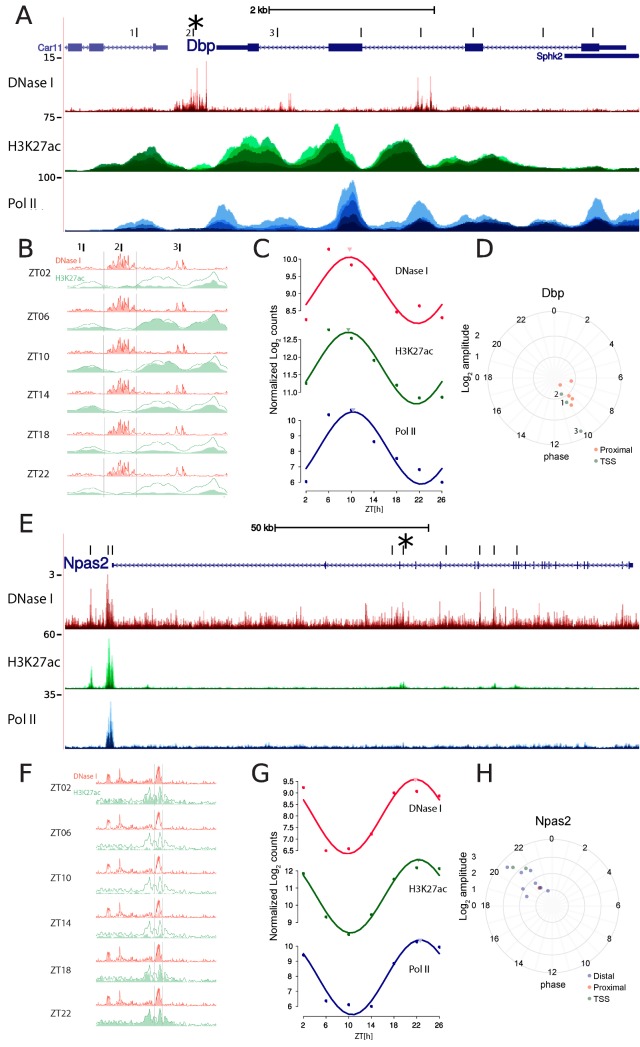
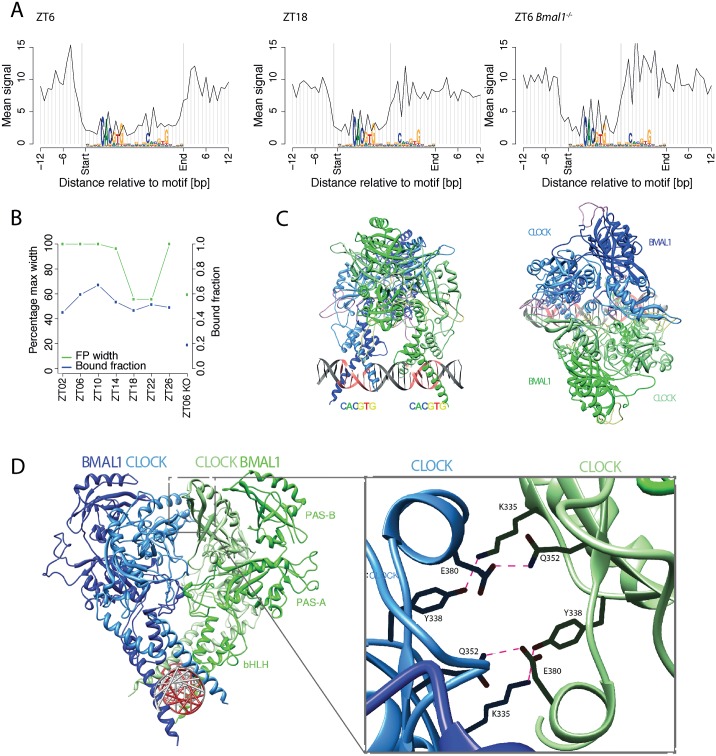
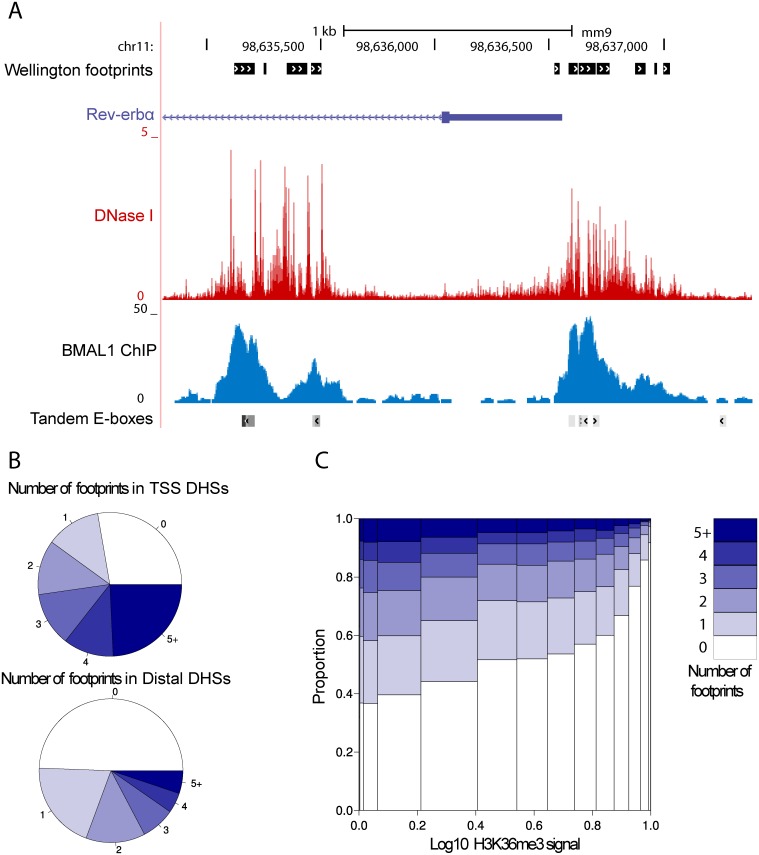
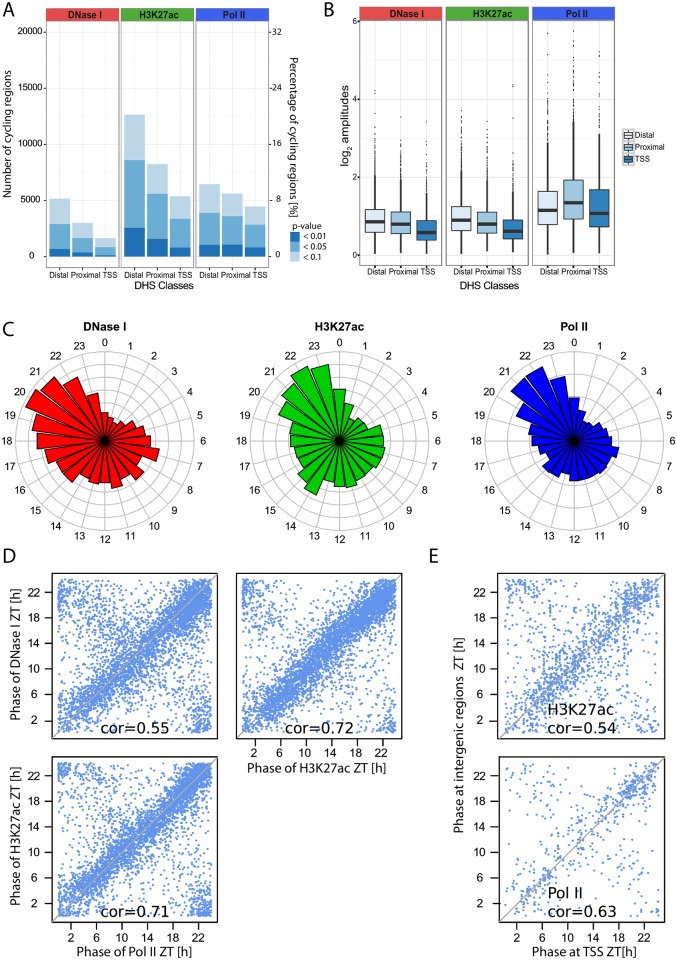
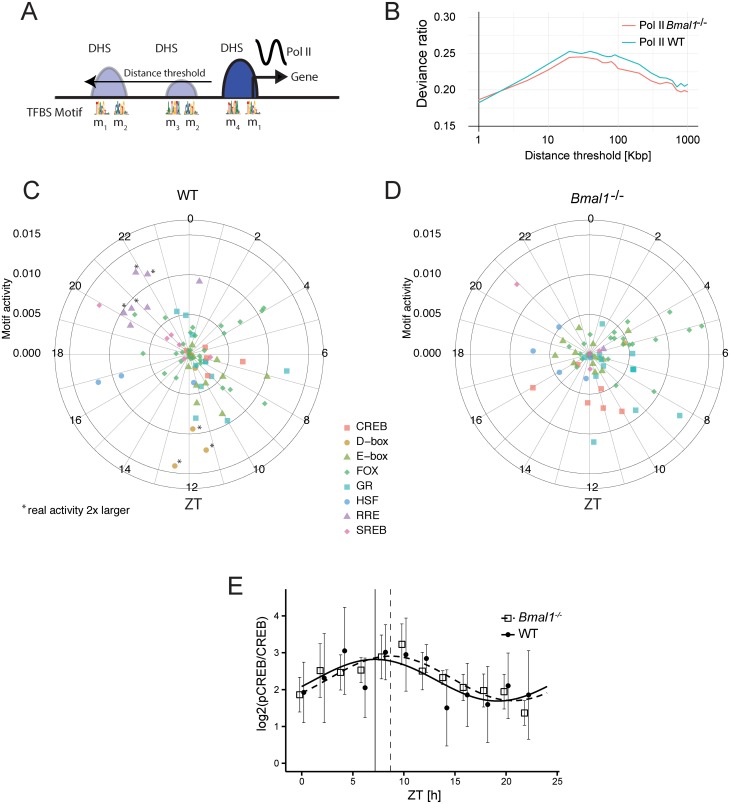
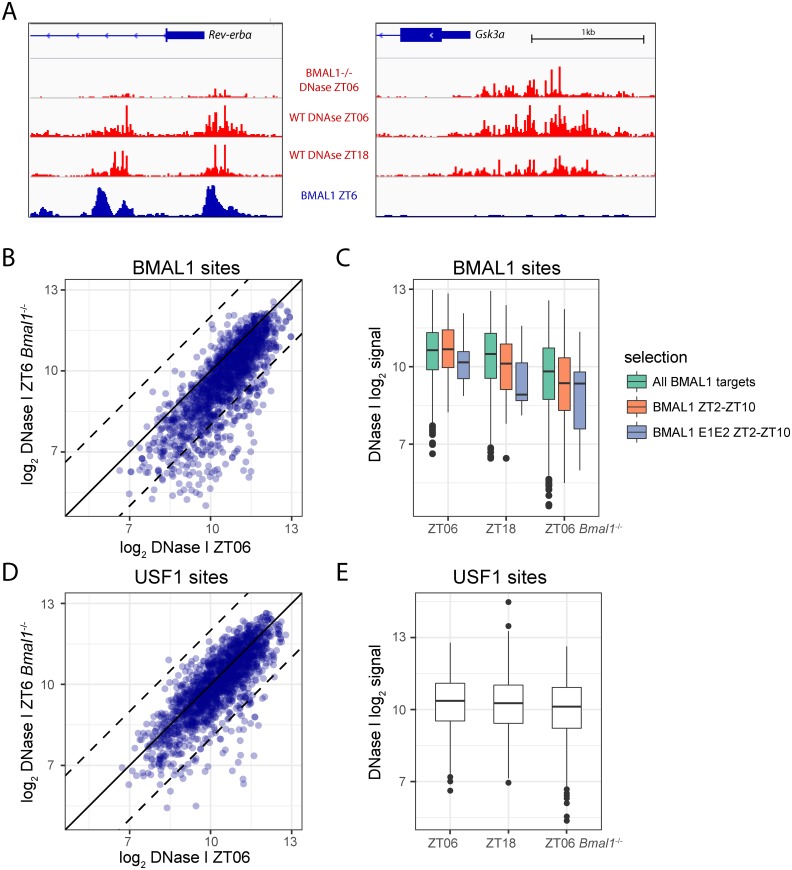
Many organisms exhibit temporal rhythms in gene expression that propel diurnal cycles in physiology. In the liver of mammals, these rhythms are controlled by transcription-translation feedback loops of the core circadian clock and by feeding-fasting cycles. To better understand the regulatory interplay between the circadian clock and feeding rhythms, we mapped DNase I hypersensitive sites (DHSs) in the mouse liver during a diurnal cycle. The intensity of DNase I cleavages cycled at a substantial fraction of all DHSs, suggesting that DHSs harbor regulatory elements that control rhythmic transcription. Using chromatin immunoprecipitation followed by DNA sequencing (ChIP-seq), we found that hypersensitivity cycled in phase with RNA polymerase II (Pol II) loading and H3K27ac histone marks. We then combined the DHSs with temporal Pol II profiles in wild-type (WT) and Bmal1-/- livers to computationally identify transcription factors through which the core clock and feeding-fasting cycles control diurnal rhythms in transcription. While a similar number of mRNAs accumulated rhythmically in Bmal1-/- compared to WT livers, the amplitudes in Bmal1-/- were generally lower. The residual rhythms in Bmal1-/- reflected transcriptional regulators mediating feeding-fasting responses as well as responses to rhythmic systemic signals. Finally, the analysis of DNase I cuts at nucleotide resolution showed dynamically changing footprints consistent with dynamic binding of CLOCK:BMAL1 complexes. Structural modeling suggested that these footprints are driven by a transient heterotetramer binding configuration at peak activity. Together, our temporal DNase I mappings allowed us to decipher the global regulation of diurnal transcription rhythms in the mouse liver.
许多生物体在基因表达上呈现出时间节律,这种节律推动了生理过程中的昼夜循环。在哺乳动物的肝脏中,这些节律受核心生物钟的转录-翻译反馈环以及进食-禁食周期的控制。为了更好地理解生物钟与进食节律之间的调控相互作用,我们在昼夜循环过程中绘制了小鼠肝脏中DNase I超敏位点(DHSs)的图谱。在所有DHSs的很大一部分中,DNase I切割强度呈周期性变化,这表明DHSs含有控制节律性转录的调控元件。通过染色质免疫沉淀结合DNA测序(ChIP-seq),我们发现超敏性与RNA聚合酶II(Pol II)的加载以及H3K27ac组蛋白标记同步循环。然后,我们将DHSs与野生型(WT)和Bmal1基因敲除(Bmal1-/-)肝脏中的时间性Pol II图谱相结合,通过计算来识别核心生物钟和进食-禁食周期控制转录昼夜节律所通过的转录因子。与WT肝脏相比,Bmal1-/-肝脏中有节律地积累的mRNA数量相似,但Bmal1-/-肝脏中的振幅通常较低。Bmal1-/-肝脏中的残余节律反映了介导进食-禁食反应以及对节律性全身信号反应的转录调节因子。最后,在核苷酸分辨率下对DNase I切割的分析显示,动态变化的足迹与CLOCK:BMAL1复合物的动态结合一致。结构模型表明,这些足迹是由峰值活性时的瞬时异源四聚体结合构型驱动的。总之,我们的时间性DNase I图谱使我们能够解读小鼠肝脏中昼夜转录节律的全局调控。