Vaz Janice, Narayan Edward J, Dileep Kumar R, Thenmozhi K, Thiyagesan Krishnamoorthy, Baskaran Nagarajan
Department of Zoology & Wildlife Biology, A.V.C. College (Autonomous), Mannampandal, Mayiladuthurai, Tamil Nadu, India.
School of Science and Helath, Western Sydney University, Hawkesbury Campus, Richmond NSW, Australia.
PLoS One. 2017 Apr 17;12(4):e0174711. doi: 10.1371/journal.pone.0174711. eCollection 2017.
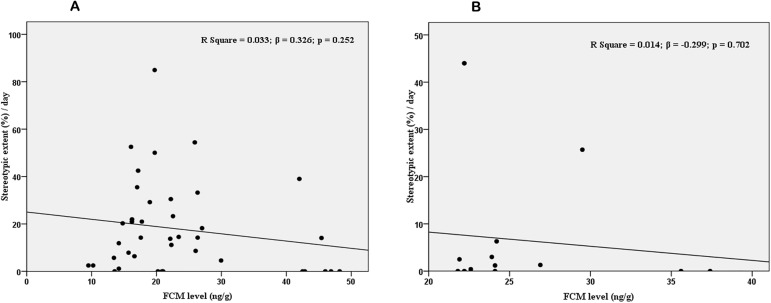
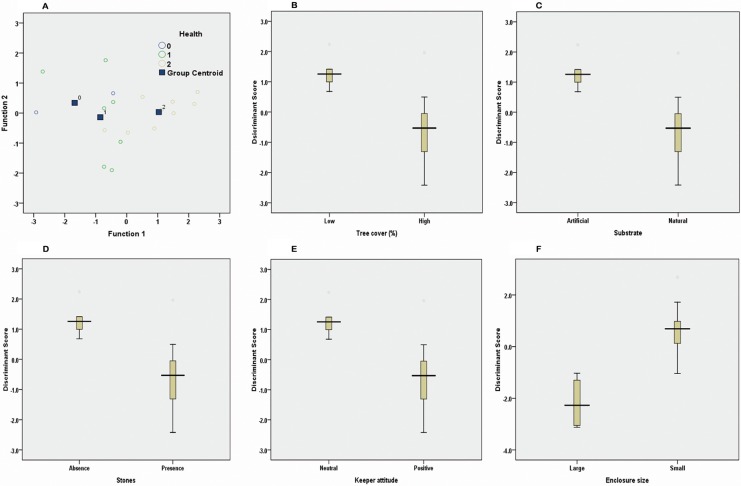
India's charismatic wildlife species are facing immense pressure from anthropogenic-induced environmental perturbations. Zoos play a major role in the conservation of threatened species, but their adaptation in captivity is posing a major challenge globally. Stress from inadequate adaptation could lead to suppression of cognitive functioning and increased display of stereotypic behaviour. It is thus necessary to measure biological traits like behaviour, stress physiology, and contextual factors driving the animals maintained at zoos. In this study, we assessed stereotypic behaviour and stress physiology employing standard behaviour scoring, non-invasive stress monitoring, and their contextual drivers in a sub-population of two large felid species managed in six Indian zoos. The prevalence and intensity of stereotypic behaviours and levels of faecal corticosterone metabolites (FCM) were ascertained among 41 Royal Bengal tigers Panthera tigris tigris and 21 Indian leopards Panthera pardus fusca between April 2014 and March 2015. Behavioural observations showed that tigers spent more time stereotyping (12%) than leopards (7%) during daylight hours. Stress levels assessed using FCM revealed that tigers (23.6 ± 1.62 ng/g) had marginally lower level of corticosterone metabolites than leopards (27.2 ±1.36 ng/g). Stereotypic behaviour increased significantly with FCM level when the effect of heath status was controlled in tigers, and the effects tree cover, stone, den and keeper attitude controlled in leopards. Comparison of stereotypes of tigers with various biological and environmental factors using binary logistic regression revealed that stereotypic prevalence decreased with increased enclosure size, and enclosure enrichments like presence of pools and stones, when managed socially with conspecifics, and with positive keeper attitude, these factors accounting for 43% of variations in stereotypic prevalence among tigers. Stereotype among leopards was significantly absent when associated with increased tree cover and presence of pool, and den in the enclosure, age and among zoo-born than wild-born ones. These factors explain 81% of variations in stereotypic prevalence in them. A comparison of FCM levels with context-dependent factors revealed that stress levels among tigers decreased significantly with enclosure size and with individuals from nil to low, and severity of health issues. These factors explain 64% of variations in FCM levels. In leopards, the presence of stones in the enclosure and keepers with positive attitude resulted in significant decrease in FCM levels, these factors together accounting for 94% of variations. Multiple regressions on selected variables based on Factor Analysis of Mixed Data showed that in tigers the intensity of stereotype decreased significantly with enclosure size, sociality and positive keeper attitude and FCM level with health problems. Similarly, analyses in leopards revealed that intensity of stereotype decreased significantly with tree cover, age and FCM level with positive keeper attitude. Overall, our study suggests that to reduce stereotypes and stress level, tigers in captivity should be managed in larger enclosures enriched with pool, and stones, and in appropriate social conditions with adequate veterinary care. Leopards should be managed in enclosures with dense tree cover, pool, stones and den. Positive keeper attitude plays a crucial role in the welfare of both the species in captivity. Our study is promising and is comparable with their natural behaviour in the wild; for example, tigers require larger natural habitats, while leopards can manage even with smaller isolated patches but with dense vegetation cover.
印度极具魅力的野生动物物种正面临着人为导致的环境扰动带来的巨大压力。动物园在濒危物种保护中发挥着重要作用,但其圈养适应问题在全球范围内构成了重大挑战。适应不足所带来的压力可能导致认知功能受到抑制以及刻板行为表现增加。因此,有必要对圈养于动物园的动物的行为、应激生理学等生物学特征以及相关环境因素进行测量。在本研究中,我们采用标准行为评分、非侵入性应激监测及其背景驱动因素,对在六个印度动物园管理的两种大型猫科动物亚种群的刻板行为和应激生理学进行了评估。在2014年4月至2015年3月期间,对41只孟加拉虎(Panthera tigris tigris)和21只印度豹(Panthera pardus fusca)的刻板行为发生率和强度以及粪便皮质酮代谢物(FCM)水平进行了测定。行为观察表明,在白天,老虎进行刻板行为的时间(12%)比豹子(7%)更多。使用FCM评估的应激水平显示,老虎(23.6 ± 1.62 ng/g)的皮质酮代谢物水平略低于豹子(27.2 ± 1.36 ng/g)。当在老虎中控制健康状况的影响,以及在豹子中控制树木覆盖、石头、兽穴和饲养员态度的影响时,刻板行为随FCM水平显著增加。使用二元逻辑回归对老虎的各种生物学和环境因素与刻板行为进行比较发现,随着圈舍面积增加以及存在水池和石头等圈舍丰富设施,当与同种动物进行群居管理且饲养员态度积极时,刻板行为发生率降低,这些因素占老虎刻板行为发生率变化的43%。当与圈舍中树木覆盖增加、水池存在、兽穴以及圈舍中出生(而非野生出生)相关时,豹子中显著不存在刻板行为。这些因素解释了它们刻板行为发生率变化的81%。将FCM水平与背景相关因素进行比较发现,老虎的应激水平随着圈舍面积增加以及个体健康问题从无到低和严重程度的降低而显著下降。这些因素解释了FCM水平变化的64%。在豹子中,圈舍中石头的存在以及饲养员积极的态度导致FCM水平显著下降,这些因素共同占变化的94%。基于混合数据因子分析对选定变量进行的多元回归表明,在老虎中,刻板行为强度随着圈舍面积、群居性和饲养员积极态度以及健康问题导致的FCM水平显著降低。同样,在豹子中的分析表明,刻板行为强度随着树木覆盖、年龄以及饲养员积极态度导致的FCM水平显著降低。总体而言,我们的研究表明,为了减少刻板行为和应激水平,圈养的老虎应在配备水池和石头的较大圈舍中,并在适当的群居条件下且有足够的兽医护理进行管理。豹子应在有茂密树木覆盖、水池、石头和兽穴的圈舍中管理。饲养员积极的态度对圈养的这两个物种的福利起着至关重要的作用。我们的研究很有前景,并且与它们在野外的自然行为具有可比性;例如,老虎需要更大的自然栖息地,而豹子即使在较小的孤立区域但有茂密植被覆盖的情况下也能生存。