Tassi Aline Daniele, Garita-Salazar Laura Cristina, Amorim Lilian, Novelli Valdenice Moreira, Freitas-Astúa Juliana, Childers Carl C, Kitajima Elliot W
Departamento de Fitopatologia e Nematologia, Escola Superior de Agricultura Luiz de Queiroz, Universidade de São Paulo, CP 9, Piracicaba, SP, 13418-900, Brazil.
Instituto Agronômico de Campinas, Centro APTA Citros Sylvio Moreira, CP 4, Cordeirópolis, SP, 13490-900, Brazil.
Exp Appl Acarol. 2017 Mar;71(3):227-241. doi: 10.1007/s10493-017-0123-0. Epub 2017 Apr 17.
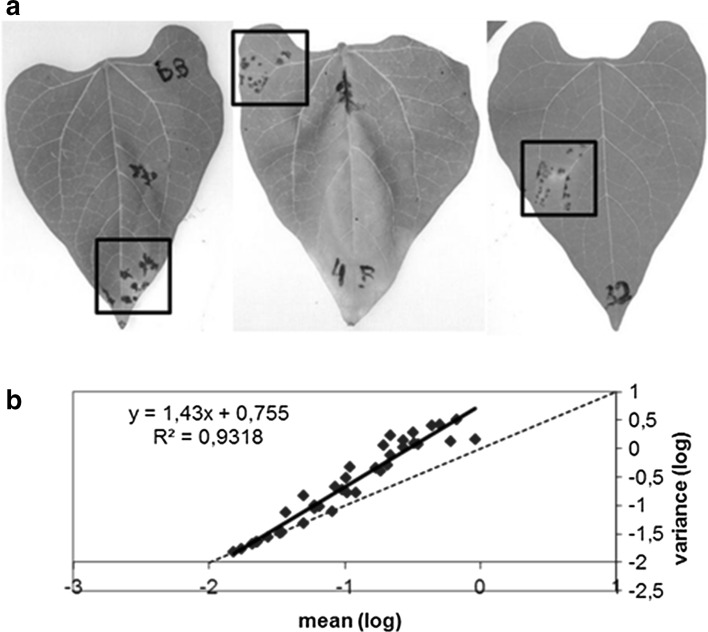
Citrus leprosis has been one of the most destructive diseases of citrus in the Americas. In the last decade important progress has been achieved such as the complete genome sequencing of its main causal agent, Citrus leprosis virus C (CiLV-C), belonging to a new genus Cilevirus. It is transmitted by Brevipalpus yothersi Baker (Acari: Tenuipalpidae), and is characterized by the localized symptoms it induces on the leaves, fruits and stems. It occurs in the American continents from Mexico to Argentina. The virus was until recently considered restricted to Citrus spp. However, it was found naturally infecting other plants species as Swinglea glutinosa Merrill and Commelina benghalensis L., and has been experimentally transmitted by B. yothersi to a large number of plant species. Despite these advances little is known about the virus-vector relationship that is a key to understanding the epidemiology of the disease. Some components of the CiLV-C/B. yothersi relationship were determined using the common bean (Phaseolus vulgaris L. cv. 'IAC Una') as a test plant. They included: (a) the virus acquisition access period was 4 h; (b) the virus inoculation access period was 2 h; (c) the latent period between acquisition and inoculation was 7 h; (d) the period of retention of the virus by a single viruliferous mite was at least 12 days; (d) the percentage of viruliferous individuals from mite colonies on infected tissues ranged from 25 to 60%. The experiments confirmed previous data that all developmental stages of B. yothersi (larva, protonymph and deutonymph, adult female and male) were able to transmit CiLV-C and that transovarial transmission of the virus did not occur. CiLV-C can be acquired from lesions on leaves, fruits and stems by B. yothersi. Based on the distribution of lesions produced by single viruliferous B. yothersi on bean leaves, it is concluded that they tend to feed in restricted areas, usually near the veins. The short latent and transmission periods during the larval stage suggest that the CiLV-C/B. yothersi relationship is of the persistent circulative type.
柑橘麻风病一直是美洲最具毁灭性的柑橘病害之一。在过去十年中取得了重要进展,例如其主要病原体柑橘麻风病毒C(CiLV-C)的全基因组测序,该病毒属于一个新的属——柑橘病毒属。它由尤氏短须螨(Brevipalpus yothersi Baker,蜱螨亚纲:细须螨科)传播,其特征是在叶片、果实和茎上诱发局部症状。它发生在从墨西哥到阿根廷的美洲大陆。直到最近,该病毒还被认为仅限于柑橘属植物。然而,人们发现它能自然感染其他植物物种,如粘滑亮叶木(Swinglea glutinosa Merrill)和孟加拉鸭跖草(Commelina benghalensis L.),并且已经通过尤氏短须螨实验性地传播到大量植物物种。尽管有这些进展,但对于病毒与传播媒介的关系却知之甚少,而这是理解该病害流行病学的关键。利用菜豆(Phaseolus vulgaris L. cv. 'IAC Una')作为试验植物确定了CiLV-C/尤氏短须螨关系的一些组成部分。它们包括:(a)病毒获取接入期为4小时;(b)病毒接种接入期为2小时;(c)获取与接种之间的潜伏期为7小时;(d)单个带毒螨保留病毒的时间至少为12天;(d)感染组织上螨群中带毒个体的百分比在25%至60%之间。实验证实了先前的数据,即尤氏短须螨的所有发育阶段(幼虫、若螨、成螨,雌螨和雄螨)都能够传播CiLV-C,并且该病毒不会经卵传播。尤氏短须螨可从叶片、果实和茎上的病斑获取CiLV-C。根据单个带毒尤氏短须螨在菜豆叶片上产生的病斑分布情况,得出它们倾向于在有限区域取食,通常靠近叶脉。幼虫阶段较短的潜伏期和传播期表明CiLV-C/尤氏短须螨关系属于持久性循环类型。