Argyros Orestis, Karampelas Theodoros, Varela Aimilia, Asvos Xenophon, Papakyriakou Athanasios, Agalou Adamantia, Beis Dimitris, Davos Constantinos H, Fokas Demosthenes, Tamvakopoulos Constantin
Division of Pharmacology-Pharmacotechnology, Biomedical Research Foundation Academy of Athens, Athens, 11527, Greece.
Cardiovascular Research Laboratory, Clinical, Experimental Surgery and Translational Research Center, Biomedical Research Foundation Academy of Athens, Athens, 11527, Greece.
Oncotarget. 2017 Jun 6;8(23):37250-37262. doi: 10.18632/oncotarget.16763.
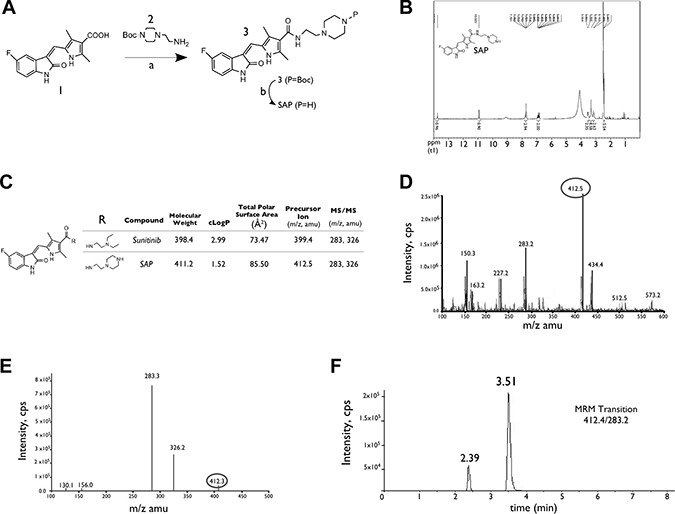
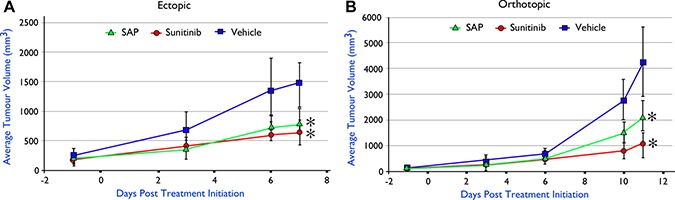
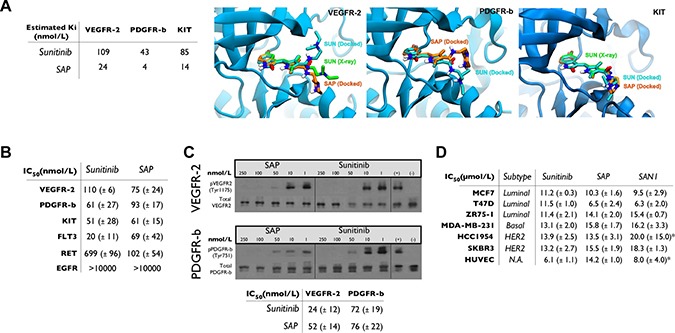
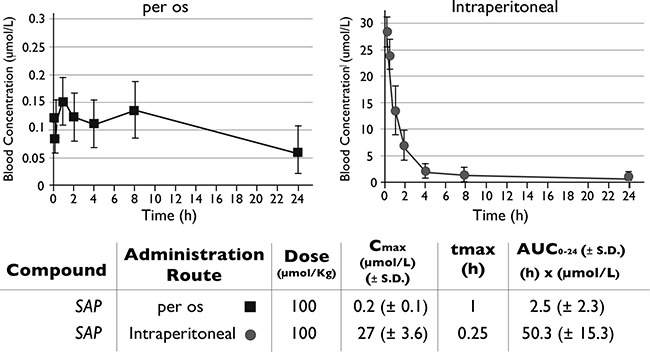
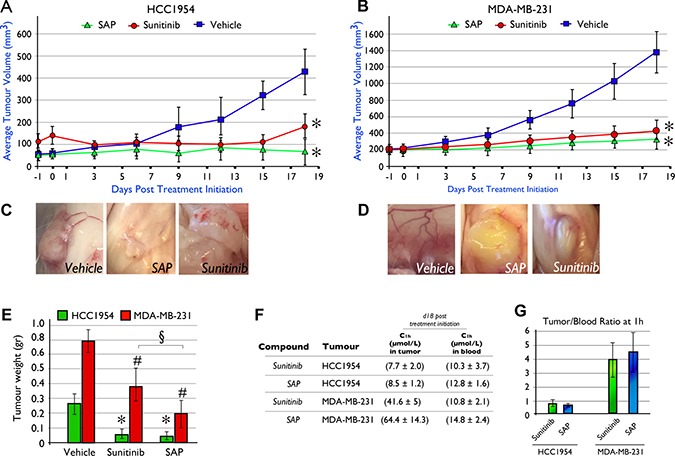
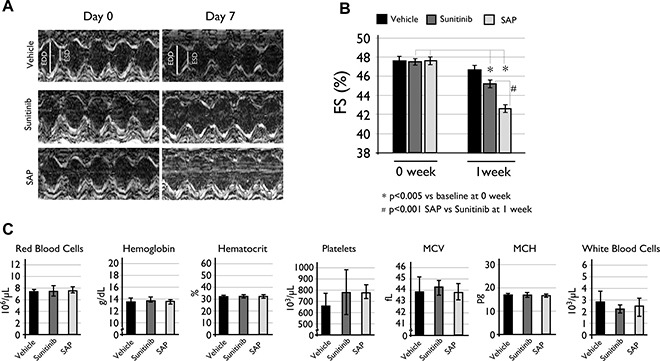
The clinical efficacy of antiangiogenic small molecules (e.g., sunitinib) in breast carcinoma has largely failed with substantial off-target toxicity. We rationally designed and evaluated preclinically a novel sunitinib analogue, SAP, with favourable pharmacological properties and the ability to be readily conjugated to a targeting peptide or antibody for active tumour targeting.SAP was evaluated in silico and in vitro in order to verify target engagement (e.g., VEGFR2). Pharmacokinetic and biodistribution parameters were determined in mice using LC-MS/MS. SAP efficacy was tested in two breast cancer xenograft and two syngeneic animal models and pharmacodynamic evaluation was accomplished using phosphokinase assays and immunohistochemistry. Cardiac and blood toxicity of SAP were also monitored.SAP retained the antiangiogenic and cytotoxic properties of the parental molecule with an increased blood exposure and tumor accumulation compared to sunitinib. SAP proved efficacious in all animal models. Tumors from SAP treated animals had significantly decreased Ki-67 and CD31 markers and reduced levels of phosphorylated AKT, ERK and S6 compared to vehicle treated animals. In mice dosed with SAP there was negligible hematotoxicity, while cardiac function measurements showed a reduction in the percentage left ventricular fractional shortening compared to vehicle treated animals.In conclusion, SAP is a novel rationally designed conjugatable small antiangiogenic molecule, efficacious in preclinical models of breast cancer.
抗血管生成小分子(如舒尼替尼)在乳腺癌中的临床疗效大多不佳,且存在严重的脱靶毒性。我们合理设计并在临床前评估了一种新型舒尼替尼类似物SAP,它具有良好的药理学特性,并且能够很容易地与靶向肽或抗体偶联以实现主动肿瘤靶向。对SAP进行了计算机模拟和体外评估,以验证其对靶点的作用(如血管内皮生长因子受体2)。使用液相色谱-串联质谱法在小鼠中测定了药代动力学和生物分布参数。在两种乳腺癌异种移植模型和两种同基因动物模型中测试了SAP的疗效,并使用磷酸激酶测定和免疫组织化学进行了药效学评估。还监测了SAP的心脏和血液毒性。与舒尼替尼相比,SAP保留了母体分子的抗血管生成和细胞毒性特性,血液暴露和肿瘤蓄积增加。SAP在所有动物模型中均证明有效。与赋形剂处理的动物相比,接受SAP治疗的动物的肿瘤中Ki-67和CD31标记物显著降低,磷酸化的AKT、ERK和S6水平降低。在给予SAP的小鼠中,血液毒性可忽略不计,而心脏功能测量显示与赋形剂处理的动物相比,左心室短轴缩短百分比降低。总之,SAP是一种经过合理设计的新型可偶联抗血管生成小分子,在乳腺癌临床前模型中有效。