
一种生物人工真皮再生模板可促进体外皮肤细胞增殖,并增强体内大面积皮肤伤口的愈合。
A bioartificial dermal regeneration template promotes skin cell proliferation in vitro and enhances large skin wound healing in vivo.
作者信息
Chang Peng, Guo Bingyu, Hui Qiang, Liu Xiaoyan, Tao Kai
机构信息
Department of Plastic and Reconstructive Surgery, General Hospital of Shenyang Military Area Command, Shenyang, 110840, Liaoning, P.R. China.
出版信息
Oncotarget. 2017 Apr 11;8(15):25226-25241. doi: 10.18632/oncotarget.16005.
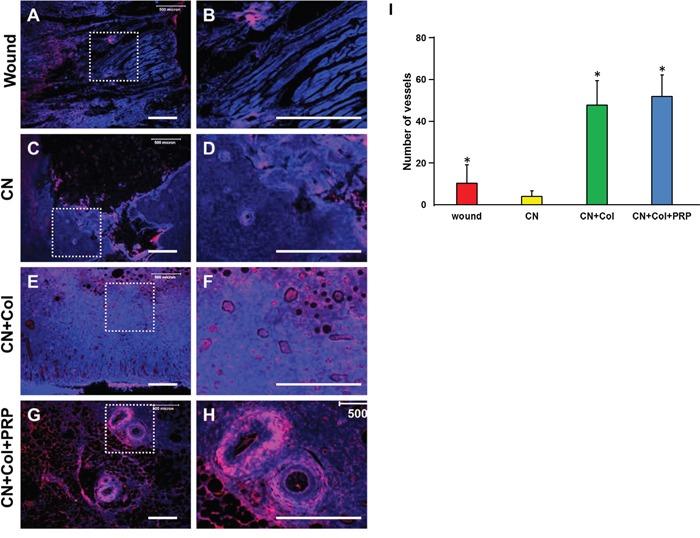
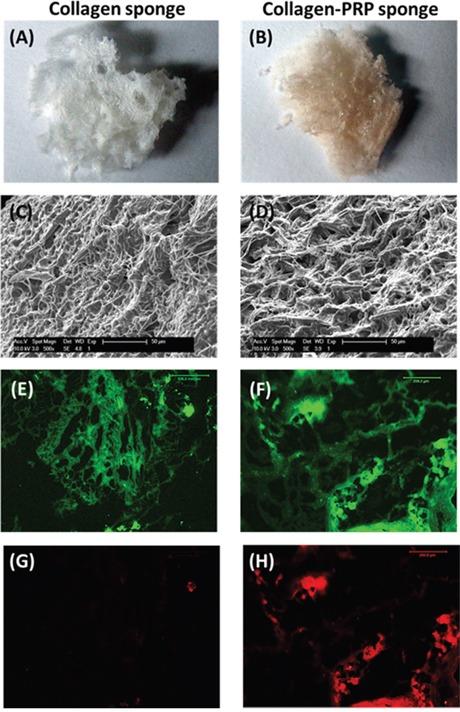
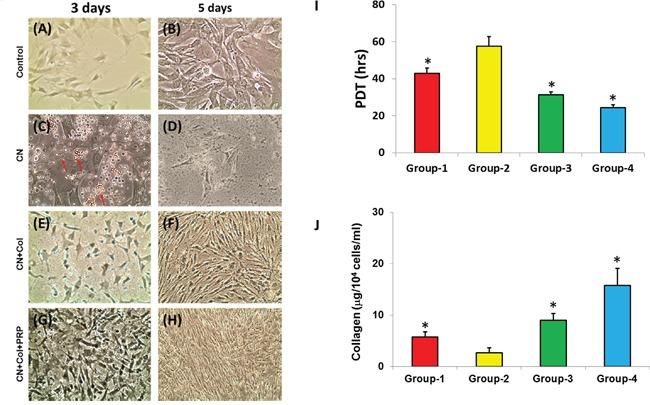
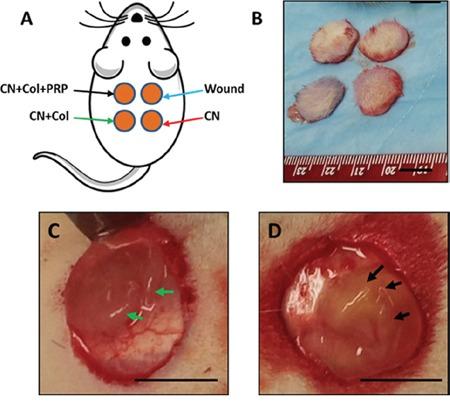
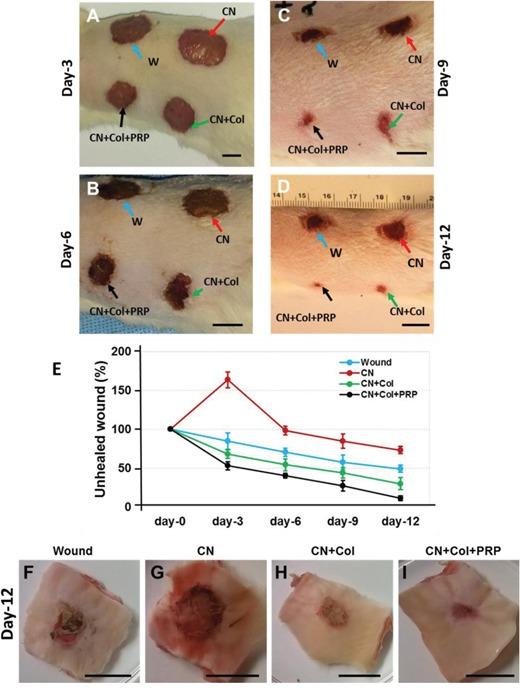
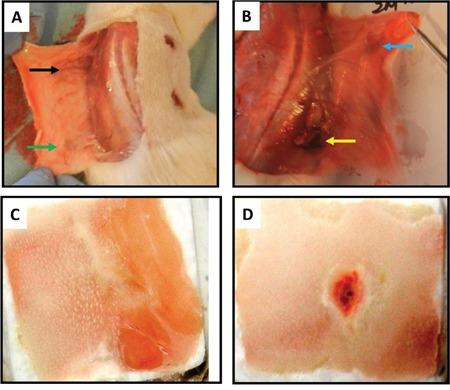
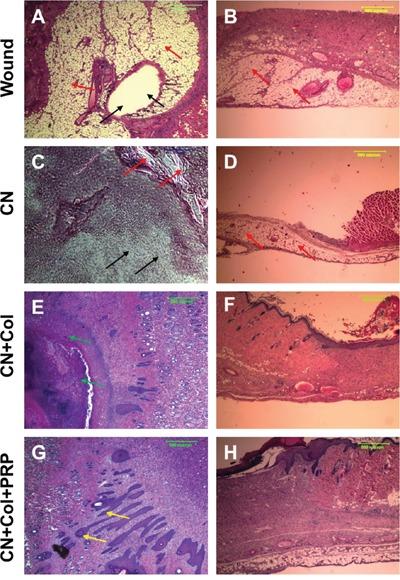
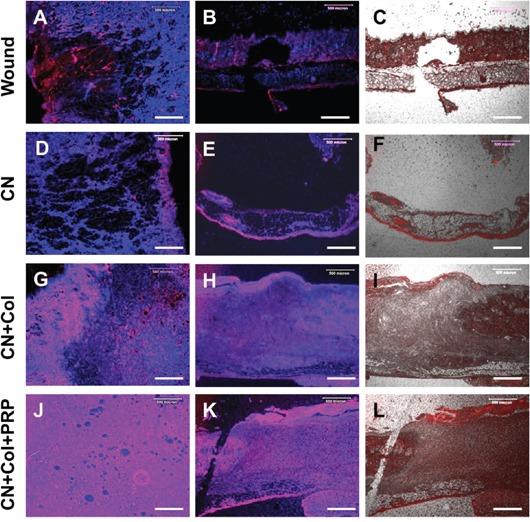
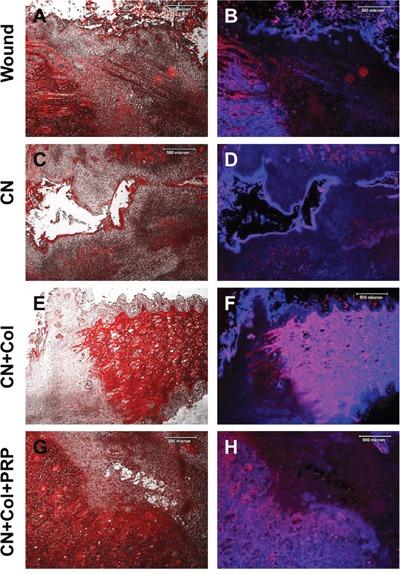
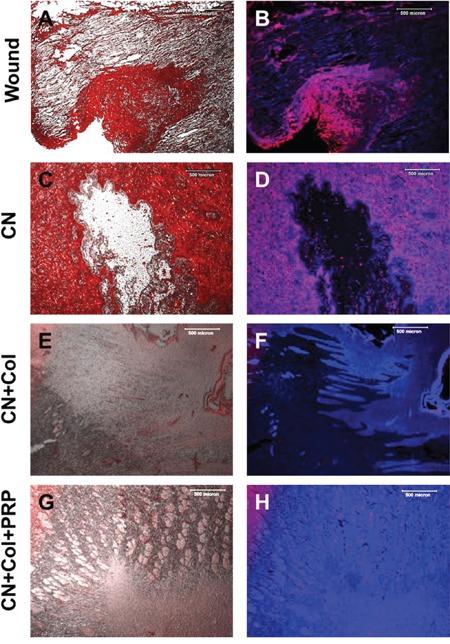
A novel bioartificial dermal regeneration template has been developed using platelet-rich plasma and acellular animal skin collagen sponge for the treatment of larger area and full thickness skin wounds. This platelet-rich plasma-collagen sponge keeps native skin structure and contains huge amounts of growth factors. The effect of this bioartificial dermal regeneration template was tested in vitro and in vivo via a mimic poor wound healing process by adding collagenase I into cell culture medium or the wound area. The in vitro experimental results indicated that the rat skin cells grew faster and produced more collagen in platelet-rich plasma-collagen sponge with collagenase than those treated either with collagen sponge plus collagenase, or collagenase, or control group without treatment. The in vivo experiments were performed by large rat skin wounds, 1.5 cm diameter, treated either with collagenase, or collagenase plus collagen sponge, or collagenase plus platelet-rich plasma-collagen sponge. The wound without treatment was used as a control. The wounds treated with collagenase-containing platelet-rich plasma-collagen sponge healed 4 times faster than the untreated wounds, 6 times faster than the collagenase treated wounds, 2.4 times faster than collagenase-containing collagen sponge treated wounds. The immunostaining indicated that the healed tissues in the wound areas treated with collagenase-containing platelet-rich plasma-collagen sponge were composed of collagen type I and collagen III with blood vessels and hair follicles. The results demonstrated that this collagenase-containing platelet-rich plasma-collagen sponge works as a bioartificial dermal regeneration template. The application of this collagenase-containing platelet-rich plasma-collagen sponge promotes the traumatic skin wound healing and permits the reconstitution of the inherent barrier functions of the skin.
一种新型生物人工真皮再生模板已被研发出来,它采用富含血小板的血浆和脱细胞动物皮肤胶原海绵,用于治疗大面积全层皮肤伤口。这种富含血小板的血浆 - 胶原海绵保留了天然皮肤结构,并含有大量生长因子。通过在细胞培养基或伤口区域添加胶原酶I来模拟不良伤口愈合过程,在体外和体内测试了这种生物人工真皮再生模板的效果。体外实验结果表明,与单独使用胶原海绵加胶原酶、胶原酶或未处理的对照组相比,在含有胶原酶的富含血小板的血浆 - 胶原海绵中,大鼠皮肤细胞生长更快,产生的胶原蛋白更多。体内实验通过对直径1.5厘米的大鼠大皮肤伤口进行,分别用胶原酶、胶原酶加胶原海绵或胶原酶加富含血小板的血浆 - 胶原海绵处理,未处理的伤口作为对照。用含胶原酶的富含血小板的血浆 - 胶原海绵处理的伤口愈合速度比未处理的伤口快4倍,比胶原酶处理的伤口快6倍,比含胶原酶的胶原海绵处理的伤口快2.4倍。免疫染色表明,用含胶原酶的富含血小板的血浆 - 胶原海绵处理的伤口区域愈合组织由I型和III型胶原蛋白、血管和毛囊组成。结果表明,这种含胶原酶的富含血小板的血浆 - 胶原海绵可作为生物人工真皮再生模板。这种含胶原酶的富含血小板的血浆 - 胶原海绵的应用促进了创伤性皮肤伤口的愈合,并使皮肤固有屏障功能得以重建。
 Zotero 插件