Mourik Bas C, Lubberts Erik, de Steenwinkel Jurriaan E M, Ottenhoff Tom H M, Leenen Pieter J M
Department of Medical Microbiology and Infectious Diseases, Erasmus University Medical Center, Rotterdam, Netherlands.
Department of Rheumatology, Erasmus University Medical Center, Rotterdam, Netherlands.
Front Immunol. 2017 Apr 5;8:294. doi: 10.3389/fimmu.2017.00294. eCollection 2017.
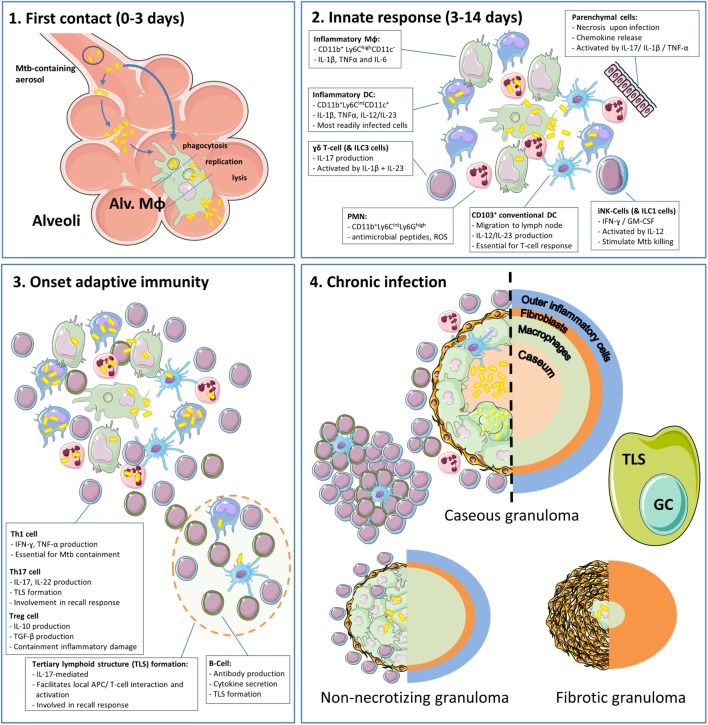
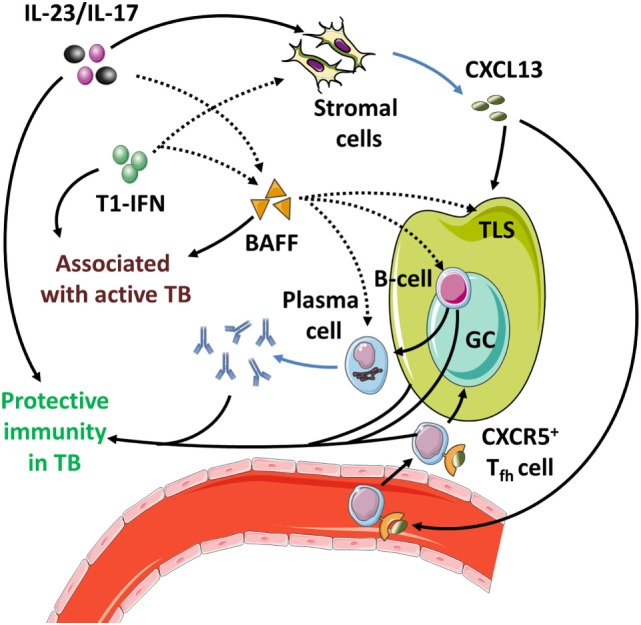
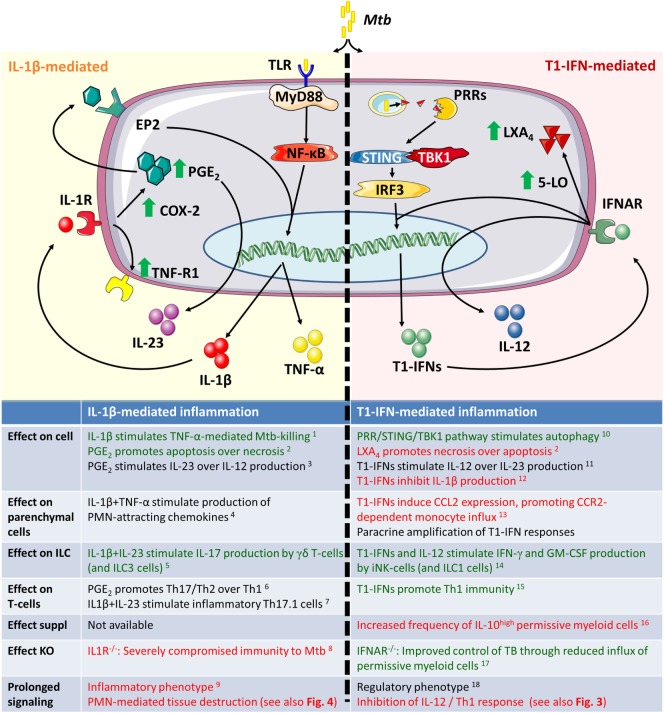
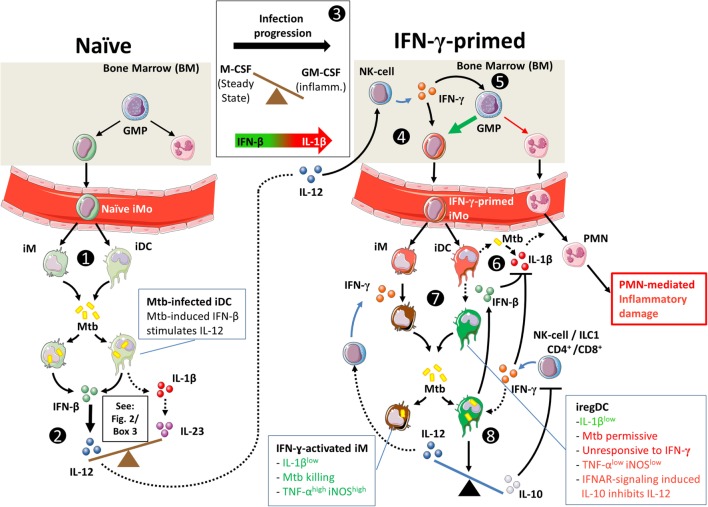
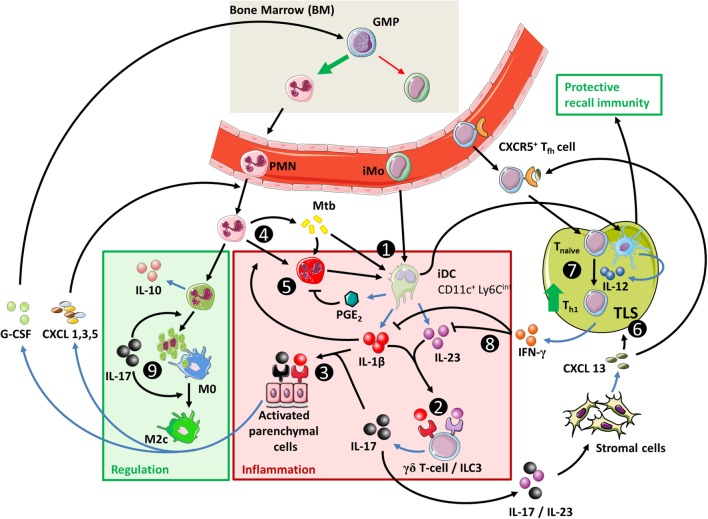
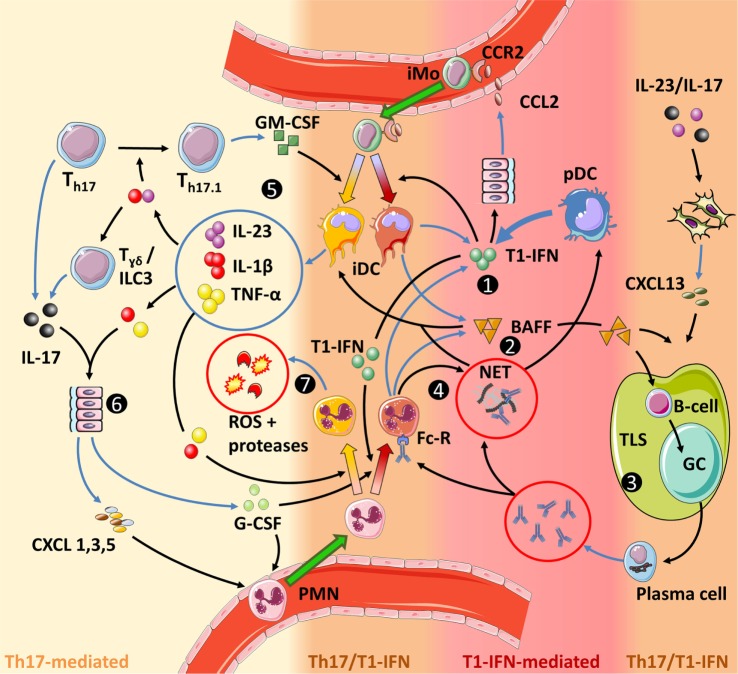
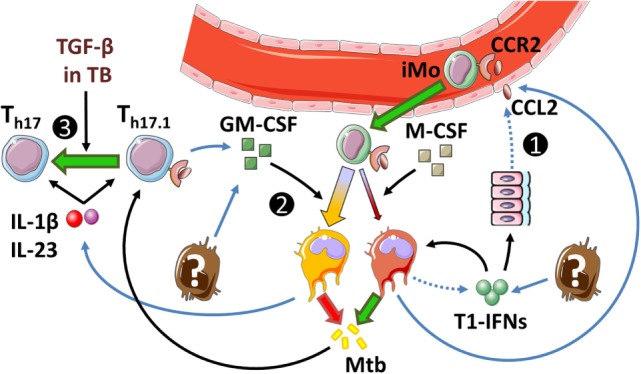
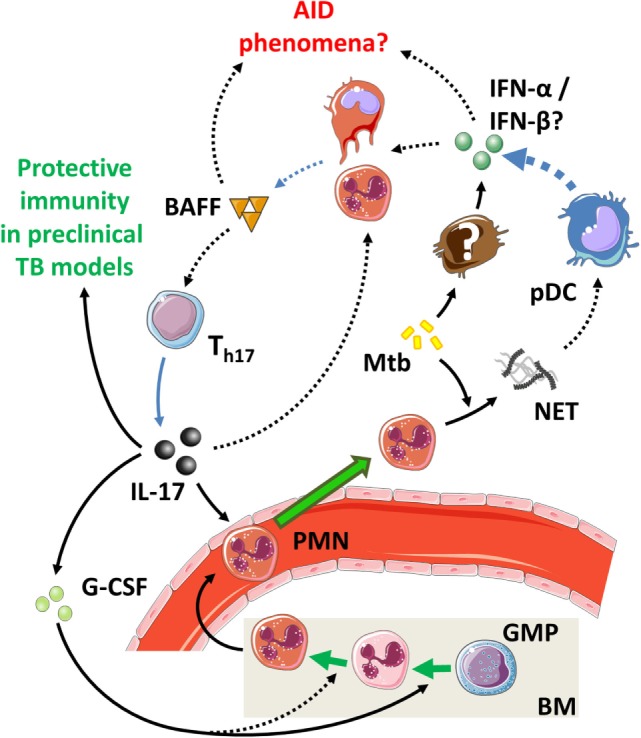
The classical paradigm of tuberculosis (TB) immunity, with a central protective role for Th1 responses and IFN-γ-stimulated cellular responses, has been challenged by unsatisfactory results of vaccine strategies aimed at enhancing Th1 immunity. Moreover, preclinical TB models have shown that increasing IFN-γ responses in the lungs is more damaging to the host than to the pathogen. Type 1 interferon signaling and altered Th17 responses have also been associated with active TB, but their functional roles in TB pathogenesis remain to be established. These two host responses have been studied in more detail in autoimmune diseases (AID) and show functional interactions that are of potential interest in TB immunity. In this review, we first identify the role of type 1 interferons and Th17 immunity in TB, followed by an overview of interactions between these responses observed in systemic AID. We discuss (i) the effects of GM-CSF-secreting Th17.1 cells and type 1 interferons on CCR2 monocytes; (ii) convergence of IL-17 and type 1 interferon signaling on stimulating B-cell activating factor production and the central role of neutrophils in this process; and (iii) synergy between IL-17 and type 1 interferons in the generation and function of tertiary lymphoid structures and the associated follicular helper T-cell responses. Evaluation of these autoimmune-related pathways in TB pathogenesis provides a new perspective on recent developments in TB research.
结核病(TB)免疫的经典范式认为Th1反应和IFN-γ刺激的细胞反应具有核心保护作用,但旨在增强Th1免疫的疫苗策略结果不尽人意,这一范式受到了挑战。此外,临床前结核病模型表明,肺部IFN-γ反应增加对宿主的损害比对病原体的损害更大。1型干扰素信号传导和Th17反应改变也与活动性结核病有关,但其在结核病发病机制中的功能作用仍有待确定。这两种宿主反应在自身免疫性疾病(AID)中得到了更详细的研究,并显示出在结核病免疫中可能具有潜在意义的功能相互作用。在本综述中,我们首先确定1型干扰素和Th17免疫在结核病中的作用,然后概述在全身性自身免疫性疾病中观察到的这些反应之间的相互作用。我们讨论了(i)分泌GM-CSF的Th17.1细胞和1型干扰素对CCR2单核细胞的影响;(ii)IL-17和1型干扰素信号在刺激B细胞激活因子产生方面的趋同以及中性粒细胞在此过程中的核心作用;以及(iii)IL-17和1型干扰素在三级淋巴结构的生成和功能以及相关滤泡辅助性T细胞反应中的协同作用。评估结核病发病机制中这些与自身免疫相关的途径为结核病研究的最新进展提供了新的视角。