Auer Stefanie, Linsmayer Elisabeth, Beránková Anna, Pascher Patrick, Firlinger Bernadette, Prischl Doris, Ratajczak Paulina, Span Edith, Holmerova Iva
Department for Clinical Neuroscience and Preventive Medicine, Danube University Krems, Dr.-Karl-Dorrek-Straße 30, 3500, Krems, Austria.
MAS Alzheimerhilfe, Bad Ischl, Austria.
BMC Health Serv Res. 2017 Apr 20;17(1):296. doi: 10.1186/s12913-017-2244-x.
The organization of long-term care is one of the main challenges of public health and health policies in Europe and worldwide, especially in terms of care concepts for people with dementia. In Austria and the Czech Republic the majority of elderly institutionalized persons with dementia are cared for in nursing homes. It is however unclear, how many persons living in nursing homes in Austria and in the Czech Republic are suffering from cognitive impairment and dementia. In addition, basic information on the nutritional status, the status of mobility and the medication prescription patterns are often missing. To facilitate new effective and evidenced based care concepts, basic epidemiological data are in urgent need. Thus, DEMDATA was initiated to provide important basic data on persons living in nursing homes in Austria and the Czech Republic for future care planning.
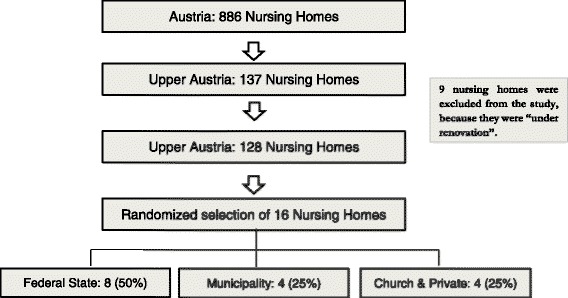
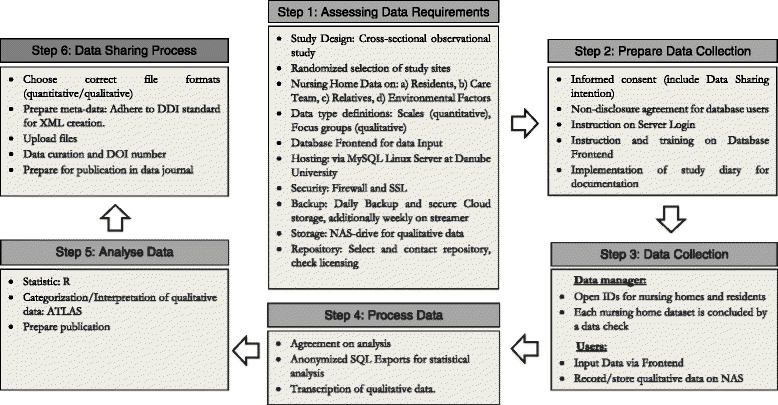
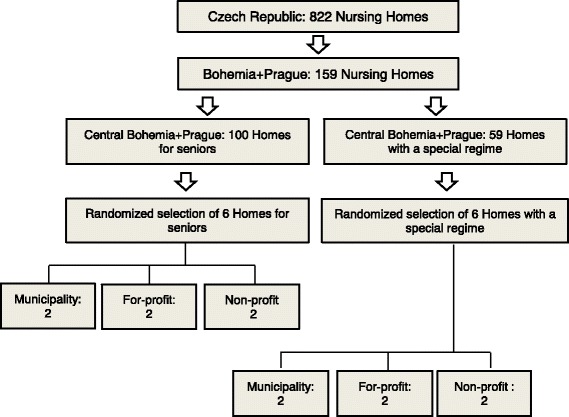
DEMDATA is a multicentre mixed methods cross-sectional study. Stratified and randomly drawn nursing homes in Austria and the Czech Republic are surveyed. The study protocol used in both study centres assesses four different domains: a) Resident, b) Care team, c) Relative and d) Environmental Factors. Resident's data include among others health status, cognition, dementia, mobility, nutrition, behavioural symptoms, pain intensity and quality of life. A minimum of 500 residents per country are included into the study (N = 1000 residents). The care team is asked about the use of the person-centred care and their burden. The relatives are asked about the number of visits and proxy-rate the quality of life of their family member. All staff employed in the nursing homes, all residents and relatives can voluntary take part in the study. The environmental factors include among others the organisational category of the nursing home, number of residents, number of rooms, social activities and the care concept. The project started in March 2016 and will be concluded in February 2018.
DEMDATA will provide important epidemiological data on four different nursing home domains in Austria and the Czech Republic, with a focus on the prevalence of dementia in this population. Thereby supplying decision and policy makers with important foundation for future care planning.
长期护理的组织安排是欧洲乃至全球公共卫生和卫生政策面临的主要挑战之一,尤其是在痴呆症患者的护理理念方面。在奥地利和捷克共和国,大多数患有痴呆症的老年机构化人员在养老院接受护理。然而,尚不清楚奥地利和捷克共和国养老院中有多少人患有认知障碍和痴呆症。此外,关于营养状况、行动能力状况和药物处方模式的基本信息往往缺失。为了促进新的有效且基于证据的护理理念,迫切需要基本的流行病学数据。因此,启动了痴呆症数据研究(DEMDATA),以提供奥地利和捷克共和国养老院居民的重要基础数据,用于未来的护理规划。
痴呆症数据研究(DEMDATA)是一项多中心混合方法横断面研究。对奥地利和捷克共和国分层随机抽取的养老院进行调查。两个研究中心使用的研究方案评估四个不同领域:a)居民,b)护理团队,c)亲属,d)环境因素。居民数据包括健康状况、认知、痴呆症、行动能力、营养、行为症状、疼痛强度和生活质量等。每个国家至少有500名居民纳入研究(N = 1000名居民)。询问护理团队关于以人为主的护理的使用情况及其负担。询问亲属探访次数,并让他们对其家庭成员的生活质量进行代理评分。养老院雇佣的所有工作人员、所有居民和亲属均可自愿参与该研究。环境因素包括养老院组织类别、居民数量、房间数量、社交活动和护理理念等。该项目于2016年3月启动,将于2018年2月结束。
痴呆症数据研究(DEMDATA)将提供奥地利和捷克共和国四个不同养老院领域的重要流行病学数据,重点是该人群中痴呆症的患病率。从而为决策和政策制定者提供未来护理规划的重要基础。