Dobson Rosie, Whittaker Robyn, Bartley Hannah, Connor Augusta, Chen Ruyan, Ross Mairead, McCool Judith
National Institute for Health Innovation, School of Population Health, University of Auckland, Auckland, New Zealand.
Waitemata District Health Board, Auckland, New Zealand.
JMIR Mhealth Uhealth. 2017 Apr 20;5(4):e49. doi: 10.2196/mhealth.7205.
Mobile phones are increasingly being used to deliver health information and health services globally. Mobile health (mHealth) interventions may be well-suited for minority groups with greater barriers to accessing traditional health services. However, little has been written about the process of culturally adapting interventions for multiple ethnic and cultural minorities within a population.
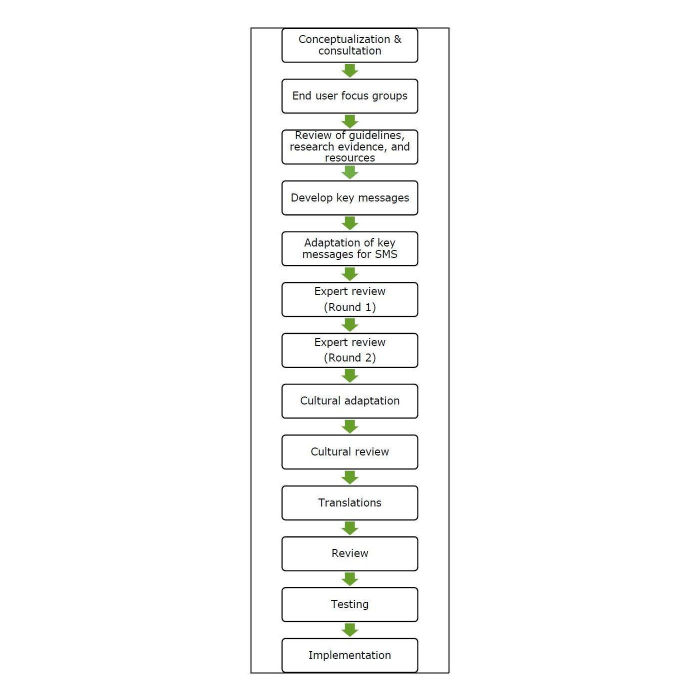
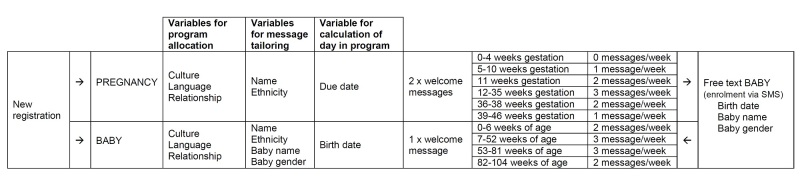
This study describes the process of developing a culturally tailored text message-based maternal health program (TextMATCH: Text for MATernal and Child Health) for Māori, Pacific, Asian, and South Asian families living in New Zealand. We report on engagement and acceptability of the TextMATCH program.
Program data was examined to describe engagement with the program 18 months after implementation. Telephone interviews were conducted with a sample of participants who consented to provide feedback on acceptability and relevance of the program.
A total of 1404 participants enrolled in TextMATCH over 18 months, with 18.52% (260) actively opting out at some point (after 0 to 17 months of messages). It was found that 356 (70.9%) of the 502 eligible participants actively switched from the initial pregnancy program to the baby program after delivery. Phone interviews were conducted with 29 participants including 6 who had withdrawn (duration of program from 3 to 16 months). Only 2 participants reported that the program was not useful, with the remainder rating the usefulness of messages positively (average 4.24 out of 5). All participants stated that the messages were relevant, culturally appropriate, and easy to understand. Most were happy with the specific advice and the language options provided.
We have demonstrated the importance of an intensive approach to the development of a culturally adapted and tailored mHealth program for multiple different cultural minority groups within our population.
在全球范围内,手机越来越多地被用于传递健康信息和提供健康服务。移动健康(mHealth)干预措施可能非常适合那些在获取传统健康服务方面面临更大障碍的少数群体。然而,关于如何针对人群中的多个种族和文化少数群体对干预措施进行文化调适的过程,相关论述较少。
本研究描述了为居住在新西兰的毛利族、太平洋岛民、亚裔和南亚裔家庭开发一个基于短信的文化定制孕产妇健康项目(TextMATCH:母婴健康短信)的过程。我们报告了TextMATCH项目的参与度和可接受性。
对项目数据进行分析,以描述实施18个月后与该项目的互动情况。对同意就该项目的可接受性和相关性提供反馈的参与者样本进行电话访谈。
在18个月内,共有1404名参与者加入了TextMATCH,其中18.52%(260人)在某个时间点(在接收短信0至17个月后)主动退出。研究发现,502名符合条件的参与者中有356人(70.9%)在分娩后从最初的孕期项目主动切换到了婴儿项目。对29名参与者进行了电话访谈,其中包括6名已退出的参与者(项目持续时间为3至16个月)。只有2名参与者表示该项目没有用处,其余参与者对短信的有用性给予了积极评价(平均评分为4.24分,满分5分)。所有参与者都表示短信相关、文化上合适且易于理解。大多数人对提供的具体建议和语言选项感到满意。
我们已经证明了采用深入方法为我们人群中的多个不同文化少数群体开发一个文化调适和定制的移动健康项目的重要性。