Wang Yina, Ma Haiyan, Zhao Chongqiang, Liu Tianshu, Yan Dan, Jou David, Li Huameng, Zhang Cuntai, Lü Jiagao, Li Chenglong, Lin Jiayuh, Li Sheng, Lin Li
Division of Cardiology, Department of Internal Medicine, Tongji Hospital, Tongji Medical College, Huazhong University of Science and Technology, Wuhan, China.
Center for Childhood Cancer, The Research Institute at Nationwide Children's Hospital, Department of Pediatrics, College of Medicine, The Ohio State University, Columbus OH, USA.
Oncotarget. 2017 May 16;8(20):33683-33693. doi: 10.18632/oncotarget.16898.
Interleukin-6 (IL-6) is a multifunctional cytokine, which is involved in the regulation of differentiation and growth of certain types of tumor cells. Constitutive activation of Signal Transducer and Activator of Transcription 3 (STAT3) induced by IL-6 is frequently detected in liver cancer and has emerged as a viable molecular target for liver cancer treatment. However, few inhibitors targeting up-streams of STAT3 are available for the therapy of liver cancer. We reported the discovery of EVISTA (Raloxifene HCl) as novel inhibitor of IL-6/GP130 protein-protein interactions (PPIs) using multiple ligand simultaneous docking (MLSD) and drug repositioning. The possible effect of Raloxifene in STAT3 signaling or liver cancer cells is still unclear.
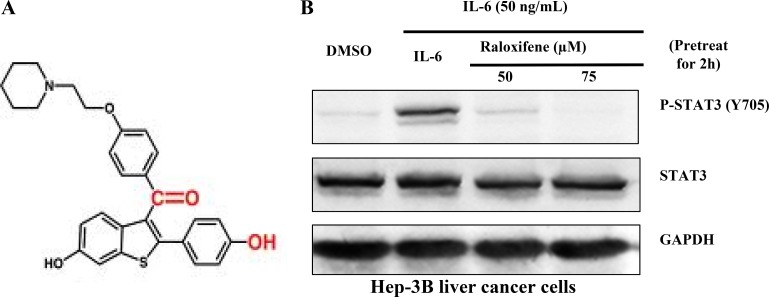
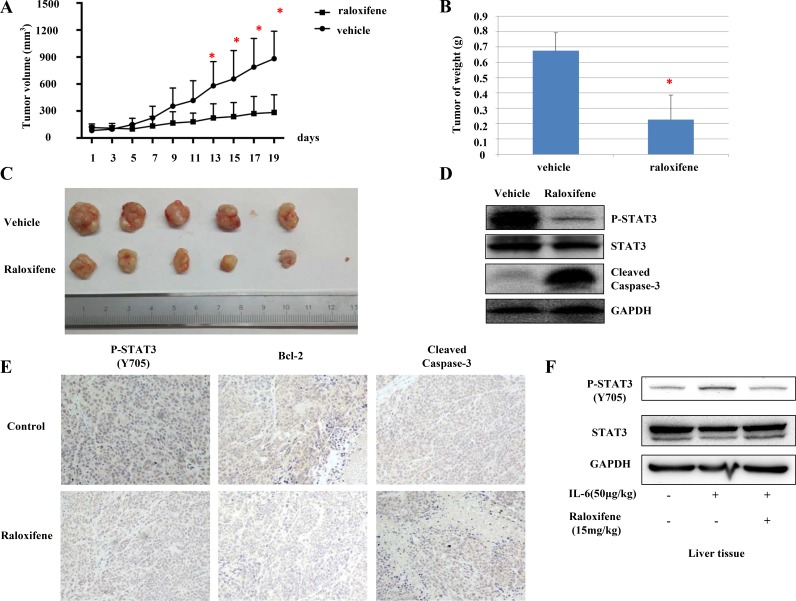
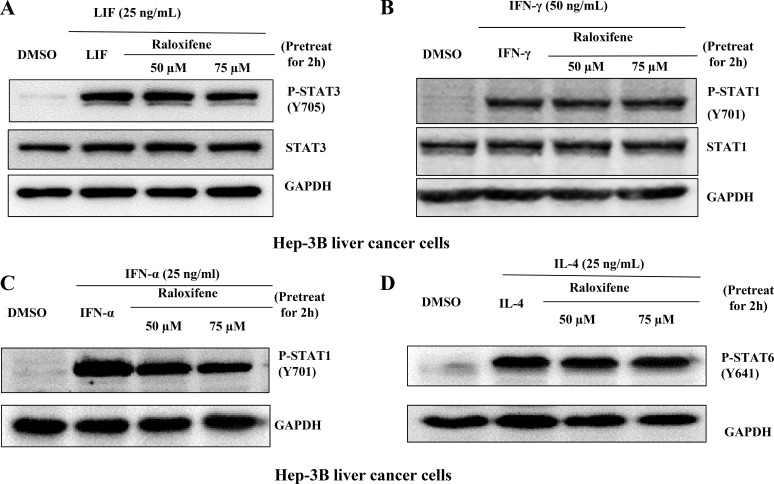
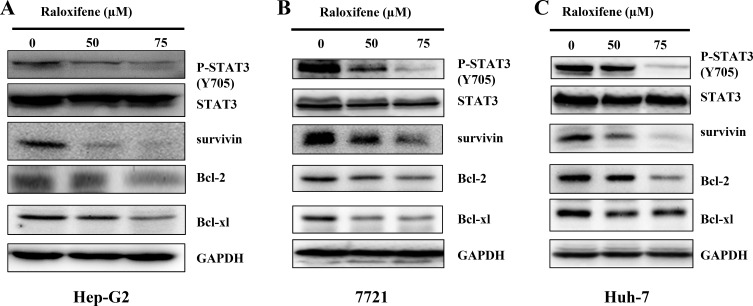
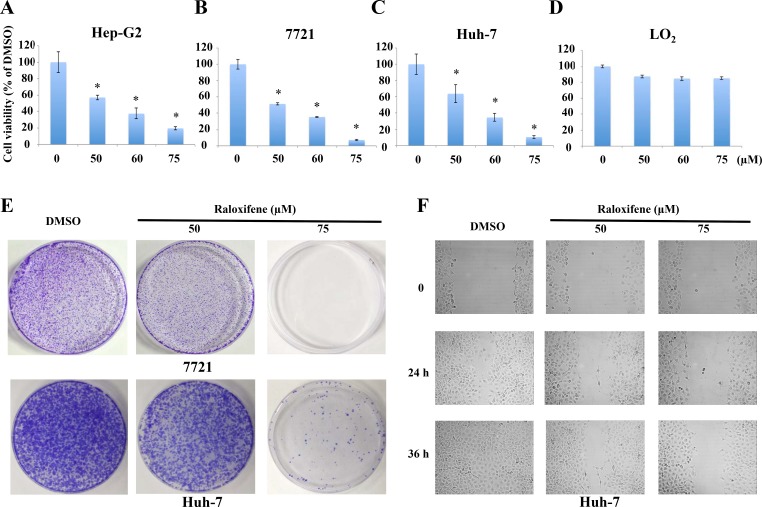
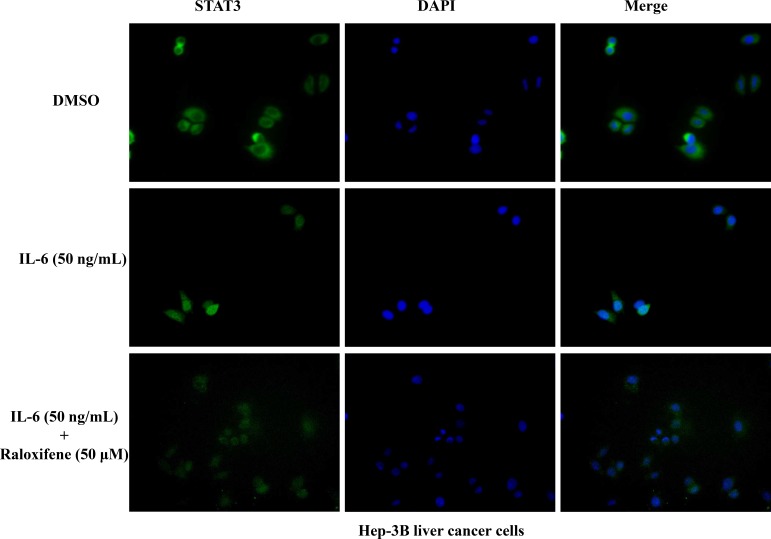
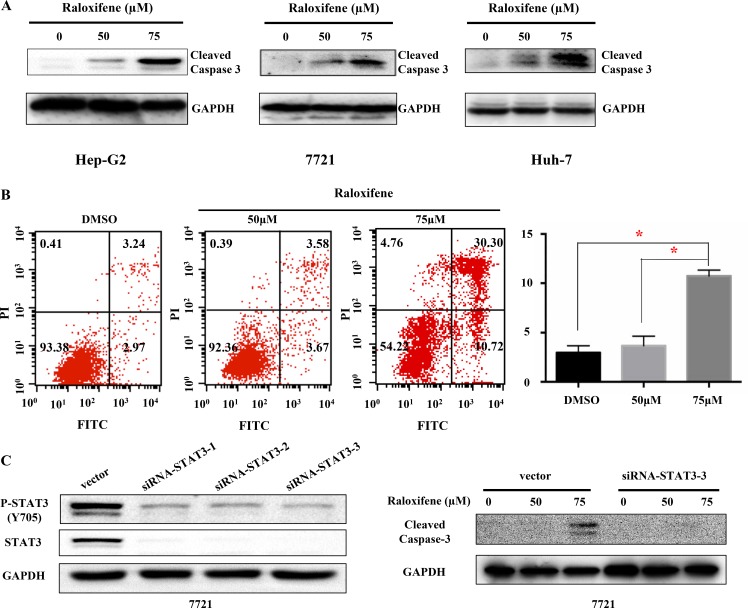
Raloxifene inhibited the P-STAT3 stimulated by IL-6, but not the induction of STAT1 and STAT6 phosphorylation by IFN-γ, IFN-α, and IL-4. Raloxifene inhibited STAT3 phosphorylation and resulted in the induction apoptosis on human liver cancer cell-lines. Raloxifene inhibited the targets of STAT3, such as Bcl-2, Bcl-xl and survivin and cell viability, cell migration, and colony formation in liver cancer cells. Further, daily administration of Raloxifene suppressed the Hep-G2 tumor growth in mice in vivo.
The inhibitory effect on STAT3 phosphorylation and activity as well as cell viability, migration, and colony forming ability by Raloxifene was examined in human liver cancer cells. Tumor growth was detected via mouse xenograft tumor mode.
Our results suggest that Raloxifene is a potent IL-6/GP130 inhibitor and may be a chemoprevention agent for liver cancer by targeting persistent STAT3 signaling.
白细胞介素-6(IL-6)是一种多功能细胞因子,参与某些类型肿瘤细胞的分化和生长调控。IL-6诱导的信号转导子和转录激活子3(STAT3)的组成性激活在肝癌中经常被检测到,并且已成为肝癌治疗的一个可行分子靶点。然而,针对STAT3上游的抑制剂很少可用于肝癌治疗。我们报道了使用多配体同时对接(MLSD)和药物重新定位发现依维斯他(盐酸雷洛昔芬)是一种新型的IL-6/GP130蛋白-蛋白相互作用(PPI)抑制剂。雷洛昔芬在STAT3信号传导或肝癌细胞中的可能作用仍不清楚。
雷洛昔芬抑制IL-6刺激的磷酸化STAT3,但不抑制IFN-γ、IFN-α和IL-4诱导的STAT1和STAT6磷酸化。雷洛昔芬抑制STAT3磷酸化并导致人肝癌细胞系发生凋亡。雷洛昔芬抑制STAT3的靶标,如Bcl-2、Bcl-xl和存活素以及肝癌细胞的细胞活力、细胞迁移和集落形成。此外,每日给予雷洛昔芬可抑制体内小鼠Hep-G2肿瘤的生长。
在人肝癌细胞中检测雷洛昔芬对STAT3磷酸化和活性以及细胞活力、迁移和集落形成能力的抑制作用。通过小鼠异种移植肿瘤模型检测肿瘤生长。
我们的结果表明,雷洛昔芬是一种有效的IL-6/GP130抑制剂,可能通过靶向持续的STAT3信号传导成为肝癌的化学预防剂。