Bae Ju Young, Lee Sang-Woo, Shin Yong-Hwan, Lee Jong-Ho, Jahng Jeong Won, Park Kyungpyo
Department of Physiology, School of Dentistry, Seoul National University, Seoul 110-749, Korea.
Oral and Maxillofacial Surgery, School of Dentistry, Seoul National University, Seoul 110-749, Korea.
Oncotarget. 2017 Jul 25;8(30):48972-48982. doi: 10.18632/oncotarget.16903.
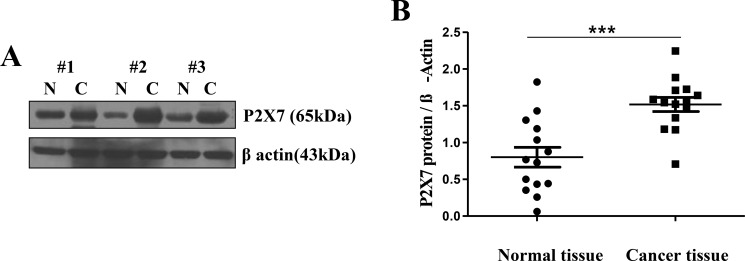
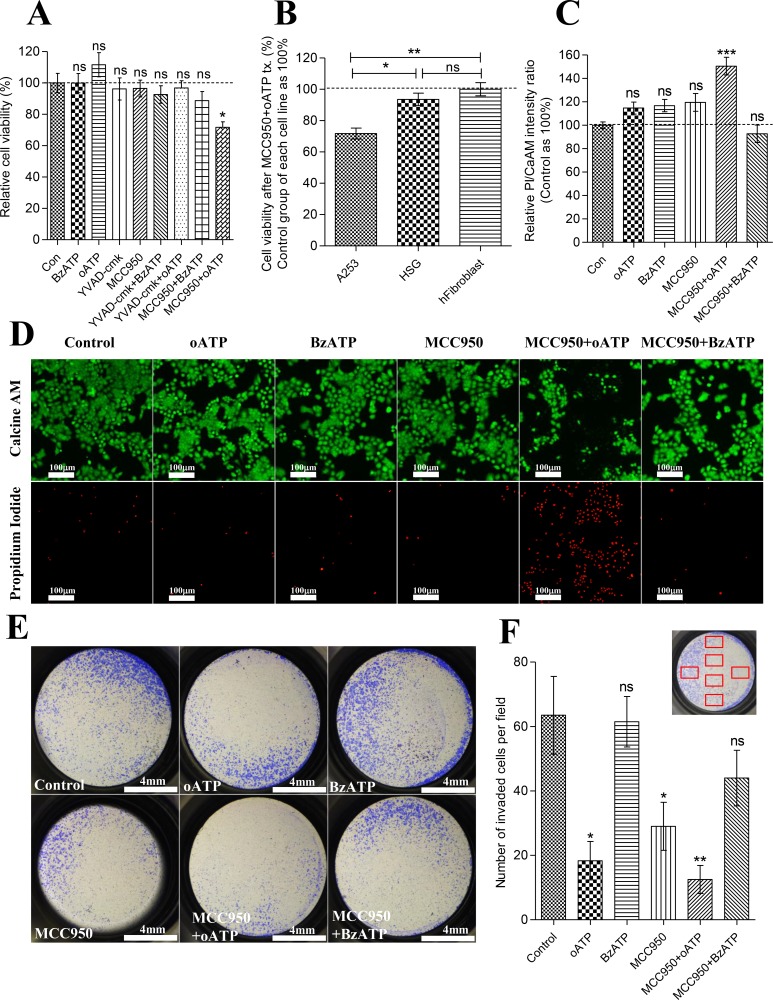
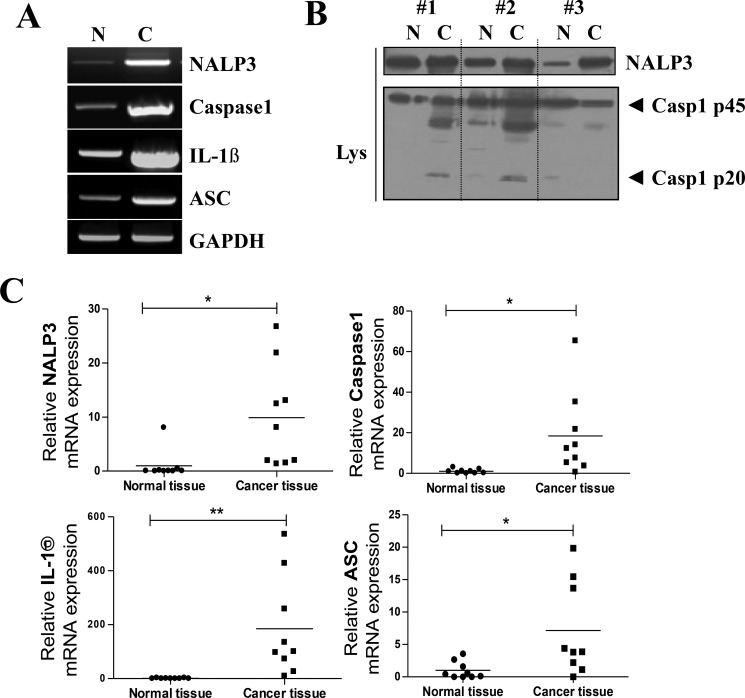
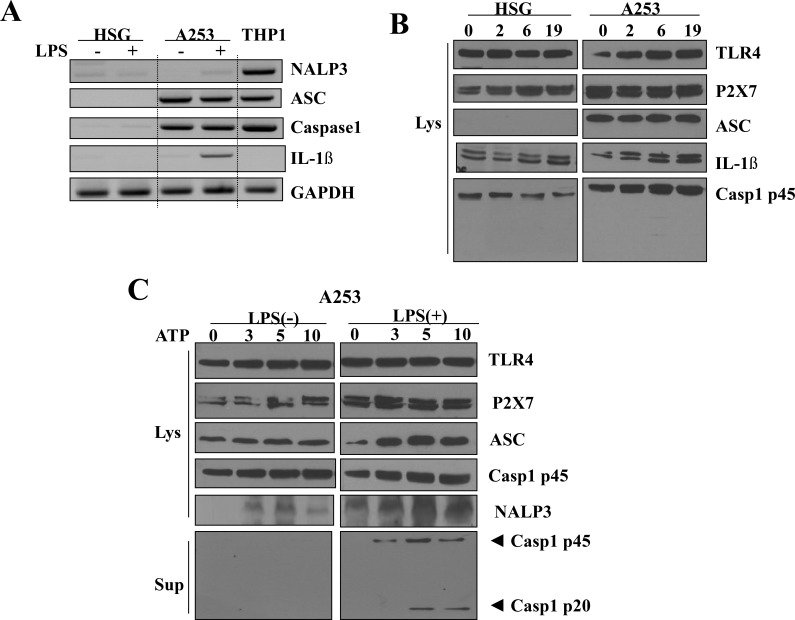
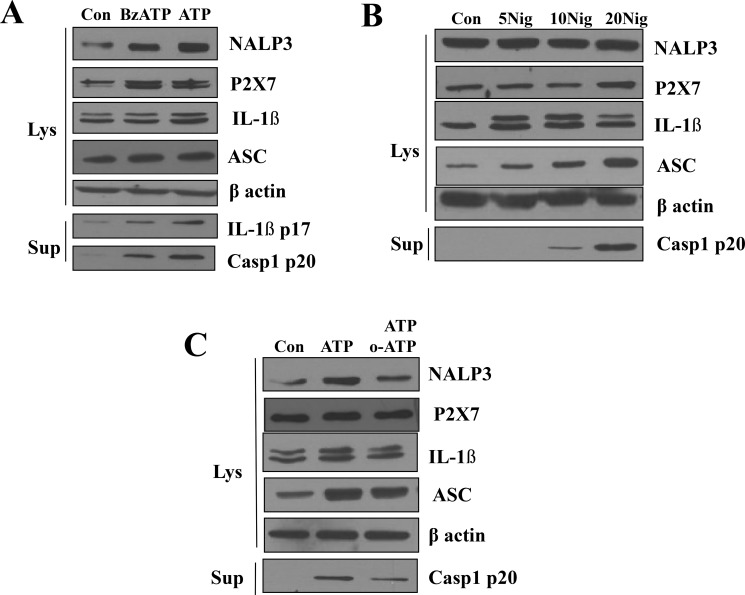
In this study, we investigated purinergic receptor P2X7 and NACHT, LRR and PYD domains-containing protein 3 (NLRP3) inflammasome expressions, and their role in head and neck cancer. We found upregulation of purinergic receptor P2X7 and all NLRP3 inflammasome components in biopsied head and neck squamous cell carcinoma tissues. Similarly, the expression of purinergic receptor P2X7, apoptosis-associated speck-like protein containing CARD, and pro-form caspase 1 in A253 cells derived from epidermoid carcinoma were highly upregulated in comparison to normal Human Salivary Gland cell line. Active caspase-1 and its final product, active interleukin-1β, both increased in primed A253 cells stimulated with purinergic receptor P2X7 agonists, while this elevated NLRP3 inflammasome activity was suppressed by purinergic receptor P2X7 antagonists. However, we observed none of these effects in Human Salivary Gland cells. Inhibition of both NLRP3 inflammasome and purinergic receptor P2X7 led to the significant cell death of primed A253 cells, but had no effect on the viability of primed HSG cells or the primary cultured human fibroblast cells. Furthermore, inhibition of either purinergic receptor P2X7 or NLRP3 inflammasome decreased invasiveness of A253, and this effect became more evident when both purinergic receptor P2X7 and NLRP3 inflammasome were simultaneously blocked. Therefore, it is concluded that the purinergic receptor P2X7 and the activation of NLRP3 inflammasome play important roles in the survival and invasiveness of head and neck squamous cell carcinoma in humans.
在本研究中,我们调查了嘌呤能受体P2X7和含NACHT、LRR和PYD结构域的蛋白3(NLRP3)炎性小体的表达及其在头颈癌中的作用。我们发现,在活检的头颈部鳞状细胞癌组织中,嘌呤能受体P2X7和所有NLRP3炎性小体成分均上调。同样,与正常人唾液腺细胞系相比,源自表皮样癌的A253细胞中嘌呤能受体P2X7、含半胱天冬酶激活和招募结构域的凋亡相关斑点样蛋白以及前体半胱天冬酶1的表达高度上调。在用嘌呤能受体P2X7激动剂刺激的预处理A253细胞中,活性半胱天冬酶-1及其终产物活性白细胞介素-1β均增加,而嘌呤能受体P2X7拮抗剂可抑制这种升高的NLRP3炎性小体活性。然而,我们在人唾液腺细胞中未观察到这些效应。抑制NLRP3炎性小体和嘌呤能受体P2X7均导致预处理的A253细胞显著死亡,但对预处理的HSG细胞或原代培养的人成纤维细胞的活力没有影响。此外,抑制嘌呤能受体P2X7或NLRP3炎性小体均可降低A253的侵袭性,当同时阻断嘌呤能受体P2X7和NLRP3炎性小体时,这种效应更为明显。因此,得出结论:嘌呤能受体P2X7和NLRP3炎性小体的激活在人类头颈部鳞状细胞癌的存活和侵袭中起重要作用。