Zhang Jing, Zhu Zhonglin, Sheng Jinxin, Yu Zhilong, Yao Bin, Huang Kejian, Zhou Lisheng, Qiu Zhengjun, Huang Chen
Department of General Surgery, Shanghai General Hospital, School of Medicine, Shanghai Jiao Tong University, Shanghai 200080, China.
Department of General Surgery, Haimen People's Hospital, Haimen 226100, Jiangsu province, China.
Oncotarget. 2017 May 23;8(21):34867-34883. doi: 10.18632/oncotarget.16802.
Our study aimed to investigate the clinicopathological feature and prognostic role of miR-509-3-5P in gastric cancer, to determine the invasive and metastatic role of miR-509-3-5P in vitro and in vivo and to explore the molecular mechanism between miR-509-3-5P and PODXL.
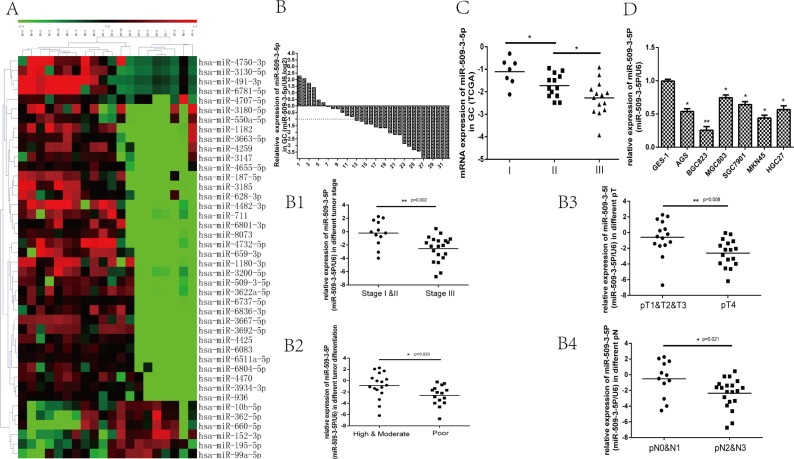
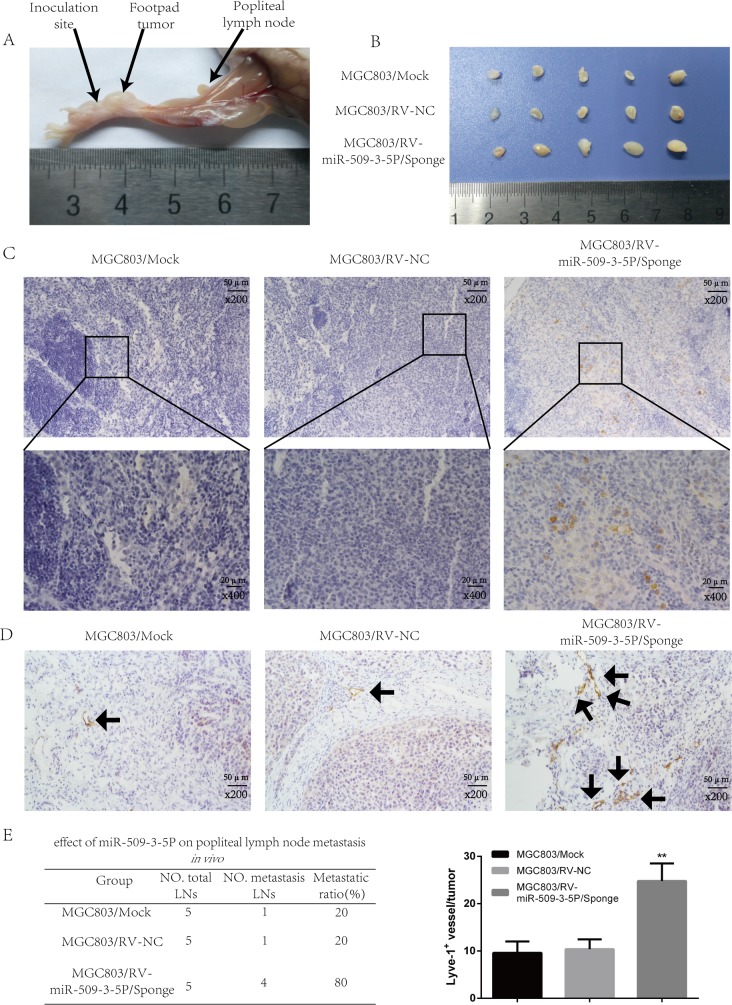
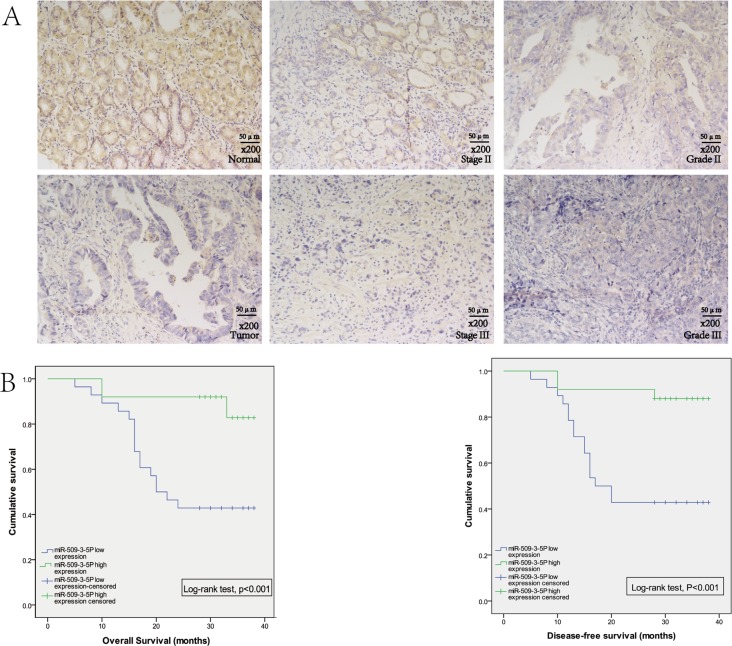
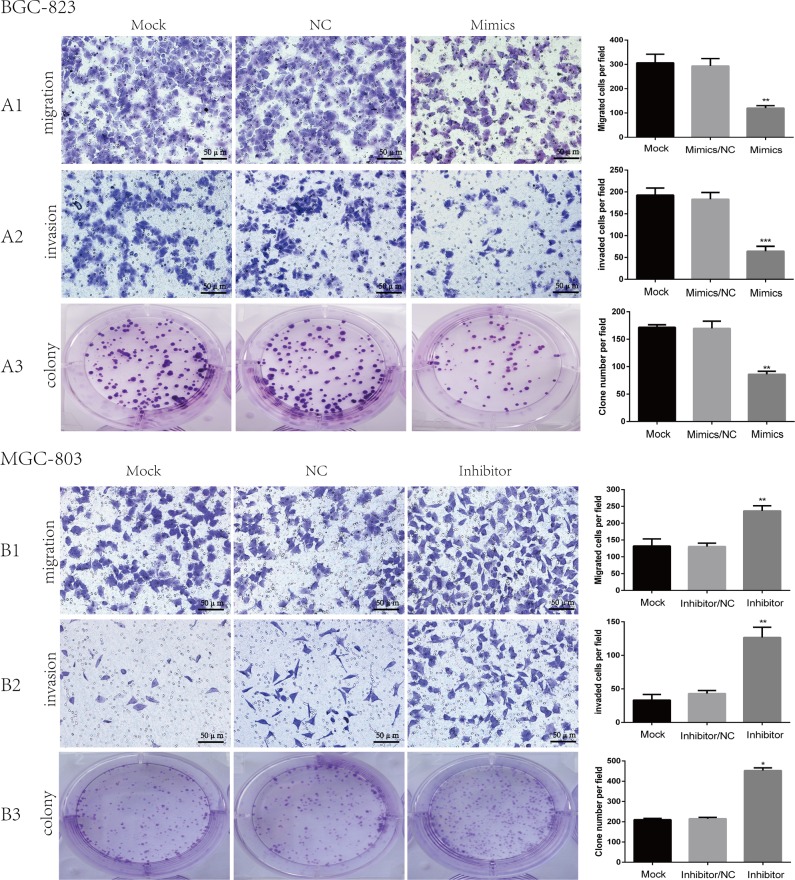
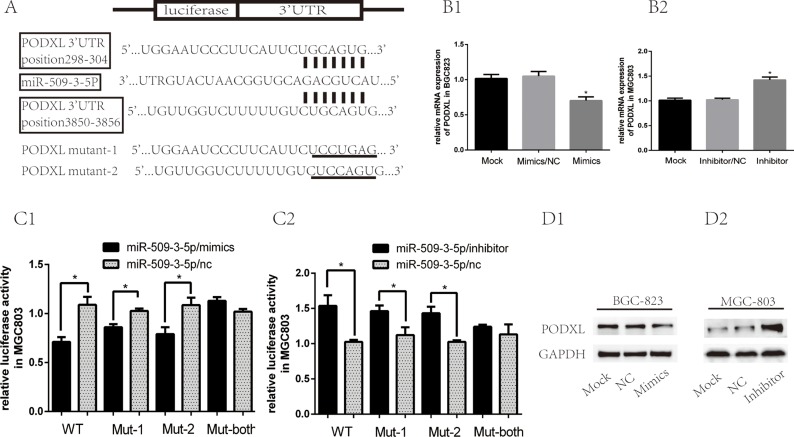
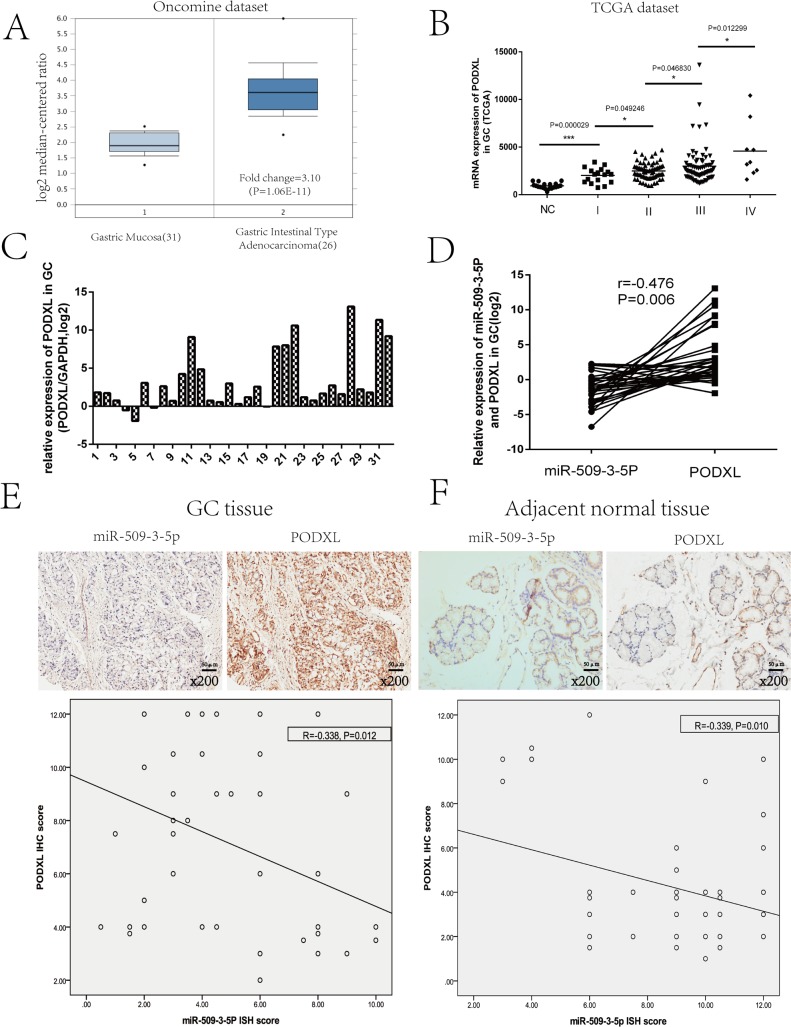
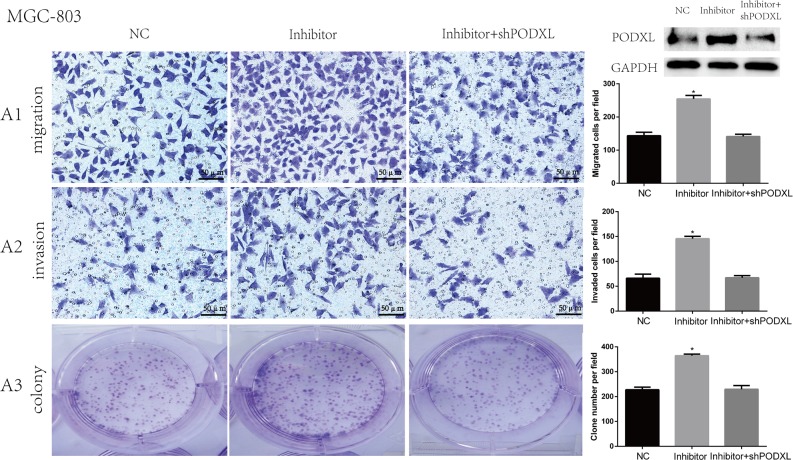
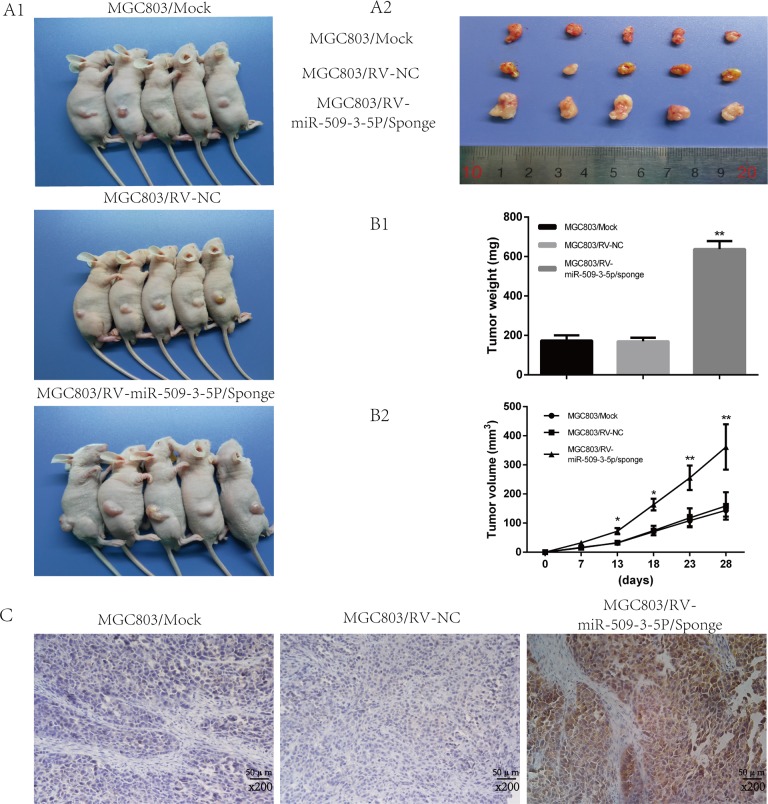
Strikingly lower miR-509-3-5P expression was detected in gastric cancer tissues with advanced tumor stage, poor differentiation and advanced pT stage, and was regarded as an independent prognostic role for poor prognosis. MiR-509-3-5P expression was markedly down-regulated in gastric cancer cell lines and tissues comparing with normal gastric cell and adjacent normal tissues, respectively. Decreased expression of miR-509-3-5P promoted the colony, migration and invasion abilities of gastric cancer cells in vitro as well as tumorigenesis and lymph node metastasis in vivo. Based on the luciferase assay and tissue microarray, PODXL was regarded as a target gene of miR-509-3-5P.
The expression of miR-509-3-5P in gastric cancer patients and its clinicopathological relationships as well as prognostic role was studied employing tissue microarray; qRT-PCR was applied to explore miR-509-3-5P expression in gastric cancer cell lines and samples. Moreover, public database was used to analyze the expression of miR-509-3-5P and PODXL. Functional and molecular mechanism experiments were performed in vitro and in vivo.
Overexpression of miR-509-3-5P inhibits the invasion and metastasis of gastric cancer in vitro and in vivo, functioning as a tumor suppressor, by targeting PODXL. More importantly, miR-509-3-5P was downregulated in gastric cancer tissues and may serve as a novel prognostic indicator for gastric cancer.
我们的研究旨在探讨miR-509-3-5P在胃癌中的临床病理特征及预后作用,确定其在体外和体内的侵袭和转移作用,并探索miR-509-3-5P与PODXL之间的分子机制。
在肿瘤分期较晚、分化差和pT分期较高的胃癌组织中,miR-509-3-5P表达显著降低,被认为是预后不良的独立预后因素。与正常胃细胞和癌旁正常组织相比,miR-509-3-5P在胃癌细胞系和组织中的表达明显下调。miR-509-3-5P表达降低促进了胃癌细胞的体外集落形成、迁移和侵袭能力以及体内肿瘤发生和淋巴结转移。基于荧光素酶报告基因检测和组织芯片,PODXL被认为是miR-509-3-5P的靶基因。
采用组织芯片研究miR-509-3-5P在胃癌患者中的表达及其临床病理关系和预后作用;应用qRT-PCR检测miR-509-3-5P在胃癌细胞系和样本中的表达。此外,利用公共数据库分析miR-509-3-5P和PODXL的表达。在体外和体内进行功能和分子机制实验。
miR-509-3-5P过表达通过靶向PODXL抑制胃癌在体外和体内的侵袭和转移,发挥肿瘤抑制作用。更重要的是,miR-509-3-5P在胃癌组织中表达下调,可能作为胃癌的一种新的预后指标。