Yin Kai, Liu Minghui, Zhang Mei, Wang Feng, Fen Min, Liu Zhijian, Yuan Yutao, Gao Shanting, Yang Liuqing, Zhang Weijie, Zhang Jianguo, Guo Baoliang, Xu Jianwei, Liang Hongwei, Chen Xi, Guan Wenxian
Department of Gastrointestinal Surgery, Nanjing Drum Tower Hospital Clinical College of Nanjing Medical University, Nanjing, Jiangsu 210008, China.
State Key Laboratory of Pharmaceutical Biotechnology, NJU Advanced Institute for Life Sciences (NAILS), Jiangsu Engineering Research Center for MicroRNA Biology and Biotechnology, School of Life Sciences, Nanjing University, Nanjing, Jiangsu 210046, China.
Oncotarget. 2016 Oct 11;7(41):67321-67332. doi: 10.18632/oncotarget.12006.
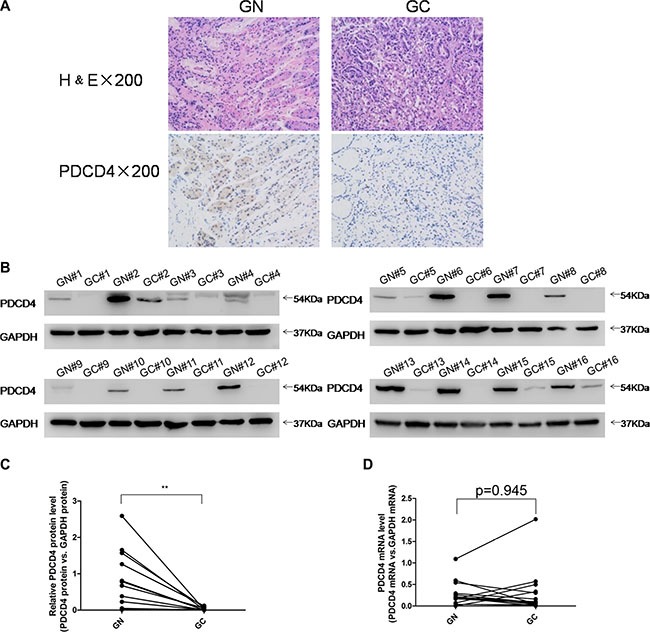
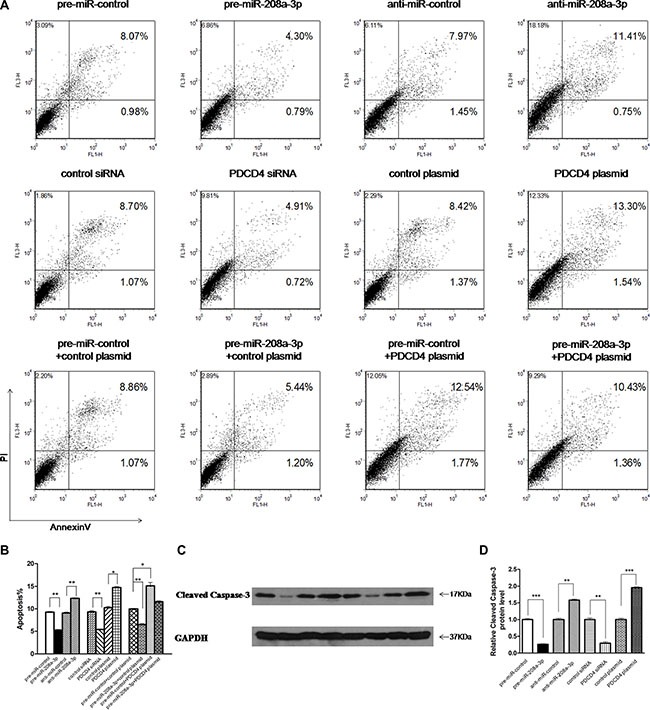
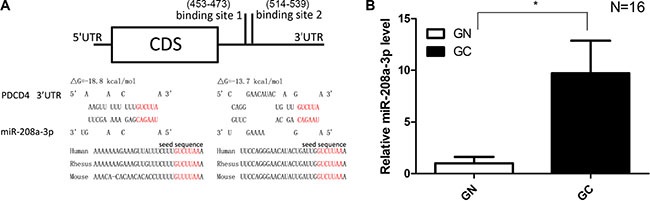
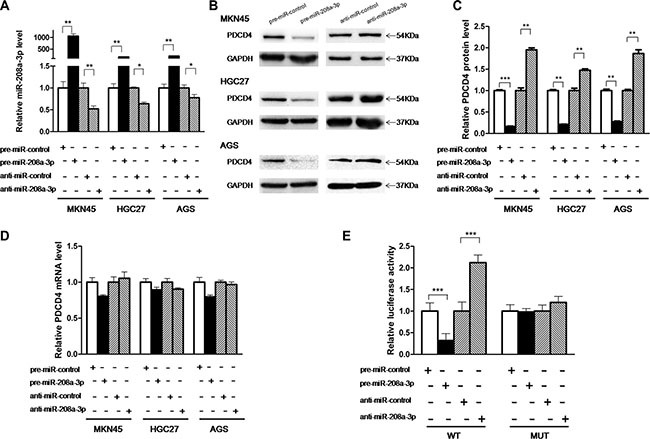
Programmed cell death 4 (PDCD4) is a novel tumor suppressor gene and a promising target for anticancer therapies. PDCD4 is frequently downregulated in various human cancers; however, the molecular mechanism accounting for the loss expression of PDCD4 in cancers is not fully understood. In this study, we identified specific targeting sites for miR-208a-3p in the 3'-untranslated region (3'-UTR) of the PDCD4 gene which regulated PDCD4 expression. We demonstrated that miR-208a-3p suppressed apoptosis in gastric cancer cells by targeting PDCD4. We also showed that miR-208a-3p promoted the development of tumor growth in xenograft mice by negatively regulating PDCD4. Taken together, this study revealed a critical role for miR-208a-3p as an oncogenic miRNA in gastric carcinogenesis and it may provide a potential novel target for gastric cancer diagnosis and therapy.
程序性细胞死亡4(PDCD4)是一种新型肿瘤抑制基因,也是抗癌治疗的一个有前景的靶点。PDCD4在多种人类癌症中经常下调;然而,导致癌症中PDCD4表达缺失的分子机制尚未完全阐明。在本研究中,我们在PDCD4基因的3'-非翻译区(3'-UTR)中鉴定出了miR-208a-3p的特异性靶向位点,该位点调节PDCD4的表达。我们证明,miR-208a-3p通过靶向PDCD4抑制胃癌细胞凋亡。我们还表明,miR-208a-3p通过负调节PDCD4促进异种移植小鼠肿瘤生长的发展。综上所述,本研究揭示了miR-208a-3p作为致癌性微小RNA在胃癌发生中的关键作用,它可能为胃癌的诊断和治疗提供一个潜在的新靶点。