Muzaffar N, Kirmani O, Ahsan M, Ahmad S
Hospital for Bone and Joint Surgery, Srinagar, India.
Department of Radiodiagnosis, Government Medical College, Srinagar, India.
Malays Orthop J. 2015 Jul;9(2):17-20. doi: 10.5704/MOJ.1507.013.
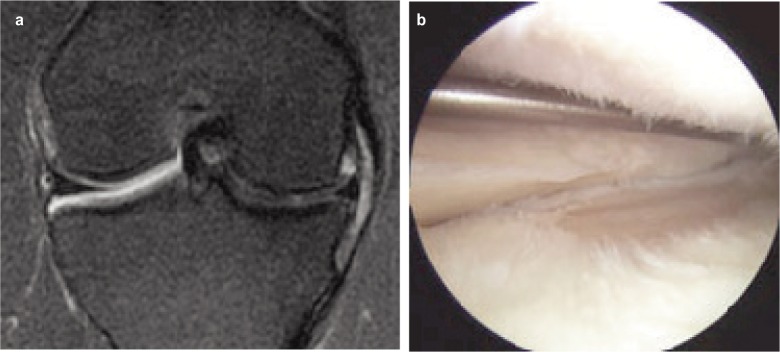
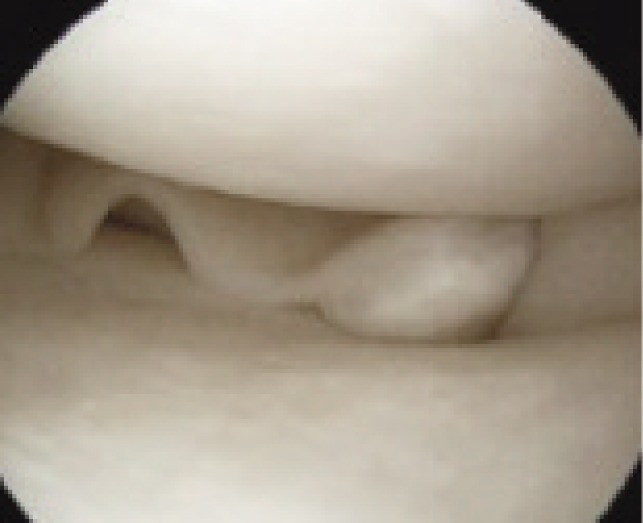
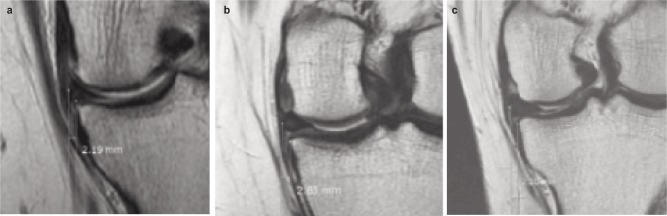
The aim of this study was to assess whether significant meniscal extrusion of more than 3 mm or of even lesser degrees of extrusion could be considered significant. We also aimed to determine the morphology of tears that are most likely to be associated with significant extrusion. Study design and material. The study was done retrospectively on a group of 202 patients (157 males and 45 females) who had been seen in our hospital between 2007 and 2011 with meniscal tears (in one knee only) diagnosed by MRI and confirmed on arthroscopy. Extrusion of 3 mm or more (usually considered significant) was seen in 102 cases and less than 3 mm in 100. Extrusion was measured on the coronal MR images rather than on saggital images because of ease and reproducibility. The tears were confirmed by arthroscopy and correlated with the extent of extrusion on MRI.
Out of the total of 202 cases, 102 cases (50.5%) had extrusion of 3 mm or more on MRI. Of these, the medial meniscal posterior horn tears accounted for 63 cases (64.26%), 21 cases were medial meniscal body tears (21.42%), five medial meniscal root tears (5.1%), nine lateral meniscal body tears (9.18%) and four lateral meniscal posterior horn tears(4.08%). Forty-four cases had extrusion of 3-4 mm, 26 had extrusion of 4-5mm, 17 cases had extrusion of 5-6mm, ten had extrusion of 6-7mm and five had extrusion of 7 mm or more. One hundred cases fell in the < 3mm extrusion category, of which 80 (39.6%) were in the 2-3 mm extrusion group and 20 (9.9%) in the 1-2 mm extrusion group. They comprised of 61 cases of medial meniscal posterior horn tears, 23 cases of medial meniscal body tears, six medial meniscal root tears, eight lateral meniscal body tears and two lateral meniscal posterior horn tears. The highest proportion of meniscal tears was seen in the 2-3 mm category comprising nearly 40% of the entire study group. The majority of tears were medial meniscal posterior horn tears.
Menisci that extruded 2-3 mm from the tibial margin formed a major proportion of menisci treated for tears by repair or menisectomy. We should consider extrusion of more than 2mm as significant. Most tears had extrusion of 2-4 mm.
本研究旨在评估半月板挤出超过3mm或甚至更小程度的挤出是否可被视为有意义。我们还旨在确定最有可能与明显挤出相关的撕裂形态。研究设计与材料。本研究对2007年至2011年期间在我院就诊的一组202例患者(157例男性和45例女性)进行回顾性研究,这些患者经MRI诊断为半月板撕裂(仅累及一侧膝关节)并经关节镜检查证实。102例患者半月板挤出3mm或更多(通常认为有意义),100例患者挤出小于3mm。由于简便性和可重复性,在冠状面MR图像上测量挤出情况,而非矢状面图像。撕裂情况经关节镜检查证实,并与MRI上的挤出程度相关联。
在总共202例病例中,102例(50.5%)在MRI上挤出3mm或更多。其中,内侧半月板后角撕裂占63例(64.26%),内侧半月板体部撕裂21例(21.42%),内侧半月板根部撕裂5例(5.1%),外侧半月板体部撕裂9例(9.18%),外侧半月板后角撕裂4例(4.08%)。44例挤出3 - 4mm,26例挤出4 - 5mm,17例挤出5 - 6mm,1个例挤出6 - 7mm,5例挤出7mm或更多。100例属于挤出<3mm类别,其中80例(39.6%)在2 - 3mm挤出组,20例(9.