González-Miro Majela, Rodríguez-Noda Laura, Fariñas-Medina Mildrey, García-Rivera Dagmar, Vérez-Bencomo Vicente, Rehm Bernd H A
Finlay Institute, La Havana, Cuba.
Institute of Fundamental Sciences and MacDiarmid Institute of Advanced Materials and Nanotechnology, Massey University, Palmerston North, New Zealand.
Heliyon. 2017 Apr 11;3(4):e00291. doi: 10.1016/j.heliyon.2017.e00291. eCollection 2017 Apr.
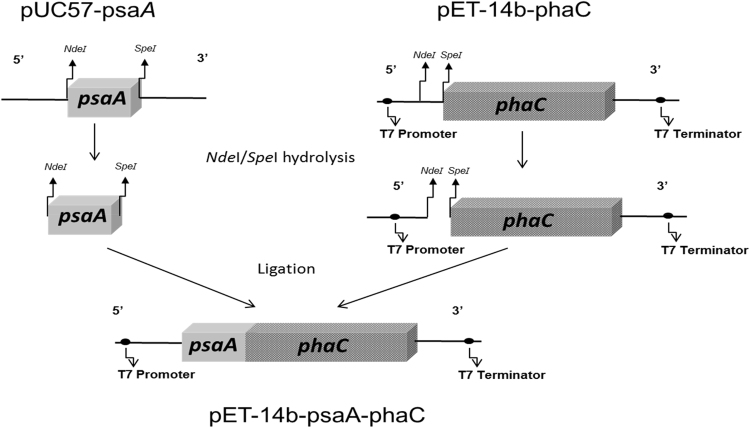
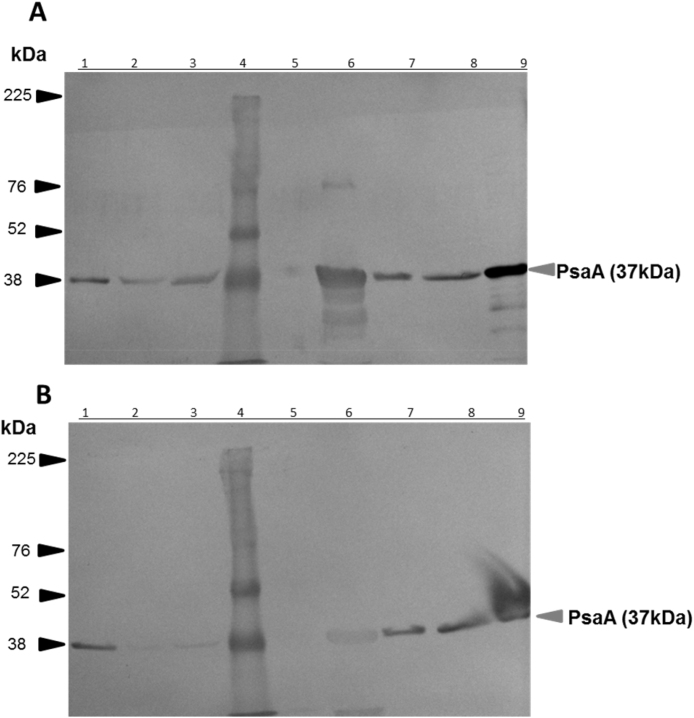
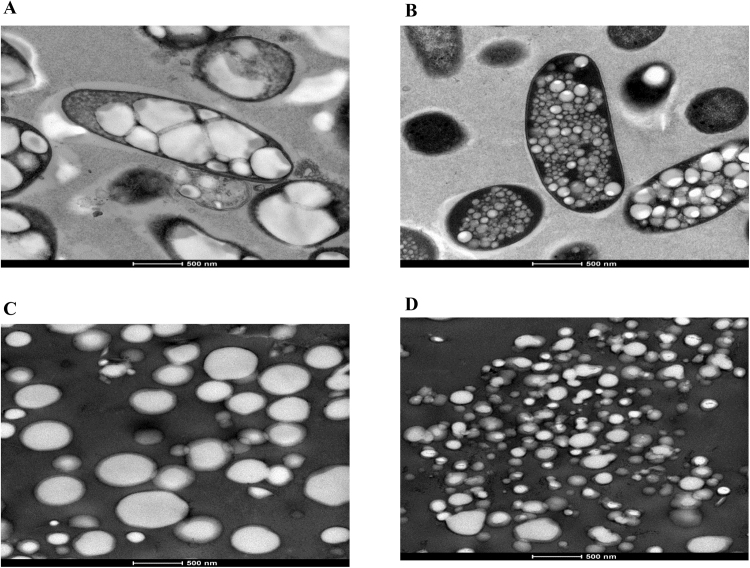
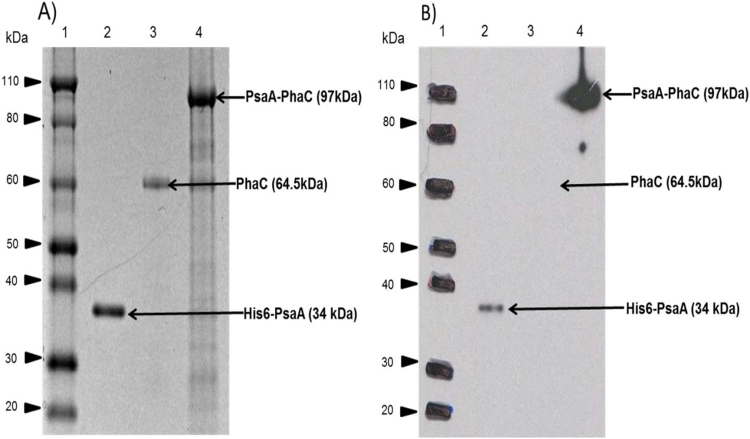
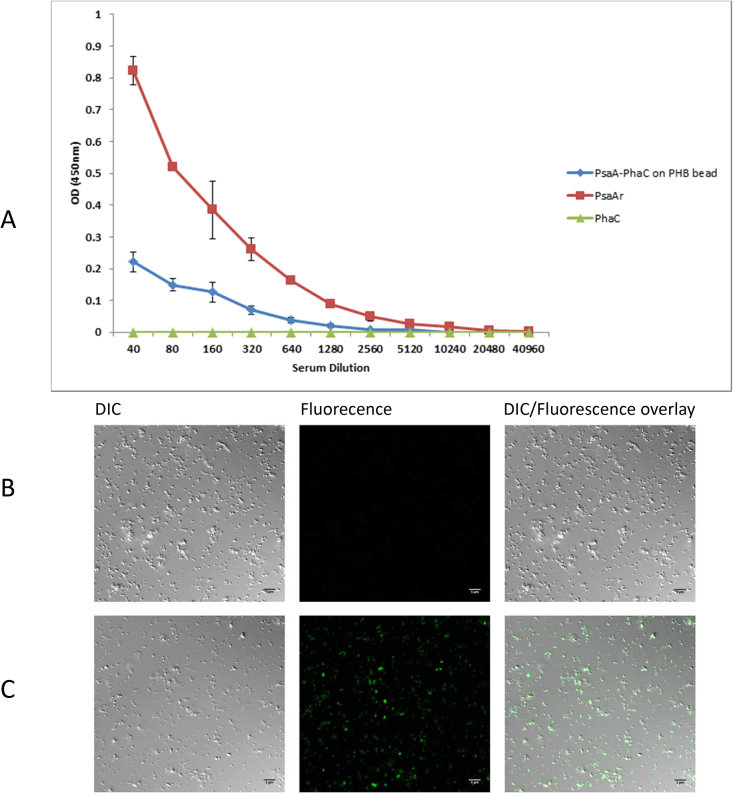
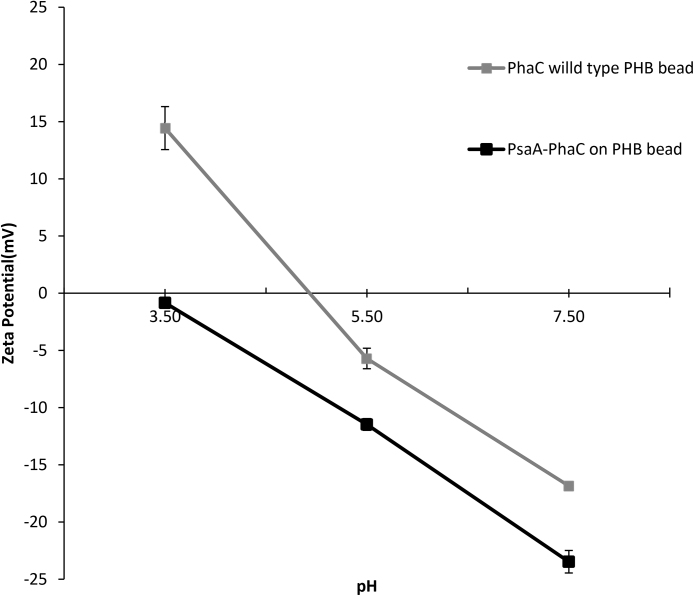
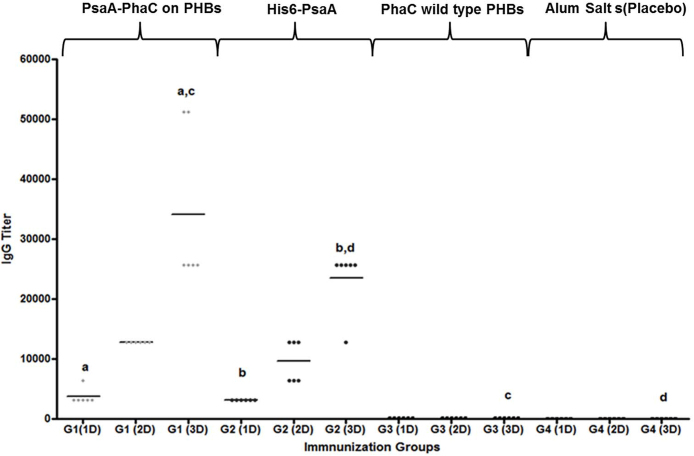
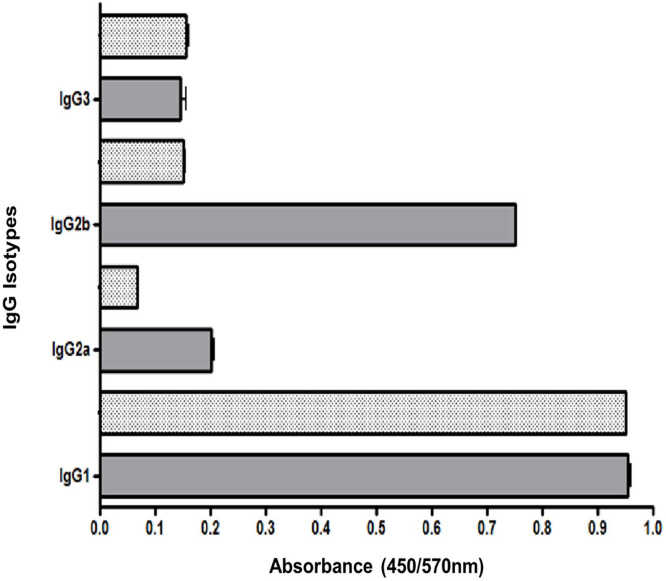
is a human pathogen responsible for the majority of childhood pneumonia and media otitis cases worldwide. The diversity of its capsular polysaccharides (CPS) results in more than 91 serotypes of which at least 23 are virulent. Various CPS conjugated to immunogenic carrier proteins are currently licensed and provide protection against the infection caused by the respective serotypes but not against new and emerging virulent serotypes. In this study, we considered the conserved protein antigen PsaA, the pneumococcal surface adhesin A, in order to overcome the limitations of CPS antigens. The PsaA was translationally fused to a polyhydroxybutyrate (PHB) synthase which mediated production of PsaA displayed on PHB inclusions in recombinant . This suggested that the PsaA fusion to the PHB synthase did not interfere with PHB synthase activity and its ability to mediate formation of nano-sized inclusions composed of a PHB core surrounded by the PHB synthase fused to PsaA. Isolated PHB beads showed a negative surface charge. Transmission electron microscopy analysis suggested that the PsaA fusion to the PHB synthase reduced the size of PHB beads from about 500 nm to 100 nm. The integrity and antigenicity of the fusion protein attached to isolated PHB beads was confirmed by SDS-PAGE, tryptic peptide fingerprinting analysis using MALDI-TOF-MS/MS and immunoblotting using a monoclonal anti-PsaA antibody. Mice immunized with PsaA displaying PHB beads produced high and specific IgG levels dominated by IgG1 isotype. While IgG1 titer were similar between soluble and insoluble PsaA, the IgG2 titers were strongly increased upon vaccination with insoluble PsaA i.e. PsaA displayed on PHB beads. Particulate PsaA-PHB beads elicited IgG antibodies recognizing PsaA in whole cell lysates of seven different serotypes of This study suggested that PHB beads are suitable carriers for PsaA in order to induce a significant and specific Th-2-type immune response.
是一种人类病原体,在全球大多数儿童肺炎和中耳炎病例中起作用。其荚膜多糖(CPS)的多样性导致91种以上血清型,其中至少23种具有毒性。目前,各种与免疫原性载体蛋白结合的CPS已获许可,可提供针对相应血清型引起的感染的保护,但不能抵御新出现的有毒力血清型。在本研究中,我们考虑了保守蛋白抗原PsaA,即肺炎球菌表面黏附素A,以克服CPS抗原的局限性。PsaA与聚羟基丁酸酯(PHB)合酶进行翻译融合,该合酶介导在重组体中PHB内含物上展示的PsaA的产生。这表明PsaA与PHB合酶的融合不会干扰PHB合酶的活性及其介导形成由PHB核心和与之融合的PsaA包围的纳米级内含物的能力。分离的PHB珠显示出负表面电荷。透射电子显微镜分析表明,PsaA与PHB合酶的融合使PHB珠的尺寸从约500nm减小到100nm。通过SDS-PAGE、使用MALDI-TOF-MS/MS的胰蛋白酶肽指纹图谱分析以及使用单克隆抗PsaA抗体的免疫印迹法,证实了附着在分离的PHB珠上的融合蛋白的完整性和抗原性。用展示PHB珠的PsaA免疫的小鼠产生了高且特异性的IgG水平,以IgG1同种型为主。虽然可溶性和不溶性PsaA的IgG1滴度相似,但在用不溶性PsaA(即展示在PHB珠上的PsaA)接种后,IgG2滴度显著增加。颗粒状PsaA-PHB珠引发了能识别7种不同血清型全细胞裂解物中PsaA的IgG抗体。本研究表明,PHB珠是PsaA的合适载体,可诱导显著且特异性的Th-2型免疫反应。