Xie Jiajiang, Li Yanxiu, Song Liang, Pan Zhou, Ye Shefang, Hou Zhenqing
a Xiamen Xianyue Hospital , Xiamen , China.
b Department of Biomaterials , College of Materials, Xiamen University , Xiamen , China , and.
Drug Deliv. 2017 Nov;24(1):707-719. doi: 10.1080/10717544.2017.1303855.
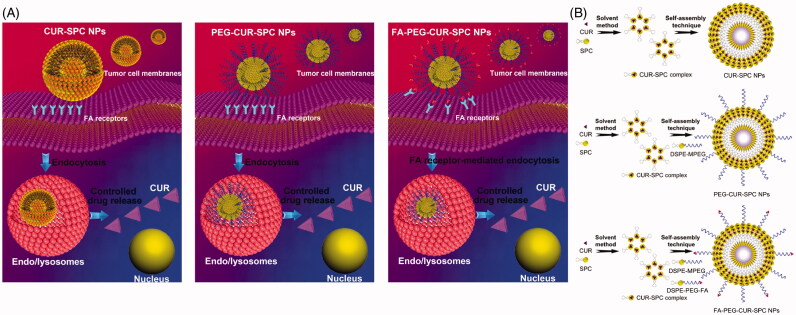
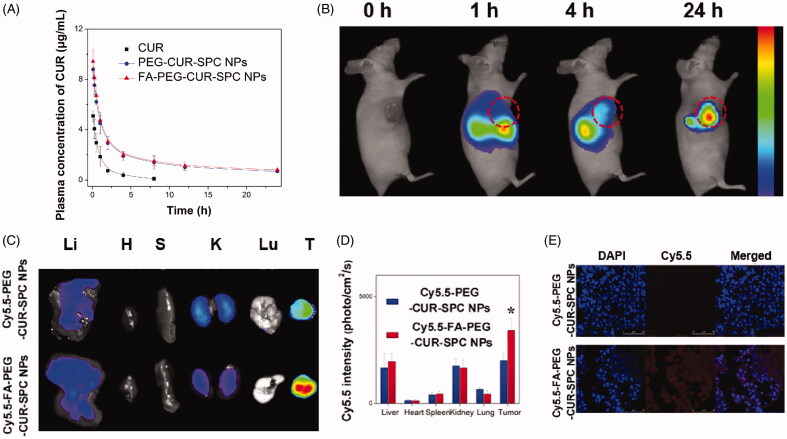
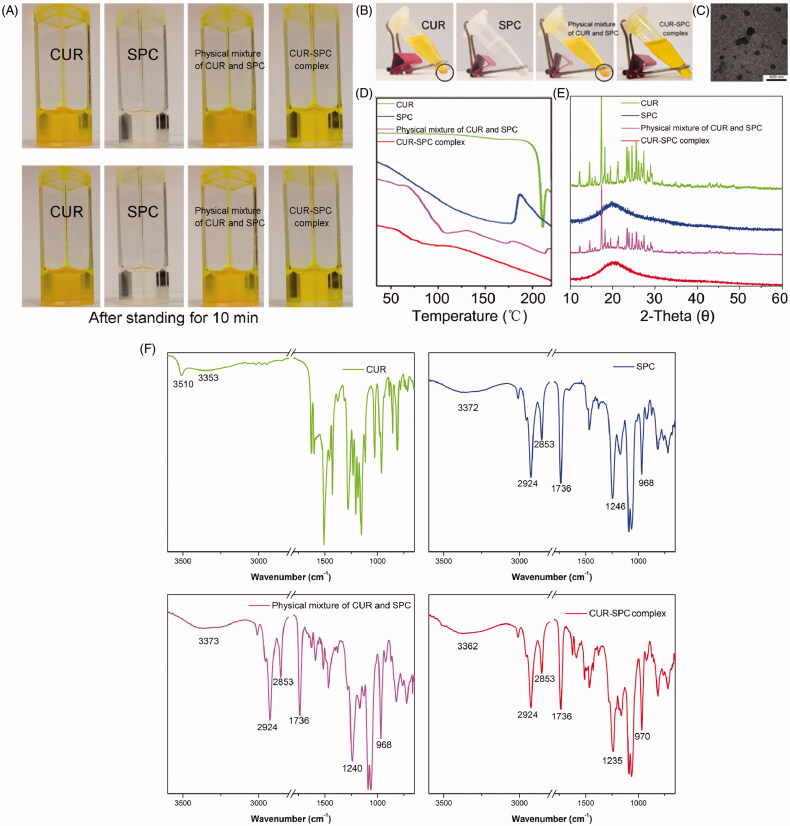
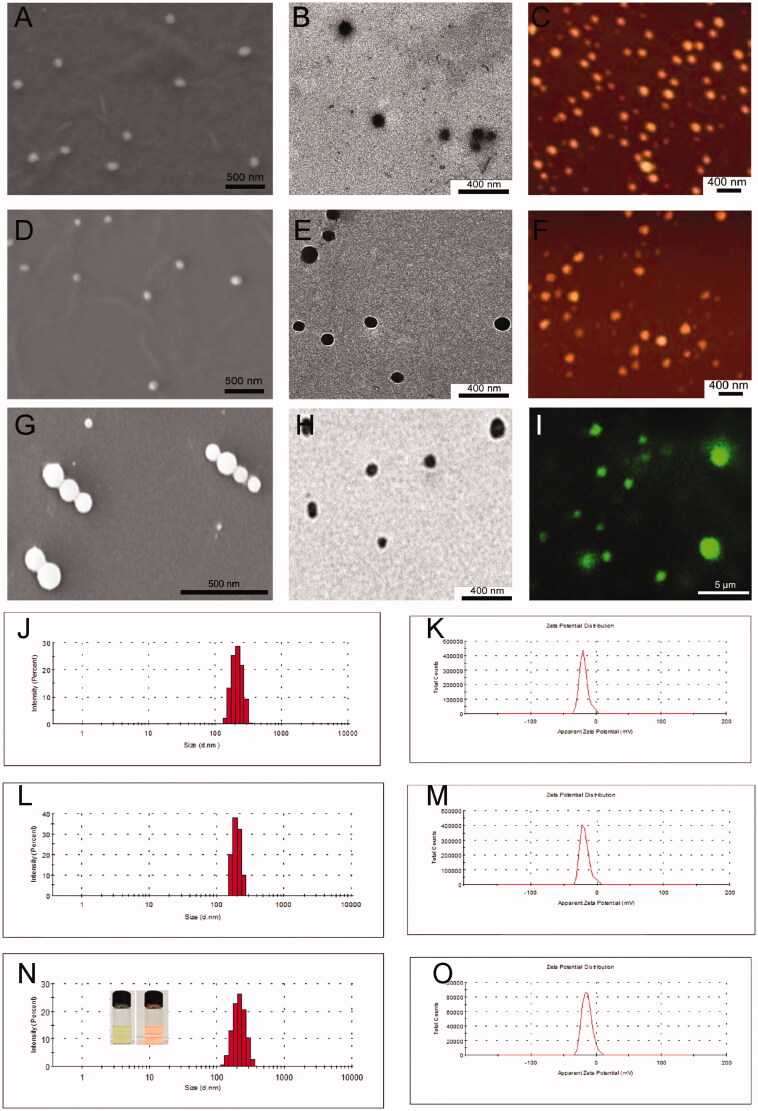
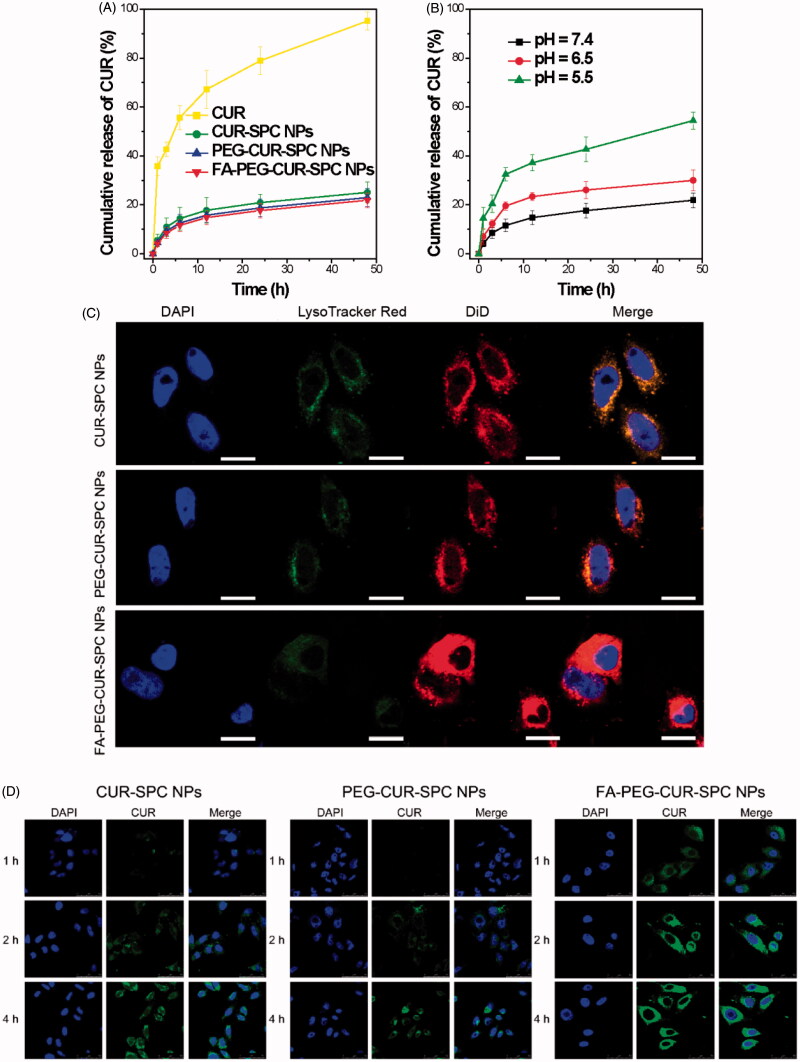
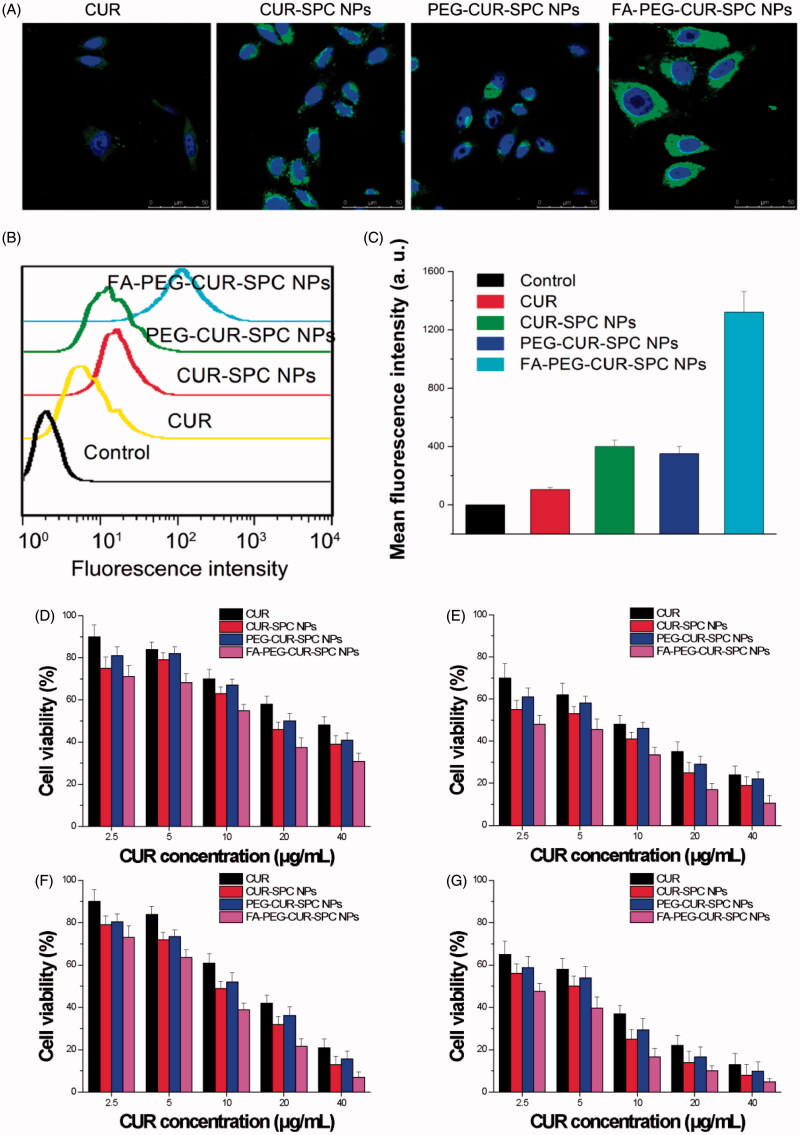
Recently, the global trend in the field of nanomedicine has been toward the design of combination of nature active constituents and phospholipid (PC) to form a therapeutic drug-phospholipid complex. As a particular amphiphilic molecular complex, it can be a unique bridge of traditional dosage-form and novel drug delivery system. In thisarticle, on the basis of drug-phospholipid complex technique and self-assembly technique, we chose a pharmacologically safe and low toxic drug curcumin (CUR) to increase drug-loading ability, achieve controlled/sustained drug release and improve anticancer activity. A novel CUR-soybean phosphatidylcholine (SPC) complex and CUR-SPC complex self-assembled nanoparticles (CUR-SPC NPs) were prepared by a co-solvent method and a nanoprecipitation method. DSPE-PEG-FA was further functionalized on the surface of PEG-CUR-SPC NPs (designed as FA-PEG-CUR-SPC NPs) to specifically increase cellular uptake and targetability. The FA-PEG-CUR-SPC NPs showed a spherical shape, a mean diameter of about 180 nm, an excellent physiological stability and pH-triggered drug release. The drug entrapment efficiency and drug-loading content was up to 92.5 and 16.3%, respectively. In vitro cellular uptake and cytotoxicity studies demonstrated that FA-PEG-CUR-SPC NPs and CUR-SPC NPs presented significantly stronger cellular uptake efficacy and anticancer activity against HeLa cells and Caco-2 cells compared to free CUR, CUR-SPC NPs and PEG-CUR-SPC NPs. More importantly, FA-PEG-CUR-SPC NPs showed the prolonged systemic circulation lifetime and enhanced tumor accumulation compared with free CUR and PEG-CUR-SPC NPs. These results suggest that the FA targeted PEGylated CUR-SPC complex self-assembled NPs might be a promising candidate in cancer therapy.
近年来,纳米医学领域的全球趋势是设计天然活性成分与磷脂(PC)的组合,以形成治疗性药物 - 磷脂复合物。作为一种特殊的两亲性分子复合物,它可以成为传统剂型和新型药物递送系统的独特桥梁。在本文中,基于药物 - 磷脂复合技术和自组装技术,我们选择了一种药理安全性高且毒性低的药物姜黄素(CUR),以提高载药能力、实现药物的控释/缓释并增强抗癌活性。通过共溶剂法和纳米沉淀法制备了新型的CUR - 大豆磷脂酰胆碱(SPC)复合物以及CUR - SPC复合物自组装纳米颗粒(CUR - SPC NPs)。在PEG - CUR - SPC NPs表面进一步用DSPE - PEG - FA进行功能化修饰(设计为FA - PEG - CUR - SPC NPs),以特异性地增加细胞摄取和靶向性。FA - PEG - CUR - SPC NPs呈球形,平均直径约为180 nm,具有优异的生理稳定性和pH触发的药物释放特性。药物包封率和载药量分别高达92.5%和16.3%。体外细胞摄取和细胞毒性研究表明,与游离CUR、CUR - SPC NPs和PEG - CUR - SPC NPs相比,FA - PEG - CUR - SPC NPs和CUR - SPC NPs对HeLa细胞和Caco - 2细胞具有显著更强的细胞摄取效率和抗癌活性。更重要的是,与游离CUR和PEG - CUR - SPC NPs相比,FA - PEG - CUR - SPC NPs显示出更长的体内循环寿命和更强的肿瘤蓄积能力。这些结果表明,FA靶向的聚乙二醇化CUR - SPC复合自组装纳米颗粒可能是癌症治疗中有前景的候选药物。