Hasanin Ahmed, Aiyad Ahmed, Elsakka Ahmed, Kamel Atef, Fouad Reham, Osman Mohamed, Mokhtar Ali, Refaat Sherin, Hassabelnaby Yasmin
Department of Anesthesia and Critical Care Medicine, Cairo University, Cairo, Egypt.
Department of Obstetrics and Gynecology, Cairo University, Cairo, Egypt.
BMC Anesthesiol. 2017 Apr 24;17(1):60. doi: 10.1186/s12871-017-0349-8.
Maternal hypotension is a common complication after spinal anesthesia for cesarean section (CS). In this study we investigated the role of leg elevation (LE) as a method for prevention of post-spinal hypotension (PSH) for cesarean section.
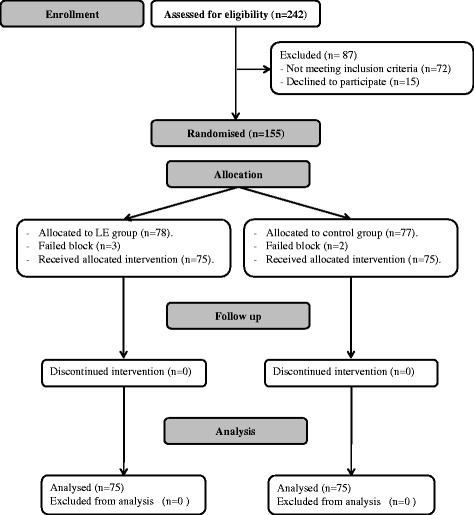
One hundred and fifty full term parturients scheduled for CS were included in the study. Patients were randomized into two groups: Group LE (leg elevation group, n = 75) and group C (Control group, n = 75). Spinal block was performed in sitting position after administration of 10 mL/Kg Ringer's lactate as fluid preload. After successful intrathecal injection of local anesthetic, Patients were positioned in the supine position. Leg elevation was performed for LE group directly after spinal anesthesia and maintained till skin incision. Intraoperative hemodynamic parameters (Arterial blood pressure and heart rate), intra-operative ephedrine consumption, incidence of PSH, and incidence of nausea and vomiting were reported.
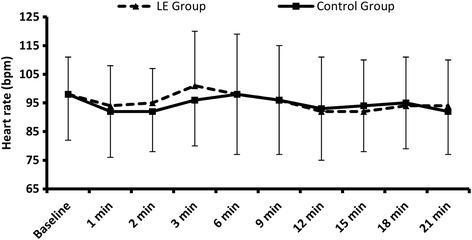
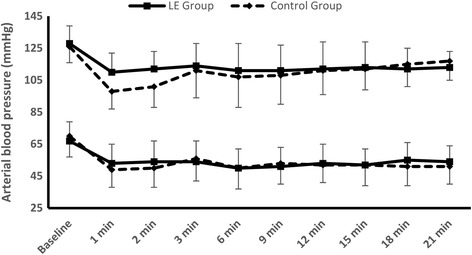
LE group showed lower incidence of PSH (34.7% Vs 58.7%, P = 0.005) compared to the control group. Arterial blood pressure was higher in the LE group compared to the control group in the first two readings after spinal block. Other readings showed comparable arterial blood pressure and heart rate values between both study groups; however, LE showed less ephedrine consumption (4.9 ± 7.8 mg Vs 10 ± 11 mg, P = 0.001).
LE performed immediately after spinal block reduced the incidence of PSH in parturients undergoing CS.
The study was registered at Pan African Clinical Trials Registry system on 5/10/2015 with trial number PACTR201510001295348 .
产妇低血压是剖宫产脊髓麻醉后的常见并发症。在本研究中,我们调查了抬高腿部(LE)作为预防剖宫产脊髓后低血压(PSH)方法的作用。
150例计划行剖宫产的足月产妇纳入本研究。患者随机分为两组:LE组(抬高腿部组,n = 75)和C组(对照组,n = 75)。在给予10 mL/kg乳酸林格氏液作为液体预负荷后,患者取坐位进行脊髓阻滞。鞘内成功注射局部麻醉药后,患者改为仰卧位。LE组在脊髓麻醉后立即抬高腿部,并维持至皮肤切开。记录术中血流动力学参数(动脉血压和心率)、术中麻黄碱用量、PSH发生率以及恶心呕吐发生率。
与对照组相比,LE组PSH发生率较低(34.7%对58.7%,P = 0.005)。脊髓阻滞后的前两次读数中,LE组的动脉血压高于对照组。其他读数显示,两组间动脉血压和心率值相当;然而,LE组麻黄碱用量较少(4.9±7.8 mg对10±11 mg,P = 0.001)。
脊髓阻滞后立即抬高腿部可降低剖宫产产妇PSH的发生率。
该研究于2015年10月5日在泛非临床试验注册系统注册,试验编号为PACTR201510001295348 。