Zhang Changyi, Zhou Guichi, Cai Chanxin, Li Jindi, Chen Fen, Xie Lichun, Wang Wei, Zhang Yonggang, Lai Xiulan, Ma Lian
Department of Cardiology, The Second Affiliated Hospital of Shantou University Medical College, Shantou, Guangdong 515041, P.R. China.
Department of Pediatrics, The Second Affiliated Hospital of Shantou University Medical College, Shantou, Guangdong 515041, P.R. China.
Mol Med Rep. 2017 Jun;15(6):3515-3520. doi: 10.3892/mmr.2017.6454. Epub 2017 Apr 11.
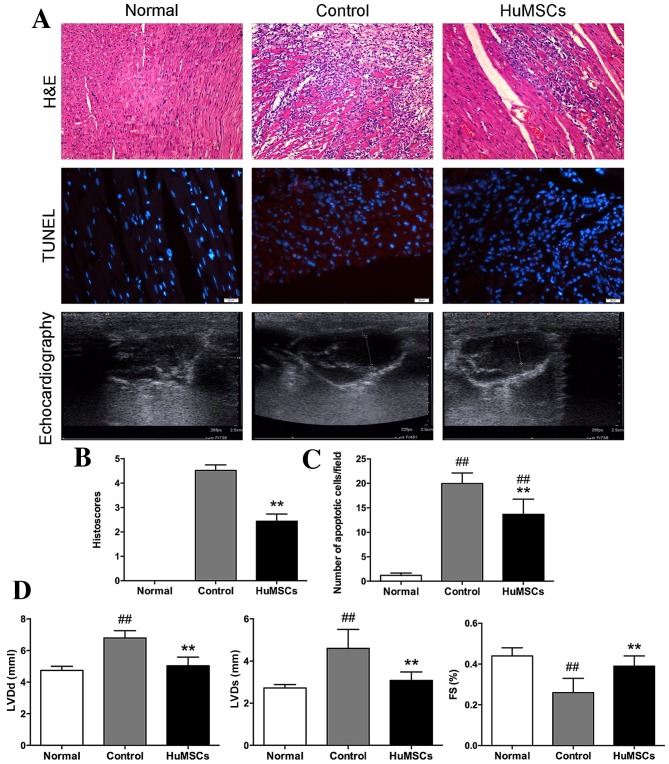
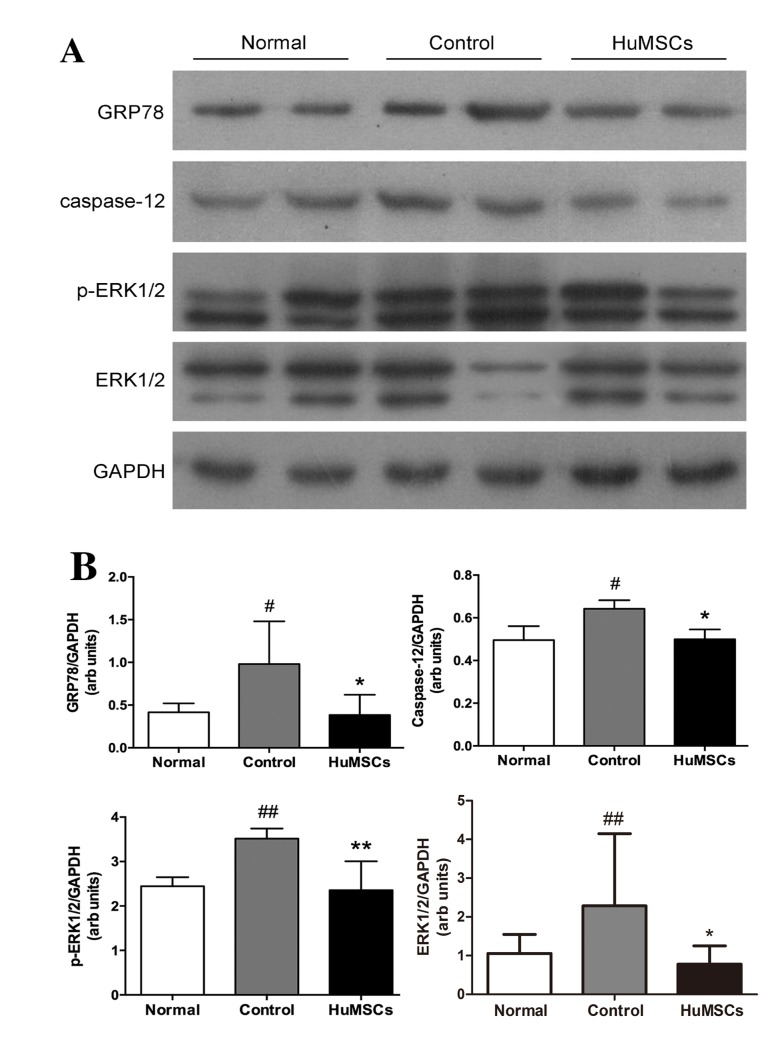
Acute myocarditis is a non-ischemic inflammatory disease of the myocardium, and there is currently no standard treatment. Mesenchymal stem cells (MSCs) can alleviate myosin‑induced myocarditis; however, the mechanism has not been clearly elucidated. In the present study, the authors investigated the ability of human umbilical cordMSCs (HuMSCs) to attenuate myocardial injury and dysfunction during the acute phase of experimental myocarditis. Male Lewis rats (aged 8 weeks) were injected with porcine myosin to induce myocarditis. Cultured HuMSCs (1x10⁶ cells/rat) were intravenously injected 10 days following myosin injection. A total of 3 weeks following injection, this resulted in severe inflammation and significant deterioration of cardiac function. HuMSC transplantation attenuated infiltration of inflammatory cells and adverse cardiac remodeling, as well as reduced cardiomyocyte apoptosis. Furthermore, it was identified that HuMSC transplantation suppressed endoplasmic reticulum stress and extracellular signal‑regulated kinase (ERK)1/2 signaling in experimental autoimmune myocarditis (EAM). The reduced number of TUNEL‑positive apoptotic cells in myocardial sections from HuMSC‑treated EAM rats compared with control demonstrates HuMSCs' anti‑apoptotic function. Based on these data, the author suggested that treatment with HuMSCs inhibits myocardial apoptosis in EAM rats, ultimately protecting them from myocardial damage. The conclusion demonstrated that HuMSC transplantation attenuates myocardial injury and dysfunction in a rat model of acute myocarditis, potentially via regulation of ER stress, ERK1/2 signaling and induction of cardiomyocyte apoptosis.
急性心肌炎是一种心肌非缺血性炎症性疾病,目前尚无标准治疗方法。间充质干细胞(MSCs)可减轻肌球蛋白诱导的心肌炎;然而,其机制尚未完全阐明。在本研究中,作者研究了人脐带间充质干细胞(HuMSCs)在实验性心肌炎急性期减轻心肌损伤和功能障碍的能力。对8周龄雄性Lewis大鼠注射猪肌球蛋白以诱导心肌炎。在注射肌球蛋白10天后静脉注射培养的HuMSCs(1×10⁶个细胞/只大鼠)。注射后共3周,这导致了严重的炎症和心脏功能的显著恶化。HuMSC移植减轻了炎性细胞浸润和不良心脏重塑,同时减少了心肌细胞凋亡。此外,研究发现HuMSC移植抑制了实验性自身免疫性心肌炎(EAM)中的内质网应激和细胞外信号调节激酶(ERK)1/2信号传导。与对照组相比,HuMSC处理的EAM大鼠心肌切片中TUNEL阳性凋亡细胞数量减少,证明了HuMSCs的抗凋亡功能。基于这些数据,作者认为用HuMSCs治疗可抑制EAM大鼠的心肌凋亡,最终保护它们免受心肌损伤。该结论表明,HuMSC移植可减轻急性心肌炎大鼠模型中的心肌损伤和功能障碍,可能是通过调节内质网应激、ERK1/2信号传导以及诱导心肌细胞凋亡来实现的。