Institute of Cardiovascular Development and Translational Medicine, The Second Affiliated Hospital and Yuying Children's Hospital of Wenzhou Medical University, Wenzhou, China.
Center of Scientific Research, The Second Affiliated Hospital and Yuying Children's Hospital of Wenzhou Medical University, Wenzhou, China.
J Cell Mol Med. 2020 Jul;24(13):7515-7530. doi: 10.1111/jcmm.15378. Epub 2020 May 18.
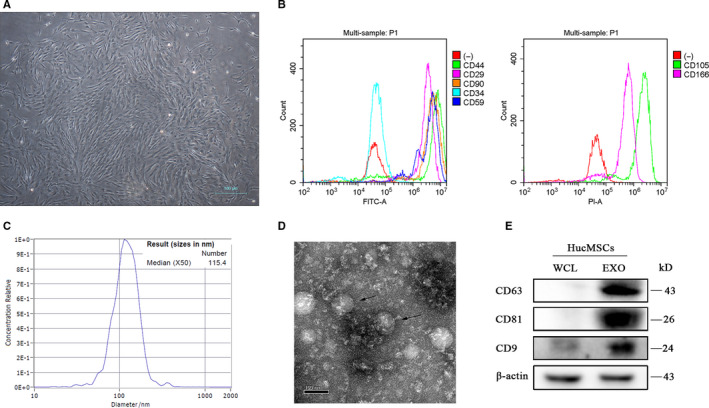
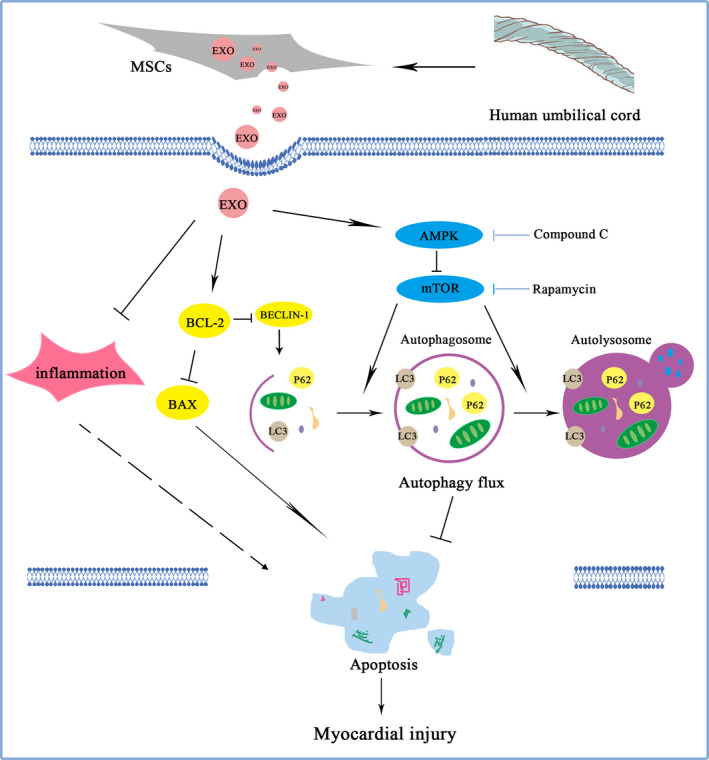
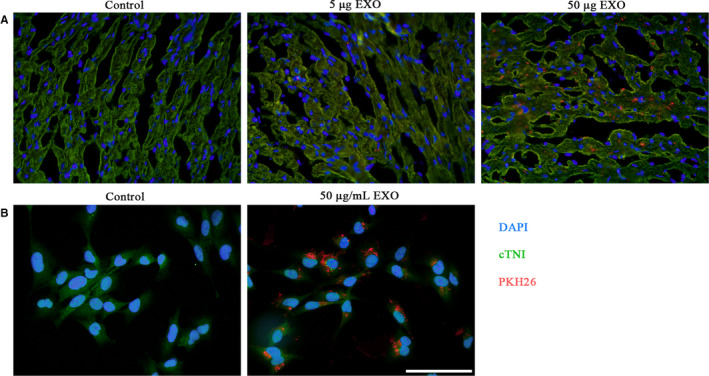
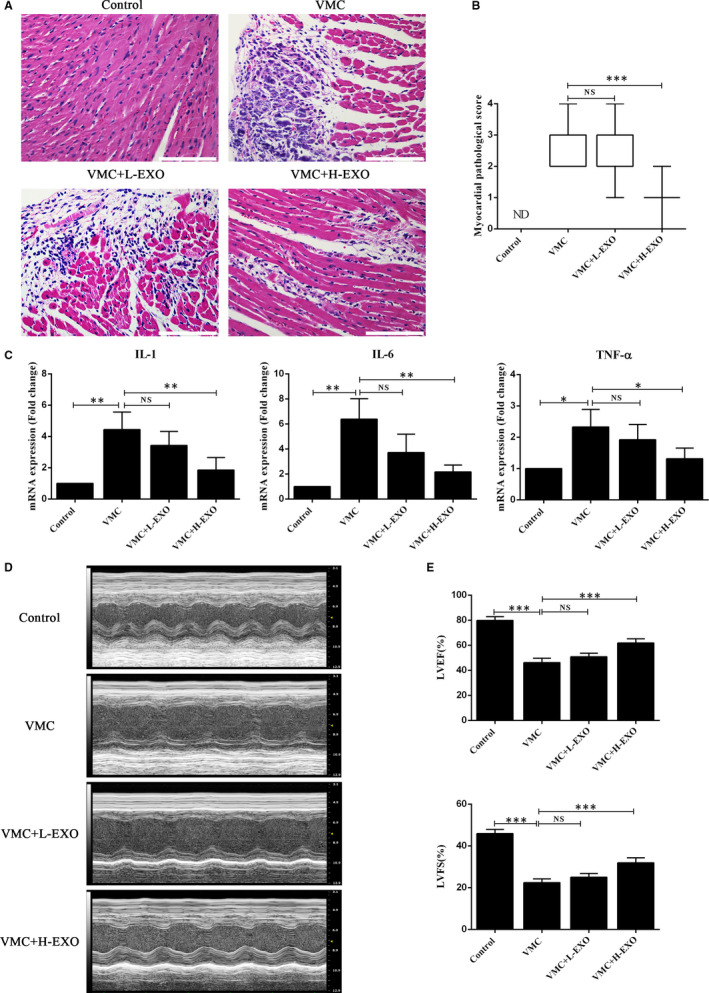
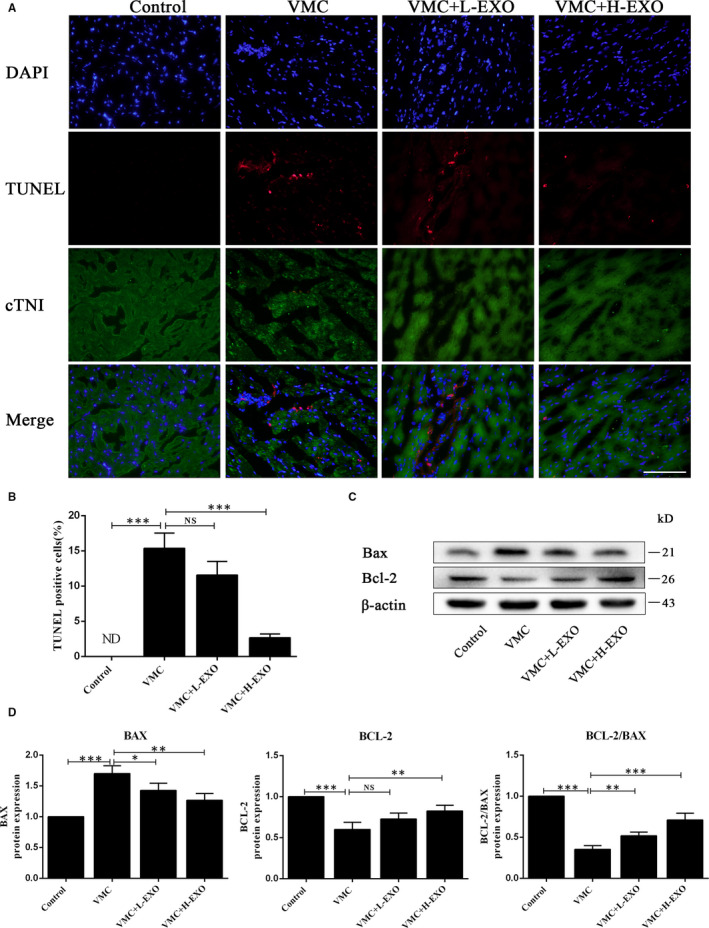
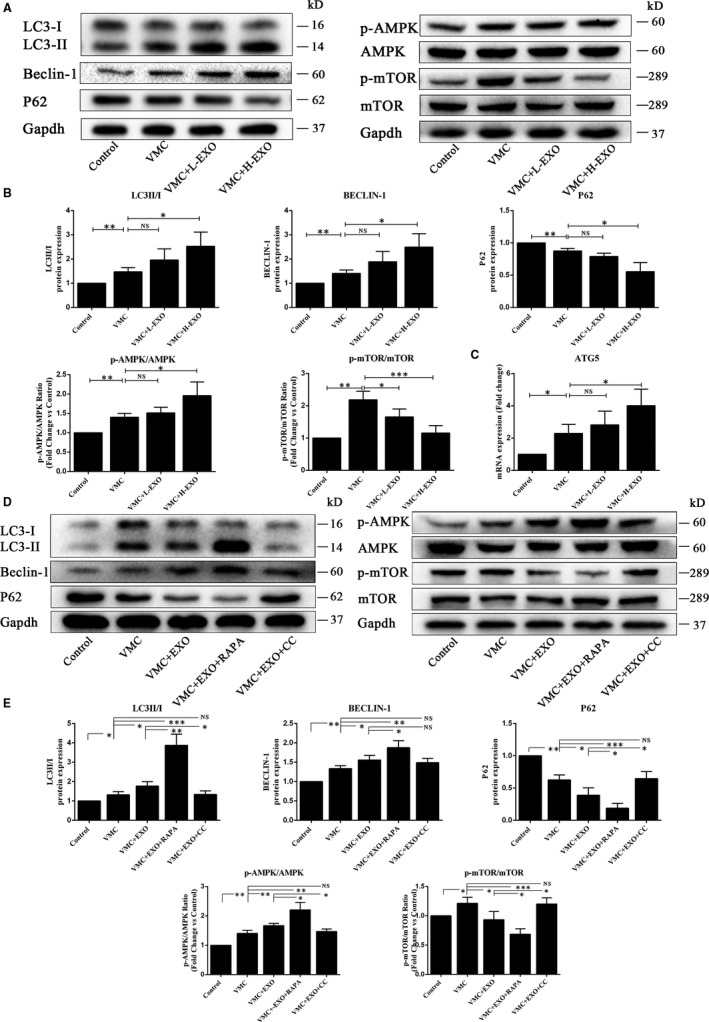
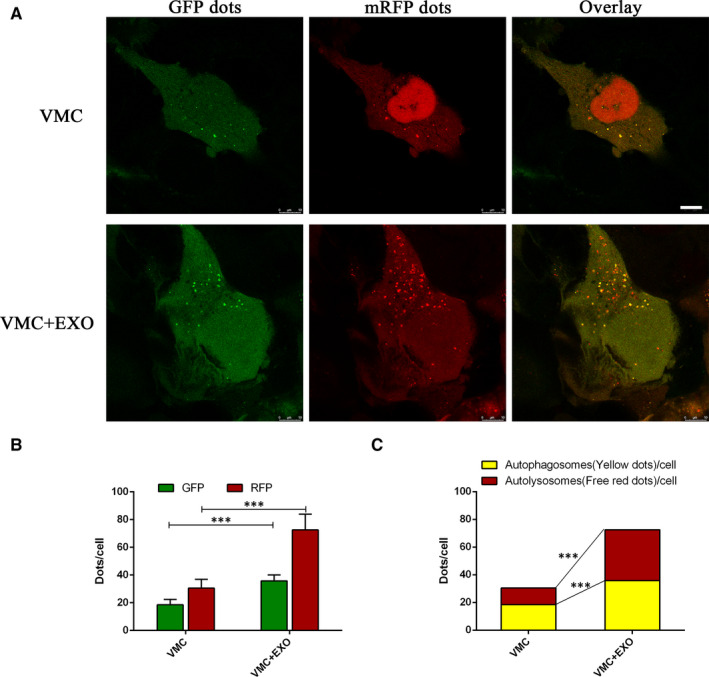
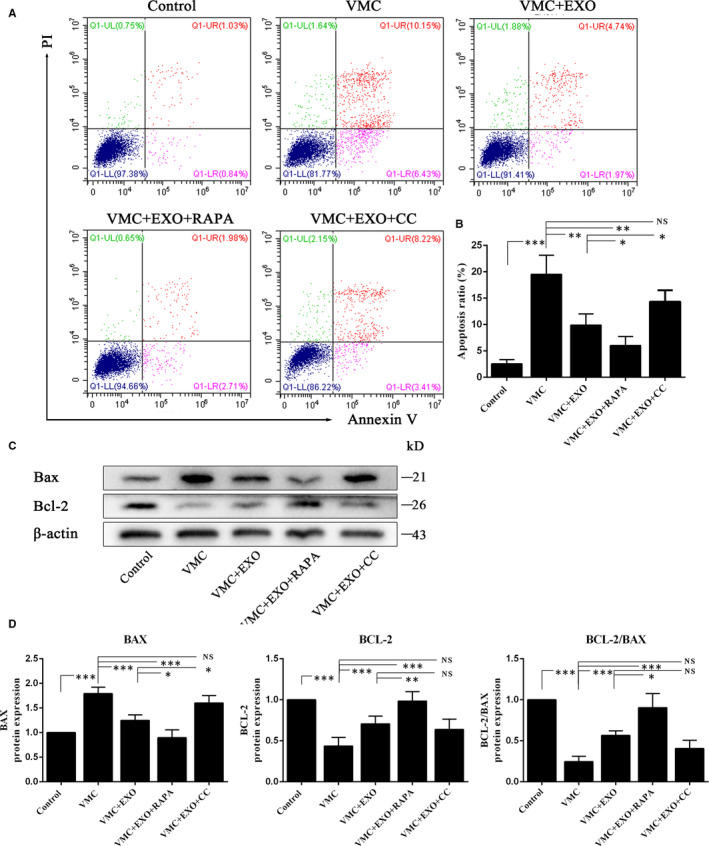
Human umbilical cord mesenchymal stem cell-derived exosomes (hucMSC-exosomes) have been implicated as a novel therapeutic approach for tissue injury repair and regeneration, but the effects of hucMSC-exosomes on coxsackievirus B3 (CVB3)-induced myocarditis remain unknown. The object of the present study is to investigate whether hucMSC-exosomes have therapeutic effects on CVB3-induced myocarditis (VMC). HucMSC-exosomes were identified using nanoparticle tracking analysis (NTA), transmission electron microscopy (TEM) and Western blot. The purified hucMSC-exosomes tagged with PKH26 were tail intravenously injected into VMC model mice in vivo and used to administrate CVB3-infected human cardiomyocytes (HCMs) in vitro, respectively. The effects of hucMSC-exosomes on myocardial pathology injury, proinflammatory cytokines and cardiac function were evaluated through haematoxylin and eosin (H&E) staining, quantitative polymerase chain reaction (qPCR) and Doppler echocardiography. The anti-apoptosis role and potential mechanism of hucMSC-exosomes were explored using TUNEL staining, flow cytometry, immunohistochemistry, Ad-mRFP-GFP-LC3 transduction and Western blot. In vivo results showed that hucMSC-exosomes (50 μg iv) significantly alleviated myocardium injury, shrank the production of proinflammatory cytokines and improved cardiac function. Moreover, in vitro data showed that hucMSC-exosomes (50 μg/mL) inhibited the apoptosis of CVB3-infected HCM through increasing pAMPK/AMPK ratio and up-regulating autophagy proteins LC3II/I, BECLIN-1 and anti-apoptosis protein BCL-2 as well as decreasing pmTOR/mTOR ratio, promoting the degradation of autophagy flux protein P62 and down-regulating apoptosis protein BAX. In conclusion, hucMSC-exosomes could alleviate CVB3-induced myocarditis via activating AMPK/mTOR-mediated autophagy flux pathway to attenuate cardiomyocyte apoptosis, which will be benefit for MSC-exosome therapy of myocarditis in the future.
人脐带间充质干细胞来源的外泌体(hucMSC-exosomes)已被认为是一种治疗组织损伤修复和再生的新方法,但 hucMSC-exosomes 对柯萨奇病毒 B3(CVB3)诱导的心肌炎的影响尚不清楚。本研究旨在探讨 hucMSC-exosomes 是否对 CVB3 诱导的心肌炎(VMC)具有治疗作用。使用纳米颗粒跟踪分析(NTA)、透射电子显微镜(TEM)和 Western blot 鉴定 hucMSC-exosomes。将 PKH26 标记的纯化 hucMSC-exosomes 通过尾静脉注射到体内 VMC 模型小鼠中,并分别用于体外给予 CVB3 感染的人心肌细胞(HCMs)。通过苏木精和伊红(H&E)染色、实时定量聚合酶链反应(qPCR)和多普勒超声心动图评估 hucMSC-exosomes 对心肌病理损伤、促炎细胞因子和心功能的影响。使用 TUNEL 染色、流式细胞术、免疫组化、Ad-mRFP-GFP-LC3 转导和 Western blot 探讨 hucMSC-exosomes 的抗凋亡作用及其潜在机制。体内结果表明,hucMSC-exosomes(50μg iv)可显著减轻心肌损伤,缩小促炎细胞因子的产生,改善心功能。此外,体外数据表明,hucMSC-exosomes(50μg/mL)通过增加 pAMPK/AMPK 比值和上调自噬蛋白 LC3II/I、BECLIN-1 和抗凋亡蛋白 BCL-2 以及降低 pmTOR/mTOR 比值来抑制 CVB3 感染的 HCM 细胞凋亡,促进自噬通量蛋白 P62 的降解,并下调凋亡蛋白 BAX。综上所述,hucMSC-exosomes 通过激活 AMPK/mTOR 介导的自噬通量途径减轻心肌细胞凋亡,从而缓解 CVB3 诱导的心肌炎,这将有利于未来 MSC-exosome 治疗心肌炎。